Congress questions PM Modi's promise of 'Na Khaunga, Na Khane Dunga'
Congress demands Yediyurappa's resignation
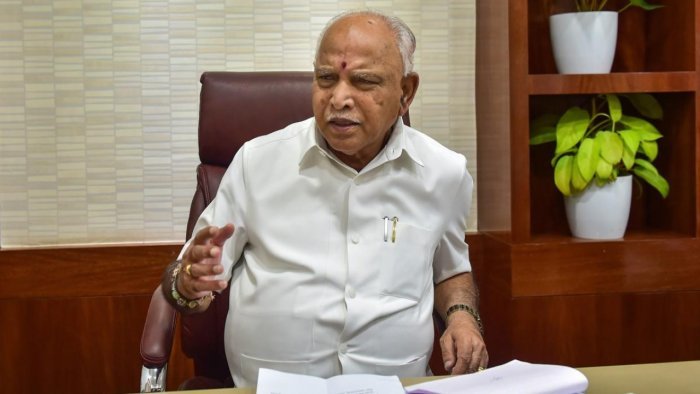
New Delhi, Dec 23: The Congress accused Karnataka Chief Minister B S Yediyurappa of corruption on Wednesday and demanded his immediate removal, while questioning the silence of Prime Minister Narendra Modi and the top BJP leadership for not acting against him.
Congress spokesperson Abhishek Singhvi cited a Karnataka High Court order in which the court made some strong remarks against the chief minister while dismissing his petition to junk an old case of corruption against him.
The Congress leader alleged that Yediyurappa has been delaying the investigation of graft charges against him in the case and accused the BJP leadership of being complacent in the acts of corruption.
"Karnataka and corruption seem to go hand in hand and are intertwined, and there is culpable conspiratorial silence of all the powers that be, including our extremely eloquent prime minister, BJP president JP Nadda and the party's former chief, Amit Shah. All of them maintain silence on this very special arc of immunity accorded by the BJP to B S Yediyurappa, the sitting chief minister of Karnataka. It is mysterious, inexplicable and shocking," Singhvi told reporters.
"The Congress party, with all the force at our command, calls for the immediate resignation, removal, stepping down of the chief minister, but knowing full well that it will not happen," he said.
Singhvi said he had referred to the case in October also while citing the example of tapes and WhatsApp messages of contractors talking of bribes paid in connection with the Rs 662-crore apartments complex project in Bengaluru.
"You only received an eloquent silence from the powers that be when we asked for B S Yediyurappa's resignation then," he added.
The Congress leader referred to a 20-page judgment delivered by the Karnataka High Court on Tuesday in an old case under the Prevention of Corruption Act against the chief minister and other accused and said Yediyurappa himself was the petitioner in the case, which the court dismissed after using some strong language.
The court questioned the Lokayukta police and the state apparatus on how they allowed a person to remain not even under investigation with the probe not proceeding at all for five long years from early 2015 till the end of 2019.
Singhvi read out portions of the high court judgment that states, "Though I will not give a finding that the Lokayukta police has succumbed to the pressure of the chief minister, yet the Lokayukta police, being an independent, impartial body and trusted with the duty to investigate into the misconduct of public servants objectively, cannot give rise to an impression in the mind of the general public that it is playing into the hands of political bigwigs. I refrain from making strong comments against the Lokayukta police, but laxity in conducting the investigation is deprecated and the Lokayukta police is directed to keep a watch over the investigation order."
The Congress leader said there cannot be stronger words than these used by a court against a sitting chief minister.
"The chief minister should not remain even for a single minute in the chair after this strong indictment by the high court," he said, adding that the Bharatiya Janata Party (BJP) is playing shameless politics and it will neither remove Yediyurappa nor will he resign.
The Congress leader said one now understands the game Yediyurappa, the BJP and the Karnataka government have been playing by not allowing the investigation to start and wait for an opportune moment to challenge the petitions in court.
"The bottom line is simple, never let the judgment day come, never let the results to follow, let time take its own course and solve matters on its own," he said.
Singhvi also cited the words of former deputy prime minister LK Advani, who had said Yediyurappa was not thrown out of the BJP, but he went of his own and formed his outfit when it became apparent that he was unabashedly indulging in corruption.
"Those who give us sermons and advice should follow at least their own senior leader's advice," he said.
In a tweet, Congress's chief spokesperson Randeep Surjewala cited a media report and said, "Does CM Yediyurappa have any right to continue in office even for whiff of a second after such stinging indictment?"
"For a fair investigation and logical conclusion, CM must quit without delay. Test of PM Modi now of his promise - NA KHAUNGA, NA KHANE DOONGA."
Let the Truth be known. If you read VB and like VB, please be a VB Supporter and Help us deliver the Truth to one and all.
Ordinance issued to increase number of Supreme Court judges from 34 to 38
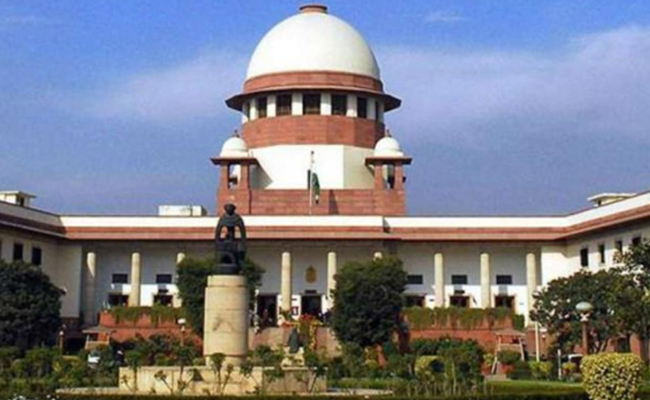
New Delhi (PTI): The government has promulgated an ordinance to increase the strength of the Supreme Court from the present 34 judges to 38, including the Chief Justice of India.
The law ministry notified the ordinance on Saturday, which amended the Supreme Court (Number of Judges) Act, 1956, to increase the sanctioned strength of the top court.
So far, the sanctioned strength of the top court was 34, including the Chief Justice of India (CJI). Now, the number of judges has been increased by four, taking the sanctioned strength to 38.
The top court will now have 37 judges, other than the CJI.
With the apex court having two vacancies at present, and the ordinance coming into force immediately, the Supreme Court Collegium will now have to recommend six names for appointment as judges in the top court.
A bill will be brought in the Monsoon Session of Parliament to convert the ordinance – an executive order – into a law passed by Parliament.
The Union Cabinet had cleared a draft bill on May 5 to increase the number of apex court judges.
The strength of the Supreme Court was last increased from 30 to 33 (excluding the CJI) in 2019.
The Supreme Court (Number of Judges) Act, as originally enacted in 1956, put the maximum number of judges (excluding the CJI) at 10.
This number was increased to 13 by the Supreme Court (Number of Judges), Amendment Act, 1960, and to 17 by another amendment to the law.
The Supreme Court (Number of Judges) Amendment Act, 1986, augmented the strength of judges from 17 to 25, excluding the CJI.
A fresh amendment in 2009 further increased the strength from 25 to 30.
Article 124(3) of the Constitution lists the qualifications required to become a Supreme Court judge.
An Indian citizen who has either served as a high court judge for at least five years, or as an advocate for 10 years, or is a distinguished jurist, can be appointed to the top court.
The strength of the Supreme Court is increased based on the recommendations of the CJI, who writes to the Union law minister. After consulting the finance ministry, the Department of Justice under the law ministry moves the Cabinet with a draft bill.