Congress MLA, son booked for abetting suicide of PSI in Karnataka, wife demands justice
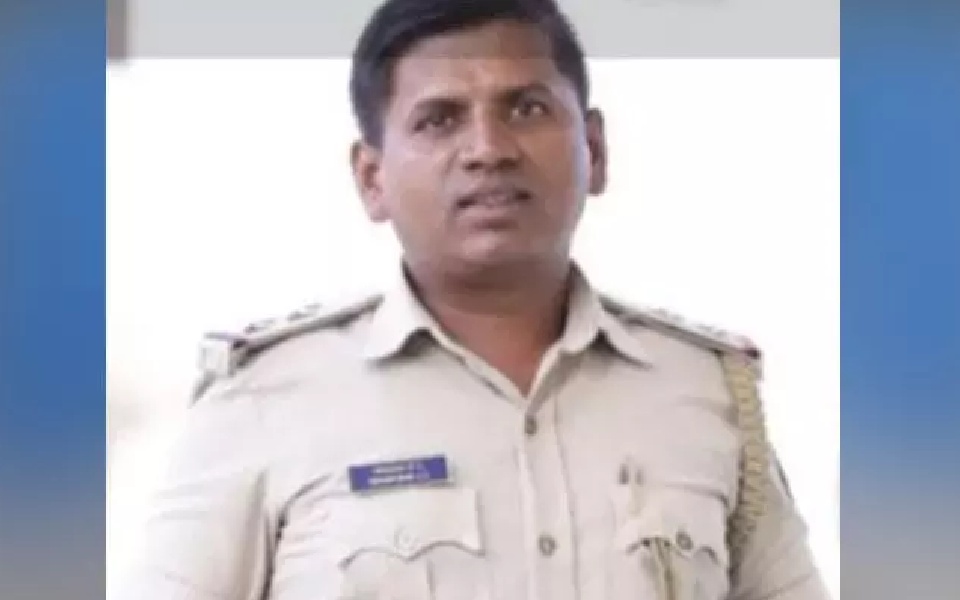
Yadgir: A case was registered by the police against Congress MLA Channareddy Tannur and his son Pampanagouda Tannur on Saturday after a Dalit sub-inspector allegedly died by suicide, following his transfer within seven months of posting.
The MLA and his son were booked on charges of intentional insult with an intent to provoke breach of peace, abetment of suicide and joint criminal liability on a complaint by Parusharam’s wife Shwetha N V.
She alleged that the father-son duo had allegedly demanded Rs 30 lakh from her husband if he wished to continue in the same place.
Shwetha said Parashuram was in tears ever since he was transferred and told her that he felt suicidal.
When Shwetha, who is pregnant, went to Raichur to her parents’ house for the delivery of her child, she got to know that Parashuram was hospitalised with bleeding from his nose and mouth.
ALSO READ: BJP is intimidating the Government through Governor: Dr G Parameshwar
Following the incident, members of the Dalit Sangharsh Samiti (DSS) staged a demonstration blocking the road demanding justice for Parashuram. Shwetha too joined the agitators.
Addressing media, she said the police department was supporting the MLA and not her husband.
“The department itself is not with him today. Instead it is supporting the MLA. It supports the one who squanders money. It pays money to him and supports him. How much money you want to feed him? Will you rear an MLA? Do you toil day and night ignoring your parents and family for an MLA? This MLA is responsible for it but he has not come here yet. I want an FIR. We want justice,” Shwetha said Traffic was badly affected due to the agitation.
Reacting to the incident, Home Minister G Parameshwara said that he has ordered a thorough investigation into the case.
He, however, ruled out that it was a suicide.
“He (Parashuram) did not commit suicide. He had not written any death note. His wife has complained that she was suffering from the transfer issue. I will consider his allegation. Investigation will be done in that dimension,” the Minister told reporters in Bengaluru.
He said that the police were collecting preliminary information and conduct an investigation.
The incident took a political turn with opposition BJP and the JD(S) slamming the government for pushing sincere officers towards suicide.
“A police sub-inspector from your community has died by suicide. Why did he do that? His wife alleges that he took the extreme step because he failed to pay Rs 25 lakh as bribe to the MLA,” Union Minister H D Kumaraswamy said at the launch of ‘Mysuru Chalo’ march jointly organised by the BJP and JD(S) in Bengaluru.
He wondered if this is how Parameshwara would pay tribute to Dr B R Ambedkar.
In his reaction, Parameshwara said he goes by the law and not his community.
The BJP leaders said earlier Karnataka Maharshi Valmiki Scheduled Tribe Development Corporation Accounts Superintendent, Chandrasekharan P died by suicide.
Chandrasekharan in his suicide note explained the illegal transfer of Rs 187 crore, which led to the arrest of the former Minister B Nagendra, and 12 other government and Union Bank of India officers.
Let the Truth be known. If you read VB and like VB, please be a VB Supporter and Help us deliver the Truth to one and all.
Ordinance issued to increase number of Supreme Court judges from 34 to 38
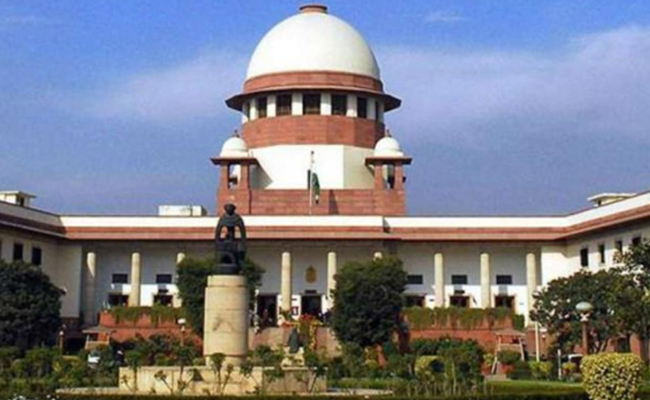
New Delhi (PTI): The government has promulgated an ordinance to increase the strength of the Supreme Court from the present 34 judges to 38, including the Chief Justice of India.
The law ministry notified the ordinance on Saturday, which amended the Supreme Court (Number of Judges) Act, 1956, to increase the sanctioned strength of the top court.
So far, the sanctioned strength of the top court was 34, including the Chief Justice of India (CJI). Now, the number of judges has been increased by four, taking the sanctioned strength to 38.
The top court will now have 37 judges, other than the CJI.
With the apex court having two vacancies at present, and the ordinance coming into force immediately, the Supreme Court Collegium will now have to recommend six names for appointment as judges in the top court.
A bill will be brought in the Monsoon Session of Parliament to convert the ordinance – an executive order – into a law passed by Parliament.
The Union Cabinet had cleared a draft bill on May 5 to increase the number of apex court judges.
The strength of the Supreme Court was last increased from 30 to 33 (excluding the CJI) in 2019.
The Supreme Court (Number of Judges) Act, as originally enacted in 1956, put the maximum number of judges (excluding the CJI) at 10.
This number was increased to 13 by the Supreme Court (Number of Judges), Amendment Act, 1960, and to 17 by another amendment to the law.
The Supreme Court (Number of Judges) Amendment Act, 1986, augmented the strength of judges from 17 to 25, excluding the CJI.
A fresh amendment in 2009 further increased the strength from 25 to 30.
Article 124(3) of the Constitution lists the qualifications required to become a Supreme Court judge.
An Indian citizen who has either served as a high court judge for at least five years, or as an advocate for 10 years, or is a distinguished jurist, can be appointed to the top court.
The strength of the Supreme Court is increased based on the recommendations of the CJI, who writes to the Union law minister. After consulting the finance ministry, the Department of Justice under the law ministry moves the Cabinet with a draft bill.