Congress plans ‘Guarantee Samavesha’ in Karnataka to counter BJP’s “zero achievement” claims: Report
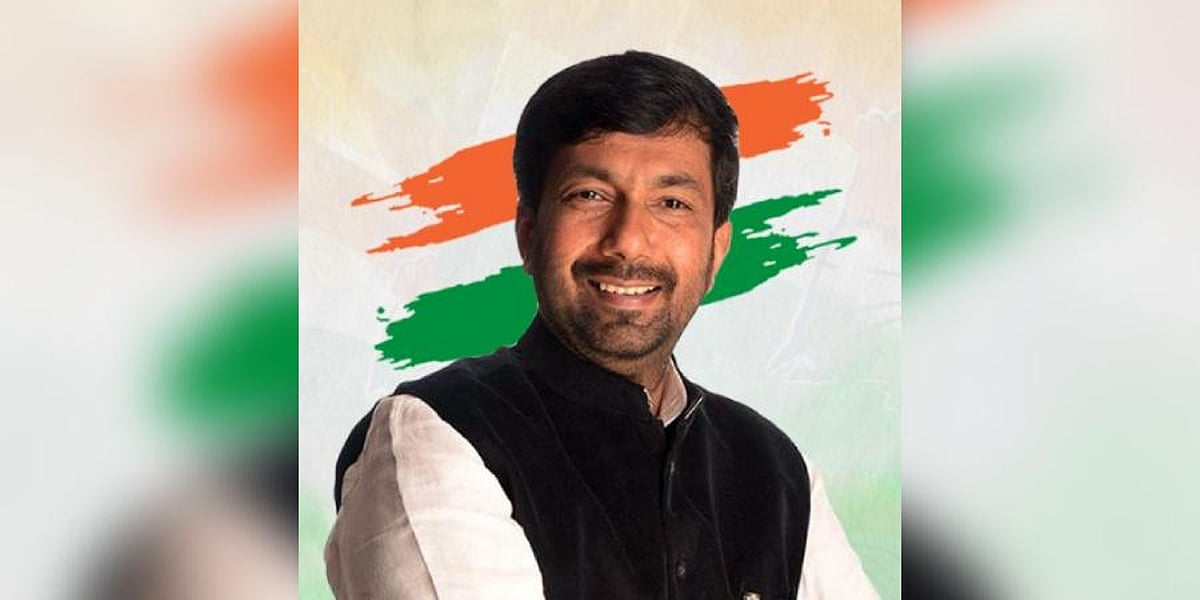
Bengaluru: While the BJP alleges that the Congress-led Karnataka government has made 'zero achievements' over the past two years, the ruling party is reportedly planning to launch a campaign called ‘Guarantee Samavesha’ to showcase the impact of its welfare schemes.
The Congress government plans to organise this event at the district level, inviting beneficiaries of its guarantee schemes, as reported by The New Indian Express on Wednesday.
Senior Congress leader and Chief Whip in the Upper House Saleem Ahmed stated that the party is planning large-scale events across districts to highlight their five guarantees. “CM Siddaramaiah and KPCC chief DK Shivakumar will finalise the dates along with the format of the event,’’ TNIE quoted Ahmed as saying.
He pointed out that the saffron party keeps accusing them of having no developmental achievements. “Through these events, we will tell them and the people about what guarantees have done for the poor,’’ he said.
Furthermore, Ahmed pointed to the Centre’s failure to release grants due to the state government. “We have two prominent ministers from Karnataka who are in PM Narendra Modi’s cabinet, Nirmala Sitharaman and Pralhad Joshi. What have they done for the state? We will speak about this in front of the people,’’ he asserted.
Meanwhile, Chief Minister Siddaramaiah accused the Union government of treating Karnataka unfairly when it comes to sharing tax money and funds for central schemes.
Speaking at a public rally in Hosapete on Tuesday, which marked the completion of his government's two-year tenure, Siddaramaiah pointed out that Karnataka contributes approximately Rs 4.5 lakh crore annually in taxes but receives only Rs 65,000 crore in return.
“It means only Rs 14 for every Rs 100. Prime Minister Narendra Modi often talks of cooperative federalism. Is it cooperative federalism? This erodes the federal structure,” he said.
Let the Truth be known. If you read VB and like VB, please be a VB Supporter and Help us deliver the Truth to one and all.
Ordinance issued to increase number of Supreme Court judges from 34 to 38
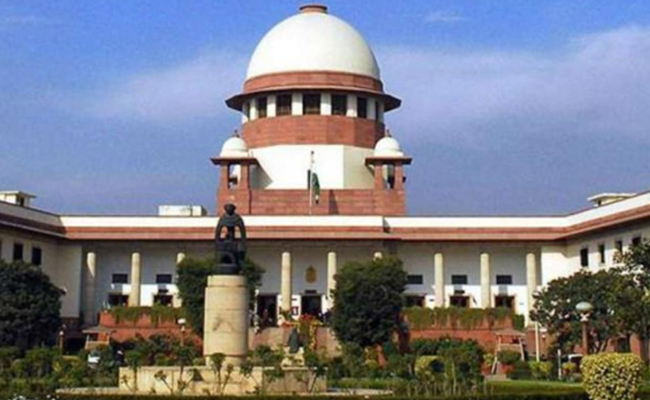
New Delhi (PTI): The government has promulgated an ordinance to increase the strength of the Supreme Court from the present 34 judges to 38, including the Chief Justice of India.
The law ministry notified the ordinance on Saturday, which amended the Supreme Court (Number of Judges) Act, 1956, to increase the sanctioned strength of the top court.
So far, the sanctioned strength of the top court was 34, including the Chief Justice of India (CJI). Now, the number of judges has been increased by four, taking the sanctioned strength to 38.
The top court will now have 37 judges, other than the CJI.
With the apex court having two vacancies at present, and the ordinance coming into force immediately, the Supreme Court Collegium will now have to recommend six names for appointment as judges in the top court.
A bill will be brought in the Monsoon Session of Parliament to convert the ordinance – an executive order – into a law passed by Parliament.
The Union Cabinet had cleared a draft bill on May 5 to increase the number of apex court judges.
The strength of the Supreme Court was last increased from 30 to 33 (excluding the CJI) in 2019.
The Supreme Court (Number of Judges) Act, as originally enacted in 1956, put the maximum number of judges (excluding the CJI) at 10.
This number was increased to 13 by the Supreme Court (Number of Judges), Amendment Act, 1960, and to 17 by another amendment to the law.
The Supreme Court (Number of Judges) Amendment Act, 1986, augmented the strength of judges from 17 to 25, excluding the CJI.
A fresh amendment in 2009 further increased the strength from 25 to 30.
Article 124(3) of the Constitution lists the qualifications required to become a Supreme Court judge.
An Indian citizen who has either served as a high court judge for at least five years, or as an advocate for 10 years, or is a distinguished jurist, can be appointed to the top court.
The strength of the Supreme Court is increased based on the recommendations of the CJI, who writes to the Union law minister. After consulting the finance ministry, the Department of Justice under the law ministry moves the Cabinet with a draft bill.