Congress to stage protest against Centre over rice supply issue on June 20
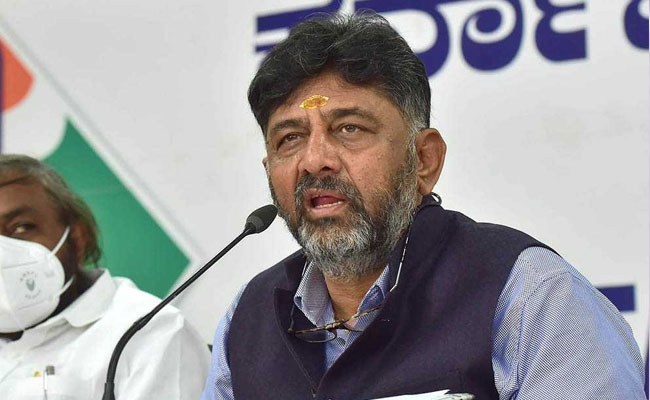
Bengaluru (PTI): Karnataka Deputy Chief Minister D K Shivakumar on Friday said the Congress will hold protests at all district centres against the BJP government at the Centre on June 20, as he accused it of ensuring that the state doesn't get the required amount of rice to implement its 'Anna Bhagya' scheme, which provides additional 5 kg of rice for BPL families.
Noting that the state government is making all efforts to procure rice from other sources and from producing states, he indicated that there may be slight delay in rolling out the scheme against the scheduled date of July one.
"I want to congratulate BJP national President J P Nadda, as they (BJP) have walked the talk", Shivakumar said sarcastically. "It was reported in the media quoting him that if BJP loses the election central schemes to the state will get affected, he has kept up his word. Even as the Prime Minister speaks about federal structure..."
Speaking to reporters here, he said, the BJP government at the Centre is indulging in "politics of hate" by ensuring that the Food Corporation of India (FCI) does not supply the required amount of rice to implement the scheme; it is their way of registering a protest against Karnataka's poor for voting in favour of Congress.
"BJP is a party that betrays the poor. Congress party and the government condemns and protests this. On on June 20 at 11 am, the Congress will stage protests at all district centres across the state against the BJP government at the Centre. The protests will be organised by local leadership of the party at district level, all MLAs and leaders from the district will take part in the protest," he added.
Chief Minister Siddaramaiah had recently said that the central government has stalled the sale of wheat and rice to state governments under the Open Market Sale Scheme (Domestic) (OMSSD), which prohibits the FCI from selling any additional rice to Karnataka for its Anna Bhagya scheme.
Noting that the state government is committed to provide 10 kg of free rice to the poor, the DCM said, "we are in talks with neighbouring states like Telangana, also Chhattisgarh, which are rice producing states, on the stocks available with them for procurement.
He said it is not difficult for us to procure from the open market, but we want to maintain transparency.
"The Centre has rice stock of over seven lakh metric tonne, we asked for about 2,88,000 metric tonnes. Despite having stock they are not giving. As they (FCI) had initially agreed to give rice, we had announced that we will supply from July 1. We will arrange rice somehow and roll out the scheme, there may be a couple of days delay due to procurement and transportation," he added.
Shivakumar also expressed hope that MPs from the state will come forward to help Karnataka, and said, "we will write to them to put pressure on the centre in the interest of the state."
Out of 28 MPs from the state, 25 are from BJP.
Let the Truth be known. If you read VB and like VB, please be a VB Supporter and Help us deliver the Truth to one and all.
Second PUC results: Life convict clears exam with distinction, DGP lauds effort
_vb_63.jpeg)
Bengaluru: A life convict lodged in Ballari Central Prison has successfully cleared the second PUC examination.
Ashok Kumar S, who appeared for the examination under prison escort, secured 481 marks out of 600, registering 80.1 percent.
Director General of Police (Prisons and Correctional Services), Alok Kumar (IPS), shared the development on his official ‘X’ handle, commending the inmate’s achievement.
In his post, he stated that it was heartening to see a life convict score over 80 percent in the examination, adding that the inmate had appeared from Ballari Central Prison under escort.
It’s heartening to see that one of our life convict prisoners Ashok has obtained 80.1% marks in PUC exam. He appeared under Prison escort from Ballari Central Prison for his exams.
— alok kumar (@alokkumar6994) April 9, 2026
Glad to see that Walls of the prison has not subdued his hopes for a better future. pic.twitter.com/Nzlcy076SR
He further noted that the achievement reflected that the “walls of the prison have not subdued his hopes for a better future.”
Alok Kumar in his post also shared the result sheet of Ashok.
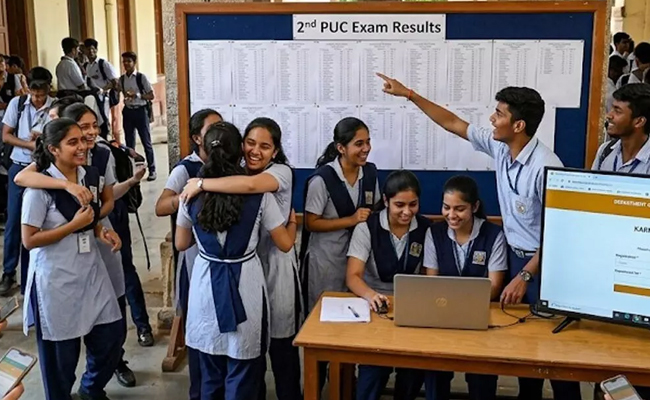
The Karnataka School Examination and Assessment Board (KSEAB) declared the second PUC results for 2026 on April 9.
A total of 6,32,200 students appeared for the examination across all streams, of whom 5,46,698 passed, recording an overall pass percentage of 86.48 per cent.