Cooperate, if you don't want another COVID-19 lockdown: Karnataka CM Yediyurappa to people
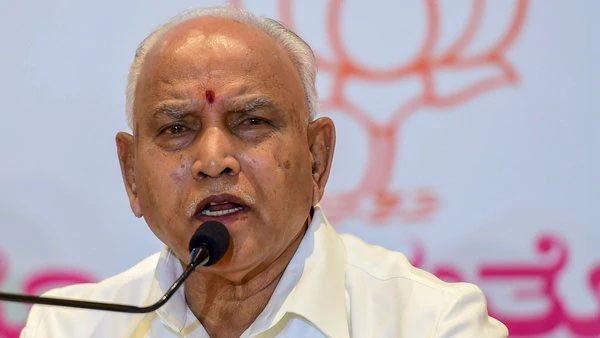
Bengaluru: Expressing concern over spike in fresh COVID-19 cases, Karnataka Chief Minister B S Yediyurappa on Sunday said the pandemic seemed to be going out of control in the state and asked people to cooperate by adhering to the preventive measures if they don't want another lockdown.
"I appeal to the people with folded hands for cooperation.... if people cooperate I'm confident that without lockdown we can control," he said, announcing that he has convened a meeting of experts and officials on Monday in the wake of the spurt in fresh cases in recent days.
His appeal comes in the backdrop of lockdown being clamped in parts of neighbouring Maharashtra recently in view of sharp rise in fresh cases there.
Earlier, the nation-wide lockdown imposed in March last year was relaxed in phases under Unlock guidelines and the Karnataka has allowed almost all activities.
For the first time since January 22, the daily COVID-19 cases in Karnatkaa crossed the 900 mark on Saturday. It reported 921 cases with 630 of them from Bengaluru Urban district alone.
Since Monday last, over 4,300 new cases have been detected in the state, whose cumulative COVID-19 tally stood at 9,59,338 including 12,387 deaths and 9,38,890 discharges.
The active cases, which hovered around 4,000-5,000 last month, touched 8,042 active cases, reflecting the rise.
"Since last one month COVID seems to be going out of control, day-by-day the number of cases are increasing. So I have called a meeting of experts tomorrow," Yediyurappa told reporters here.
He also said the government has fixed a limit on the number of people allowed to attend gatherings like marriages, and action will be taken in accordance with law in case of any violation.
"My appeal to people is that if you don't want lockdown and want all activities to continue as it is going on now, people have to cooperate by wearing masks and maintaining distance," the Chief Minister said.
Noting that cases were increasing day-by-day in Maharashtra, he said, all efforts were being made to control the spread from travellers coming to the state from there.
Responding to a question whether the government is thinking about measures like lockdown or night curfew, Yediyurappa said, "as of now there are no such plans, if people cooperate and things come under control, we don't want to impose lockdown, as it will hamper day-to-day activities.
"We have suffered in the past (due to lockdown). I will not allow it, but people will have to cooperate."
The Chief Minister's office said he has called a meeting of officials and health experts at 5 pm on Monday at Vidhana Soudha, the seat of state legislature and secretariat.
The government was thinking about stricter measures for those travelling from neighboring states to control COVID spread, Yediyurappa, in response to a question said, it will be discussed at the meeting.
"I have had a meeting with the Chief Secretary regarding measures that can be taken. We will tighten things as much as possible," he added.
The Chief Minister also said he has called a meeting of Ministers on Monday morning to discuss the functioning of the government and regarding the working together in responding to the needs of the people, as the legislature session is on.
In the wake of a spike in cases in the state, the government on Friday had put a cap on the number of people who can gather at events and celebrations like marriages.
Additional Chief Secretary, Health, Jawaid Akhtar in a circular has said the measure has been taken amid the emergence of new clusters and fear of a second wave of the pandemic.
As per new rules, 500 people will be allowed at marriages if it is an open space, and only 200 if it is a hall or a closed space.
Similarly for birthday celebrations, the limit would be 100 and 50 respectively for functions in open and closed spaces.
A similar cap has been specified for funerals. However, at cremations and burials, only 50 are allowed. A maximum of 500 people will be allowed for religious and political gatherings in open spaces.
Let the Truth be known. If you read VB and like VB, please be a VB Supporter and Help us deliver the Truth to one and all.
Inappropriate for MLAs seeking free IPL tickets, says D.K. Suresh
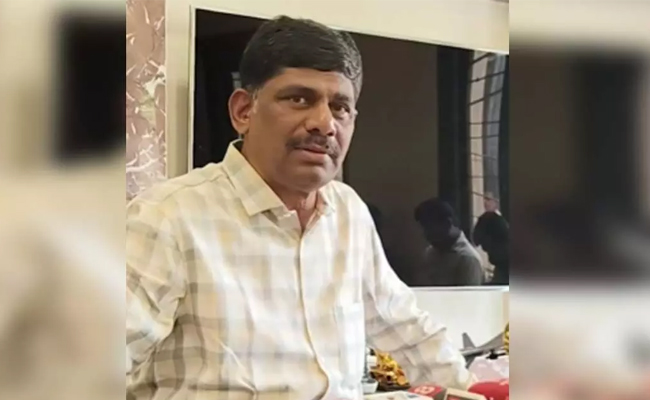
Bengaluru: Bengaluru Milk Union Ltd President D.K. Suresh on Monday said it is inappropriate for MLAs to seek free IPL tickets, adding that those interested in watching matches should pay for them personally.
Speaking to reporters near his residence in Sadashivanagar, he said, “IPL is a commercial tournament and does not represent the country. It is not right for public representatives to focus too much on such matters.”
Referring to the recent controversy during the RCB celebrations, he said, “let us find out who benefited the most from the statements made during the incident.” He also pointed out that BJP MLAs had received IPL tickets as well.
Responding to discussions about relocating the Chinnaswamy Stadium, Suresh said the government has already approved the construction of a new stadium at a location he had proposed.
“I had suggested building a stadium in Surya City and submitted a proposal for it. Bengaluru needs four stadiums in four directions to cater to its growing population and encourage youth participation in sports,” he said.
He noted that apart from Kanteerava Stadium, KSCA, and the Football Stadium, there are limited facilities in the city.
“When I was a Lok Sabha member, I had proposed allocating 100 acres in my constituency at Surya City. The land was later earmarked and the plan approved,” he added.
Suresh said he has discussed the project with Minister Zameer Ahmed Khan, Rajiv Gandhi Housing Corporation Chairman Shivalingegowda, and Anekal MLA Shivanna.
“The Cabinet has now approved the project, and a stadium will be developed on around 50–60 acres,” he said.
He further added that he has requested the Deputy Chief Minister to build another stadium at Shivarama Karanth Layout through the BDA, where 40 acres have been allocated. Plans are also being discussed to develop a well-equipped stadium in Bidadi.
Commending state government's recent bilingual policy move, Suresh said forcing children to learn three languages could affect their comprehension.
“It is a good decision to make two languages compulsory. Learning a third language should be left to the choice of students and parents,” he said.
Responding to criticism from BJP leaders, he said their tendency is to oppose every decision of the government.
“To please their central leadership, they take a pro-Hindi stance. Instead, they should advocate for the adoption of Kannada in all states,” he said.
When asked about the earlier three-language policy under Congress, he said, “the situation is different now. Today, the focus should be on quality learning. Kannada should remain the primary language, while students and parents can choose an additional language.”