DK Shivakumar accuses BJP, other organisations of provocation; assures peace in Dakshina Kannada
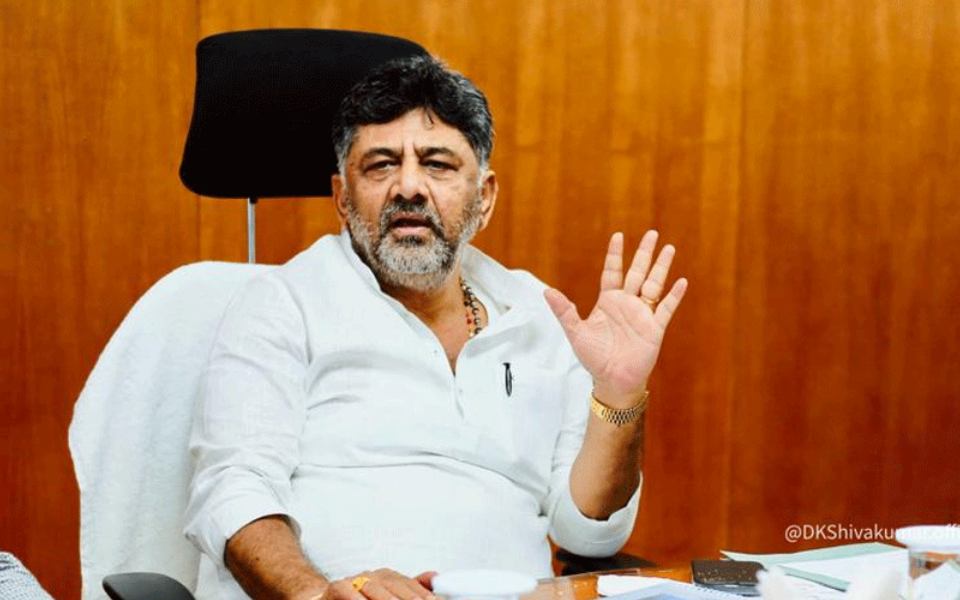
Bengaluru, May 30 (PTI): Asserting that the government will bring the situation in the communally sensitive coastal region, especially Dakshina Kannada district, under control, Karnataka Deputy Chief Minister D K Shivakumar on Friday accused the BJP and other organisations of indulging in provocations.
He was speaking about the alleged deteriorating law and order situation in the district, in the wake of the killing of 32- year-old Abdul Rahiman in Bantwal taluk on Tuesday.
Rahiman's murder comes close on the heels of Hindu activist Suhas Shetty's killing on May 1 in the communally sensitive Dakshina Kannada district.
"Everything will be under control. The BJP and several organisations are provoking things in Karnataka. They should understand who is at loss. The loss is for Karnataka and Dakshina Kannada district. People are migrating. Already, youth are going out as they are not getting jobs. We are trying to create jobs," Shivakumar said.
Speaking to reporters here, he said some minorities are expressing worry.
"I'm also sending a team from our (Congress) party. They will go tomorrow and they will submit a report. What officials and bureaucrats do is different. Our (party) team, will meet the people from all sections and submit a report. There is worry, but our government is committed to controlling it in every way," he added.
Meanwhile, Home Minister G Parameshwara said that the government has taken the violent incidents in the coastal region seriously. Such things will not be tolerated and there should be peace in Dakshina Kannada district and the region, he said.
"Those trying to disturb peace will not be tolerated ...the situation was unavoidable for us to transfer some officers. So Mangaluru Commissioner, Dakshina Kannada and Udupi Superintendents of Police have been changed. There was demand from locals for changes. The chief minister and I have given instructions to officials who have been newly appointed to take all strict measures to ensure peace. We will monitor," he said.
Noting that he had discussed with the Director General of Police regarding the deployment of the newly formed 'Anti- Communal Force', the home minister said, "From today itself the work will start on structuring and then they will be deployed in Dakshina Kannada, Udupi and Shivamogga districts, and strict instructions will be given to them on maintaining peace."
Assuring action against those making instigative and hate speeches, he said unnecessary posts on social media will be controlled. He also indicated about transfers of more officials in the days ahead.
Asked if there was any political influence behind the series of killings in Dakshina Kannada, he said, "We are finding the source, who are behind it. Accordingly, action will be taken."
To a question on Minister Dinesh Gundu Rao reportedly expressing his wish not to continue as district in-charge of Dakshina Kannada, Parameshwara said, "He has been saying this from the beginning, not after the current incident. He has been saying that someone from that part of the state should be made in-charge. It is left to the discretion of the CM."
Meanwhile, Rao said peace should be established and strict action will be taken against those who are spreading enmity and communal hatred.
"We want people from all religions, castes and sections to live peacefully together. But some people want to do politics, which is not right.
Establishing a cordial atmosphere, law and order is our priority, along with taking merciless action against those indulging in such communal activities -- these things have to be done. I have called a meeting of officials tomorrow in Mangaluru," he said.
Rejecting reports that he doesn't have a free hand as the district in-charge minister, Rao said he is working taking everyone along.
"My responsibility is to ensure peace. I have made honest efforts for it and will continue to do so," he added.
Meanwhile, BJP leader and Union Minister Shobha Karandlaje, alleging the collapse of law and order in Dakshina Kannada, said that the government has lost control.
"...our children are dying, the government is doing politics," she said.
Let the Truth be known. If you read VB and like VB, please be a VB Supporter and Help us deliver the Truth to one and all.
Ordinance issued to increase number of Supreme Court judges from 34 to 38
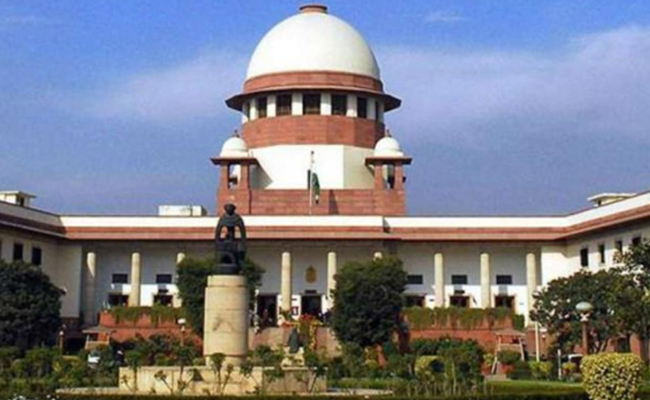
New Delhi (PTI): The government has promulgated an ordinance to increase the strength of the Supreme Court from the present 34 judges to 38, including the Chief Justice of India.
The law ministry notified the ordinance on Saturday, which amended the Supreme Court (Number of Judges) Act, 1956, to increase the sanctioned strength of the top court.
So far, the sanctioned strength of the top court was 34, including the Chief Justice of India (CJI). Now, the number of judges has been increased by four, taking the sanctioned strength to 38.
The top court will now have 37 judges, other than the CJI.
With the apex court having two vacancies at present, and the ordinance coming into force immediately, the Supreme Court Collegium will now have to recommend six names for appointment as judges in the top court.
A bill will be brought in the Monsoon Session of Parliament to convert the ordinance – an executive order – into a law passed by Parliament.
The Union Cabinet had cleared a draft bill on May 5 to increase the number of apex court judges.
The strength of the Supreme Court was last increased from 30 to 33 (excluding the CJI) in 2019.
The Supreme Court (Number of Judges) Act, as originally enacted in 1956, put the maximum number of judges (excluding the CJI) at 10.
This number was increased to 13 by the Supreme Court (Number of Judges), Amendment Act, 1960, and to 17 by another amendment to the law.
The Supreme Court (Number of Judges) Amendment Act, 1986, augmented the strength of judges from 17 to 25, excluding the CJI.
A fresh amendment in 2009 further increased the strength from 25 to 30.
Article 124(3) of the Constitution lists the qualifications required to become a Supreme Court judge.
An Indian citizen who has either served as a high court judge for at least five years, or as an advocate for 10 years, or is a distinguished jurist, can be appointed to the top court.
The strength of the Supreme Court is increased based on the recommendations of the CJI, who writes to the Union law minister. After consulting the finance ministry, the Department of Justice under the law ministry moves the Cabinet with a draft bill.