Drought relief: Karnataka govt to pay Rs 3,000 each to 16 lakh small and marginal farming families
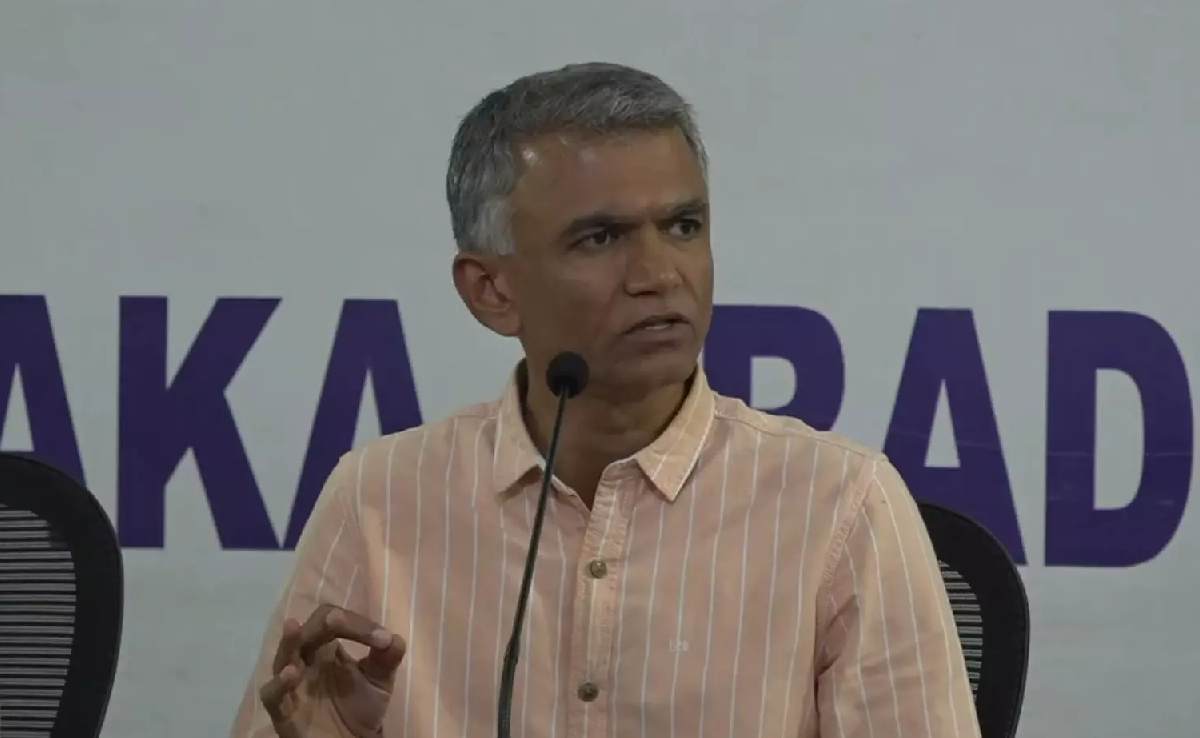
Bengaluru, May 9: The Karnataka government, for the first time, has decided to pay Rs 3,000 each to 16 lakh agricultural families involved in small and marginal farming to compensate for the loss of their livelihood due to drought, Revenue Minister Krishna Byre Gowda said on Thursday.
With the rains picking up in the state, he also said that the government has designed measures to prevent loss of life due to lightning strikes.
"There are about 16 lakh families of small and marginal farmers involved in dry farming. It has been decided to give Rs 3,000 each to these families to compensate for the loss of their livelihood due to drought, and officials have been directed to take action in this regard immediately," Gowda said.
While speaking to reporters here, he said, "This will be paid to farmers from both SDRF and NDRF funds, and also funds from the state government. It will be about Rs 460 crore. Officers have been directed to work this out. This is being done for the first time. But, there is a provision for it in the drought manual."
Karnataka had declared 223 out of 240 taluks as drought-hit; 196 of them were categorised as severely drought affected.
Noting that all together about Rs 4,300 crore would be credited to the accounts of the farmers in the state as drought relief, the minister said it may take 20 days to complete this process, and already about Rs 3,000 crore has been deposited to the bank accounts of over 32 lakh farmers.
He said, "After going to the Supreme Court and the legal fight, so far about Rs 3,454 crore has come (from the Centre) as drought relief, which the government has started depositing into the bank accounts of farmers from last Monday itself. And so far, the relief has been completely been deposited to the accounts of 32.12 lakh farmers."
Together, from the first and second installments, so far Rs 3,000 crore has been deposited to the bank accounts of the farmers through Direct Benefit Transfer (DBT), he added.
Noting that the second installment of relief is yet to be deposited to the accounts of about 1.5 lakh farmers, he said it is in the verification stage due to minor technical issues. "Once it is cleared, relief would have gone to over 33 lakh farmers' accounts," he added.
Apart from this, it has been decided that compensation would be distributed for rain-fed and irrigated crops which were not included in the drought relief list in some taluks, despite them being eligible, he said. About 3 lakh eligible farmers would get the relief of Rs 400-500 crore in total.
"The process has started and this will be done within 10 days after verification by Deputy Commissioners of the districts," he added.
Responding to a question on whether the drinking water scarcity has reduced due to rains, the minister said, "It has not reduced, but chances of it aggravating are fewer. Drinking water is being supplied through tankers to 270 villages and through private borewells to 594 villages."
"In urban areas, supply is done through tankers to 150 wards and through private borewells in 29 wards," he said, adding that things seem to be under control.
Stating that there are reports predicting good rains in the state this year, Gowda said most parts of the state are likely to get above-normal rains this time.
From April till now, 17 persons have died due to lightning strikes. Last year, this number was 68, he said, adding that certain preventive measures have been designed in this regard, but the government has not been able to implement it due to the Lok Sabha polls and Model Code of Conduct (MCC).
Let the Truth be known. If you read VB and like VB, please be a VB Supporter and Help us deliver the Truth to one and all.
Congress using hijab issue to pacify minority anger, alleges Karnataka LoP R Ashoka
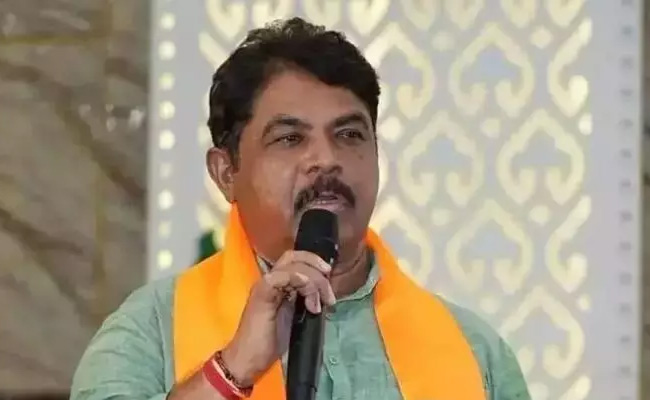
Bengaluru: Leader of Opposition in the Assembly R. Ashoka has accused the Congress government of using the hijab issue to placate what he described as discontent among minority voters after the Davanagere by-election.
In a post on X on Wednesday, Ashoka alleged that the state government, instead of addressing issues such as price rise, corruption, farmers’ distress and law and order, was attempting to retain its minority vote base by reviving the hijab issue.
Referring to the 2022 dress code introduced by the BJP government, which prohibited hijab in schools and colleges, Ashoka said the Karnataka High Court had upheld the policy and emphasised the importance of discipline in educational institutions.
He questioned the Congress government’s move to revisit the issue and asked whether setting aside the court-backed policy to benefit one community could be described as secularism.
Ashoka further alleged that while the government was willing to permit hijab, it continued to prohibit saffron shawls.
He accused the government of dividing students on religious lines rather than treating schools and colleges as spaces of equality.
Drawing a comparison with Mamata Banerjee’s government in West Bengal, Ashoka claimed that excessive appeasement politics had harmed the state and warned that the Congress in Karnataka could face a similar political response.
He said voters in Karnataka would teach the Congress a lesson for what he termed “vote-bank politics” and for compromising constitutional and judicial principles.