ED arrest Kannada movie producer in Rs 250 crore co-operative society scam in Karnataka

New Delhi, Jan 6: The Enforcement Directorate (ED) on Thursday said it has arrested the chairman of a Belagavi-based cooperative credit society in connection with a money laundering case linked to alleged duping of depositors of Rs 250 crore.
Anand Balakrishna Appugol, the chairman of Krantiveer Sangolli Rayanna Urban Cooperative Credit Society in Karnataka, was arrested on Wednesday, the agency said in a statement.
He was produced before a special Prevention of Money Laundering Act (PMLA) court in Bengaluru on Thursday which sent him to seven days of ED custody, it said.
He has also produced the Kannada film ‘Krantiveera Sangolli Rayanna’ starring Darshan Thoogudeepa.
Prima facie, the ED said, a probe found that the society had collected around Rs 250 crore deposits till March, 2017 from more than 26,000 people by promising them that their money will be returned along with high rate of interest.
"However, the society failed to return the money to the public depositors in time and committed breach of trust and cheated the public at large," it alleged.
Funds of the society were "siphoned off" in the form of immovable and movable properties resulting in depositors suffering huge losses, it said.
The agency's case was filed after studying a Belagavi police FIR against Appugol and 15 others.
Let the Truth be known. If you read VB and like VB, please be a VB Supporter and Help us deliver the Truth to one and all.
Ordinance issued to increase number of Supreme Court judges from 34 to 38
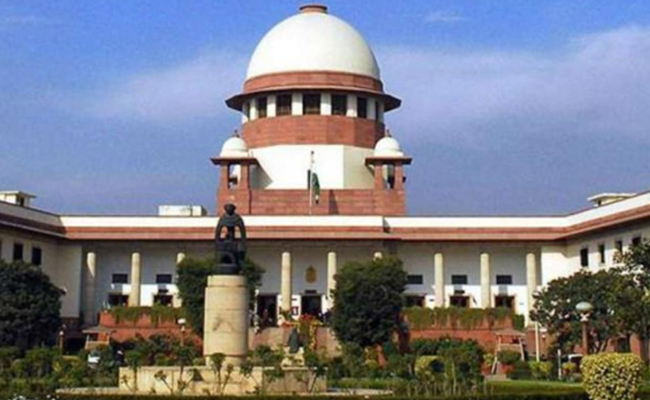
New Delhi (PTI): The government has promulgated an ordinance to increase the strength of the Supreme Court from the present 34 judges to 38, including the Chief Justice of India.
The law ministry notified the ordinance on Saturday, which amended the Supreme Court (Number of Judges) Act, 1956, to increase the sanctioned strength of the top court.
So far, the sanctioned strength of the top court was 34, including the Chief Justice of India (CJI). Now, the number of judges has been increased by four, taking the sanctioned strength to 38.
The top court will now have 37 judges, other than the CJI.
With the apex court having two vacancies at present, and the ordinance coming into force immediately, the Supreme Court Collegium will now have to recommend six names for appointment as judges in the top court.
A bill will be brought in the Monsoon Session of Parliament to convert the ordinance – an executive order – into a law passed by Parliament.
The Union Cabinet had cleared a draft bill on May 5 to increase the number of apex court judges.
The strength of the Supreme Court was last increased from 30 to 33 (excluding the CJI) in 2019.
The Supreme Court (Number of Judges) Act, as originally enacted in 1956, put the maximum number of judges (excluding the CJI) at 10.
This number was increased to 13 by the Supreme Court (Number of Judges), Amendment Act, 1960, and to 17 by another amendment to the law.
The Supreme Court (Number of Judges) Amendment Act, 1986, augmented the strength of judges from 17 to 25, excluding the CJI.
A fresh amendment in 2009 further increased the strength from 25 to 30.
Article 124(3) of the Constitution lists the qualifications required to become a Supreme Court judge.
An Indian citizen who has either served as a high court judge for at least five years, or as an advocate for 10 years, or is a distinguished jurist, can be appointed to the top court.
The strength of the Supreme Court is increased based on the recommendations of the CJI, who writes to the Union law minister. After consulting the finance ministry, the Department of Justice under the law ministry moves the Cabinet with a draft bill.