ED attaches over Rs 8 crore assets of Bengaluru firm in ponzi case

New Delhi, Dec 22: The Enforcement Directorate (ED) has attached properties worth over Rs 8 crore of a Bengaluru-based company in connection with a money laundering probe against it linked to an alleged multi-crore ponzi or chit fund case, the agency said on Tuesday.
An agricultural land, a residential plot, 13 bank accounts and a demat account "held in the name of Ajmera Groups, its partners and others" have been provisionally attached by the probe agency under sections of the Prevention of Money Laundering Act (PMLA).
The ED case stems from an FIR and chargesheet filed against the company and its promoters Tabrez Pasha, Abdul Dastagir, Tabrez Ulla Shariff, Syed Mudasir, Syed Muthahir and Fairoz Khan for "illegally" collecting funds from 1,148 depositors and "failing" to return Rs 29.17 crore.
The police case was filed under various sections of the Karnataka Protection of Interest of Depositors in Financial Establishments Act, 2004 (KPIDFE) and the Price, Chits and Money Circulating Banning Act of 1978.
"Ajmera Groups illegally collected deposits worth Rs 256.06 crore from various persons by luring the gullible investors with a promise of higher rate of interest (upto 20 per cent per month)," the ED said in a statement.
"Such higher rate of interest was not possible in any prudent way and the accused company failed to return Rs 29.17 crore to the depositors," the agency said.
It said that the "illegally collected" amount was deposited in various bank accounts.
"Investigations revealed that these funds were embezzled and transferred to various unrelated accounts of Ajmera Groups or the depositors and further invested in immovable and movable properties," the ED alleged.
The accused can appeal against the ED issued provisional order before the Adjudicating Authority of the PMLA within six months.
ED attaches under PMLA, an agricultural land, a residential plot and balances in bank accounts belonging to M/s Ajmera Groups totaling to ₹ 8.41 Crores in a Ponzi Scheme Case.
— ED (@dir_ed) December 22, 2020
Let the Truth be known. If you read VB and like VB, please be a VB Supporter and Help us deliver the Truth to one and all.
Ordinance issued to increase number of Supreme Court judges from 34 to 38
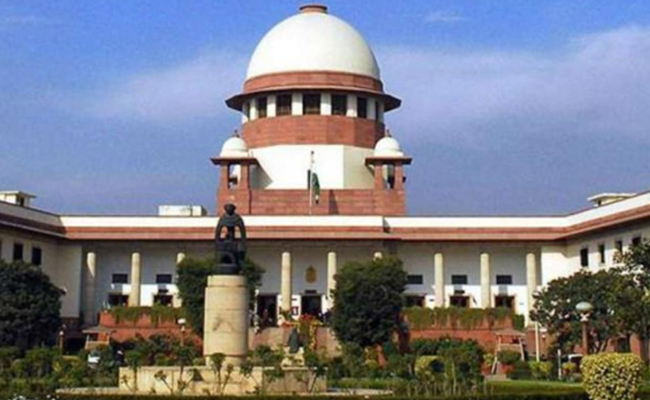
New Delhi (PTI): The government has promulgated an ordinance to increase the strength of the Supreme Court from the present 34 judges to 38, including the Chief Justice of India.
The law ministry notified the ordinance on Saturday, which amended the Supreme Court (Number of Judges) Act, 1956, to increase the sanctioned strength of the top court.
So far, the sanctioned strength of the top court was 34, including the Chief Justice of India (CJI). Now, the number of judges has been increased by four, taking the sanctioned strength to 38.
The top court will now have 37 judges, other than the CJI.
With the apex court having two vacancies at present, and the ordinance coming into force immediately, the Supreme Court Collegium will now have to recommend six names for appointment as judges in the top court.
A bill will be brought in the Monsoon Session of Parliament to convert the ordinance – an executive order – into a law passed by Parliament.
The Union Cabinet had cleared a draft bill on May 5 to increase the number of apex court judges.
The strength of the Supreme Court was last increased from 30 to 33 (excluding the CJI) in 2019.
The Supreme Court (Number of Judges) Act, as originally enacted in 1956, put the maximum number of judges (excluding the CJI) at 10.
This number was increased to 13 by the Supreme Court (Number of Judges), Amendment Act, 1960, and to 17 by another amendment to the law.
The Supreme Court (Number of Judges) Amendment Act, 1986, augmented the strength of judges from 17 to 25, excluding the CJI.
A fresh amendment in 2009 further increased the strength from 25 to 30.
Article 124(3) of the Constitution lists the qualifications required to become a Supreme Court judge.
An Indian citizen who has either served as a high court judge for at least five years, or as an advocate for 10 years, or is a distinguished jurist, can be appointed to the top court.
The strength of the Supreme Court is increased based on the recommendations of the CJI, who writes to the Union law minister. After consulting the finance ministry, the Department of Justice under the law ministry moves the Cabinet with a draft bill.