ED's search and seizure at Ex-MUDA chief's residence unlawful: Karnataka HC
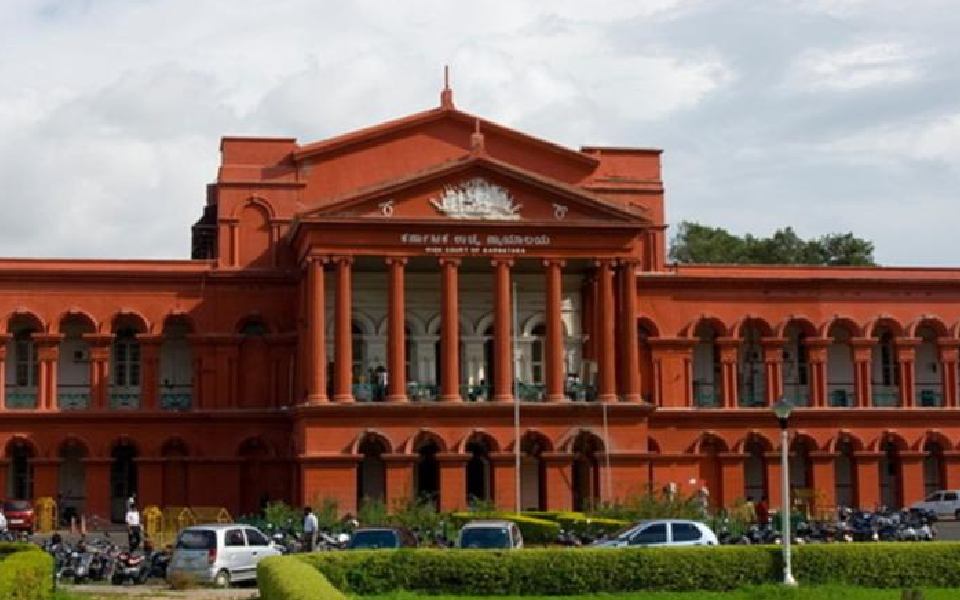
Bengaluru, Jan 29 (PTI): The Karnataka High Court ruled on Wednesday that the Enforcement Directorate's search and seizure at the residence of former Commissioner of MUDA was unlawful and an abuse of legal procedures.
The court also granted the official the right to initiate legal action against those involved in the search.
The case is linked to allegations of illegal site allotment to Parvathy B M, the wife of Karnataka Chief Minister Siddaramaiah.
Justice Hemant Chandangoudar, delivering the verdict, stated that the ED must uphold fairness in its investigations, as it is a key agency responsible for tackling money laundering.
He emphasised that searches conducted arbitrarily infringe upon the fundamental right to liberty and privacy under Article 21 of the Constitution. The court found that the ED had no prima facie evidence to invoke Section 3 of the Prevention of Money Laundering Act (PMLA), making the search baseless and a violation of legal procedures.
"The ED cannot disregard procedural fairness outlined in the PMLA. Civil liberties cannot be compromised without adhering to due process," the judgment noted.
Granting relief to Natesh D B, former commissioner of Mysuru Urban Development Authority (MUDA), the court nullified the search operation carried out on October 28-29, 2024. It also invalidated his statements recorded under Section 17(1)(f) of the PMLA and quashed the summons issued on October 29 and November 6, 2024, under Section 50 of the Act.
The court observed that while the allegations revolve around the illegal allotment of sites during Natesh's tenure as MUDA Commissioner, no evidence suggested that he received any financial benefit from the transactions. As a result, he could not be held liable for possessing, concealing, or using proceeds of crime under Section 3 of the PMLA.
The court further clarified that merely holding a site allegedly allocated unlawfully does not automatically constitute an offence under the Act unless all elements required under Section 3 are met.
Additionally, the high court granted Natesh the right to initiate legal action under Section 62 of the PMLA against the officials involved in the search, stating that whether the operation was vexatious would need to be determined through trial.
The ED had registered an Enforcement Case Information Report (ECIR) on October 1, 2024, based on an FIR filed by the Lokayukta regarding alleged irregularities in MUDA site allotments.
Following authorisation from the ED's Joint Director, an Assistant Director conducted the search at Natesh's residence under Section 17 of the PMLA. During the operation, his mobile phone was seized, and its data was transferred to a hard disk. He was also questioned under oath as part of the probe.
Let the Truth be known. If you read VB and like VB, please be a VB Supporter and Help us deliver the Truth to one and all.
RCB beat MI by 18 runs after batters fire
Mumbai (PTI): Royal Challengers Bengaluru skipper Rajat Patidar, Phil Salt and Virat Kohli blasted half-centuries as the defending champions beat Mumbai Indians by 18 runs in an Indian Premier League match here on Sunday.
Salt (78 off 36 balls) and Kohli (50 off 38 balls) stitched together a 120-run stand for the opening wicket before Patidar scored a rapid 53 off just 20 balls as RCB posted 240 for 4.
In response, Mumbai Indians were restricted to 222 for 5, with RCB spinner Suyash Sharma (2/47) putting the skids on the home side with a double strike in the eighth over, from which they could not recover.
Sherfane Rutherford top-scored for MI with an unbeaten 71 off 31 balls.
While opener Rohit Sharma appeared to be struggling with a hamstring issue and had to retire hurt on 19, his partner Ryan Rickelton made 37, while Suryakumar Yadav (33) and Hardik Pandya (40) were the other contributors for MI.
Brief scores:
Royal Challengers Bengaluru 240 for 4 in 20 overs (Phil Salt 78, Virat Kohli 50, Rajat Patidar 53, Tim David 35 not out).
Mumbai Indians: 222 for 5 in 20 overs (Sherfane Rutherford 71 not out, Ryan Rickelton 37, Hardik Pandya 40; Suyash Sharma 2/47).