Efforts being made to put me, CM in jail, claims Karnataka Deputy Chief Minister DK Shivakumar
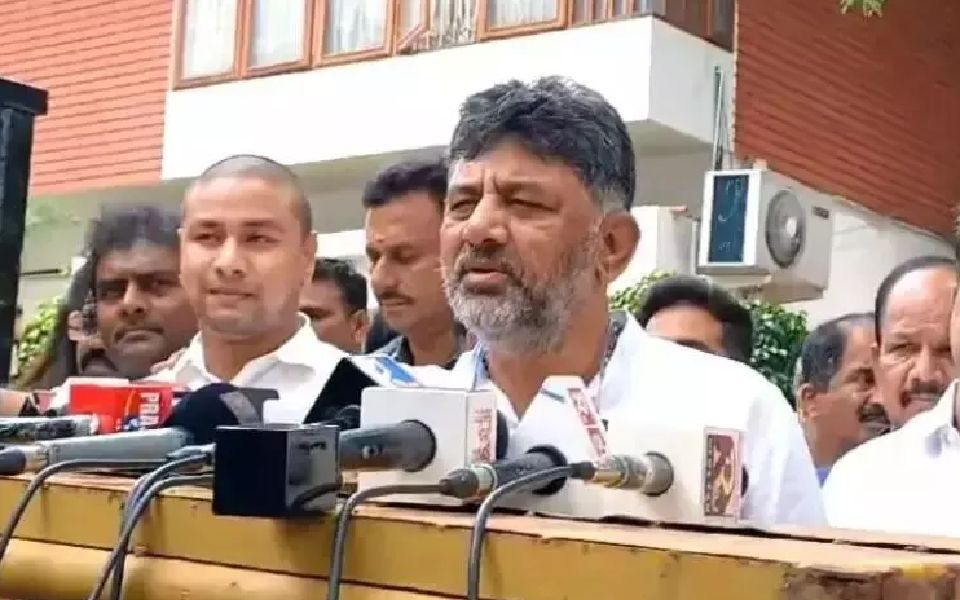
Bengaluru: Karnataka Deputy Chief Minister DK Shivakumar on Thursday made a bold claim that efforts are being made to imprison both him and Chief Minister Siddaramaiah.
Speaking to the media outside his residence in Sadashivanagar, Shivakumar stated, "Efforts are going on to bring in Chief Minister Siddaramaiah and me. We are ready for everything."
In his remarks, Shivakumar referenced former Prime Minister Deve Gowda's meeting with Union Home Minister Amit Shah, implying that there were attempts to protect family interests while simultaneously targeting him and Siddaramaiah. He suggested that complaints had been made against them with the intent of getting them jailed.
ALSO READ: Bengaluru court issues summons to CM Siddaramaiah, DCM DK Shivakumar in connection with 2022 protest
Shivakumar also touched upon reports that Governor Thawar Chand Gehlot might be hesitant to investigate illegal mining activities in Sandanur dating back to 2007 when HD Kumaraswamy was the Chief Minister. He noted that the chargesheet in the case has reached the Supreme Court, which has asked for further investigation. The Lokayukta has also been involved, and the matter is awaiting a decision from the Governor.
The Deputy Chief Minister further challenged the opposition, particularly Kumaraswamy, to release property documents related to his brother, indicating that there should be transparency in the ongoing allegations. Shivakumar emphasized the importance of discussing these issues in the legislative assembly so that the next generation can be aware of the recorded facts.
Let the Truth be known. If you read VB and like VB, please be a VB Supporter and Help us deliver the Truth to one and all.
MP boat tragedy: Death toll rises to 10 with recovery of one more body; 3 tourists still missing
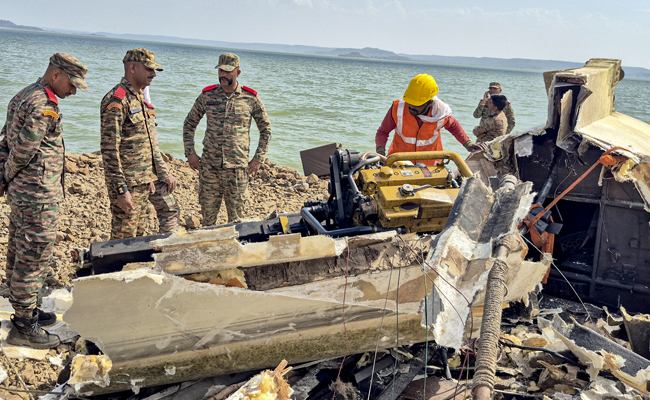
Jabalpur (PTI): The body of a child was retrieved on Saturday evening from Bargi Dam in Jabalpur district of Madhya Pradesh, raising the death toll in the cruise boat tragedy that took place two days ago to ten, while search continued for three missing tourists.
The boat, operated by the state tourism department, capsized during a storm on Thursday evening with some of the survivors alleging negligence and safety lapses such as life jackets not being distributed in time.
The body recovered on Saturday evening was possibly that of six-year-old Viraj Soni, said Sub-Divisional Officer of Police (SDOP) Anjul Ayank Mishra.
"The identity will be confirmed after family members identify the body," he told PTI.
Kamraj, an employee of the Ordnance Factory at Khamaria, his five-year-old son Tamil, and another child Mayuram (5) who had come from southern India were still missing.
Authorities have arranged equipment to search deep waters of the dam and are getting a generator to facilitate diving operations, Mishra added.
Divers and disaster response teams have expanded the search radius to five km, he said.
Of the 41 identified passengers on board the ill-fated vessel, 28 were rescued, police said.
More than 200 rescuers, including around 20 Army divers airlifted from Agra, joined the search operation that resumed at 5 on Saturday morning. The operation, involving the National Disaster Response Force, State Disaster Response Force and local divers, was briefly affected at around 9 am due to strong winds, officials said.
Post-mortem examinations of nine deceased persons have been completed, Mishra said.
"Our priority is to search for the missing persons. We will also register a First Information Report in the case soon," he said.
Police said CCTV footage near the boarding point showed 43 people heading towards the boat while the identities of 41 passengers have been confirmed so far.
The state government on Friday ordered a probe into the tragedy and dismissed three crew members. It also banned operation of similar vessels in the state.