Everyone should read Prophet Muhammad: Dr L Hanumanthaiah
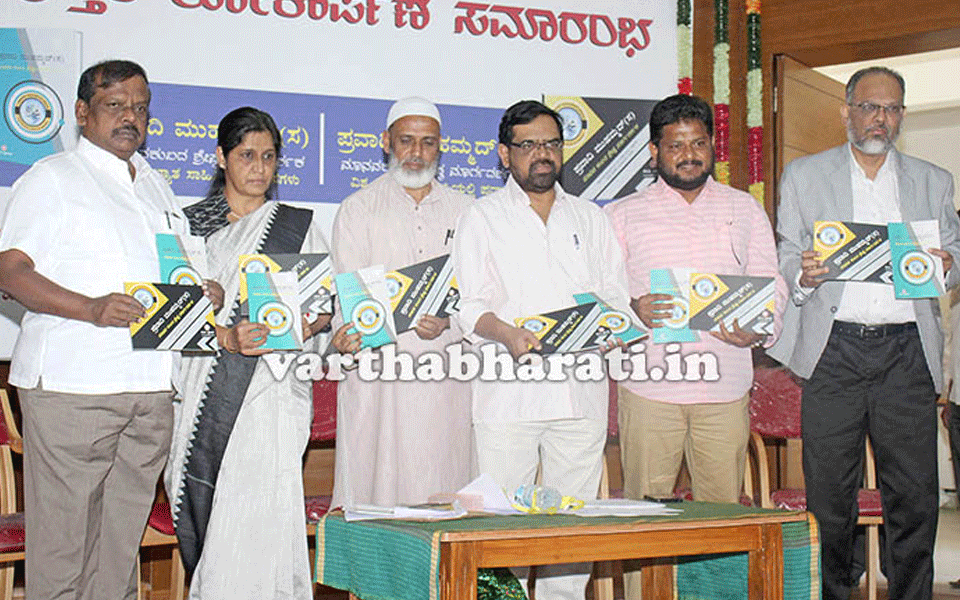
Bengaluru, November 18: Rajya Sabha Member and writer Dr L Hanumanthaiah said that people from all languages and religions should read Prophet Muhammad who advocated the message of peace as people who have not read the Prophet might misunderstand the religion.
Speaking at a programme organized to release books - Prophet Muhammad (collection of articles of writers), Prophet Muhammad (Prophet in the eyes of world scholars), organized by the Shanti Publications at Kannada Sahitya Parishat here on Sunday, he said that the Prophet Muhammad had advocated a message to the world for the peace and survival of mankind. So, not only Muslim community, but the people from all languages and religions should read the Prophet. The Prophet had said that Jihad means fighting against desire and luxury. But nowadays, jihad means creating fear among people. In the name of jihad, terrorism was dominating the world making the life of people hell, he said.
Some people have been appeasing the minorities keeping the Supreme Court verdict on Talaq and they have been doing politics in allowing the women into the Sabarimala temple which is ridiculous. The efforts of using the religion as a political pawn were there in all times. So, there was a need to disclose the truth of a religion. In view of this, Prophet Muhammad should be taken to the people, he said.
Writer Shakira Khanum said that in the book Prophet Muhammad (Prophet in the eyes of world scholars), opinions of total 25 philosophers of the world including five from India including Gandhi, Vivekananda and Sarojini Naidu were collected. The Prophet had said that ‘God means seeing ourselves’, she said.
Senior journalist NS Shankar, Muhammad Kunhi, Shanti Publication president Mohammad Attarulla Sharif and others were present.
“Woman is also has life. She also has dreams of leading her life independently. Understanding this, Prophet Muhammad had given rights to them. The Prophet had given message to the world that good will win over the evil and truth will win over the lies at any time. Apart from this, he had introduced the moral strength to the society. He was in favour of showing concerns and mercy to the enemies. So these two books will help to reach the message of such a personality to the people”.
- Shakira Khanum, Writer

Let the Truth be known. If you read VB and like VB, please be a VB Supporter and Help us deliver the Truth to one and all.
Maharashtra sets up state vaccination task force to strengthen immunisation programme

Mumbai (PTI): The Maharashtra government has set up a State Vaccination Task Force to strengthen the regular immunisation programme and review the progress of related campaigns, a health department official said on Monday.
The State Vaccination Task Force will comprise at least 29 members and will be headed by the administrative head of the health department, he informed.
The government has also constituted separate district-level and municipal vaccination task forces to improve implementation and address challenges at the grassroots level, he said.
Municipal task forces, chaired by respective civic commissioners, have been constituted in view of the vast urban population in Maharashtra and the role of civic bodies in implementing different health programmes.
The district-level task forces will function under the chairmanship of collectors.
"Complete immunisation of children at the appropriate age is an extremely simple, cost-effective and highly effective measure to reduce child mortality and the prevalence of diseases among kids. Immunisation is a powerful tool for reducing illness in children," maintained the official.
To ensure full vaccination of all children, the state government implements various campaigns from time to time as per the central government guidelines, he pointed out.
"Active participation and cooperation of other relevant government departments are essential (in making these campaigns successful)," according to the official.
The state-level body will review the regular immunisation programme, associated campaigns and vaccine-preventable diseases in detail. It will also conduct focused assessments of high-risk districts and municipal corporations, including vacancies at district, municipal and sub-district levels, availability of cold chain equipment, resource gaps and training requirements, he noted.
The state task force will review allocation and utilisation of funds for immunisation and ensure timely action by officers concerned based on reports from district and municipal task forces and state-level monitoring mechanisms, the official said.
It will also ensure active coordination and participation of other government departments in immunisation drives, while district and municipal task forces will carry out similar functions at their respective levels, the official added.