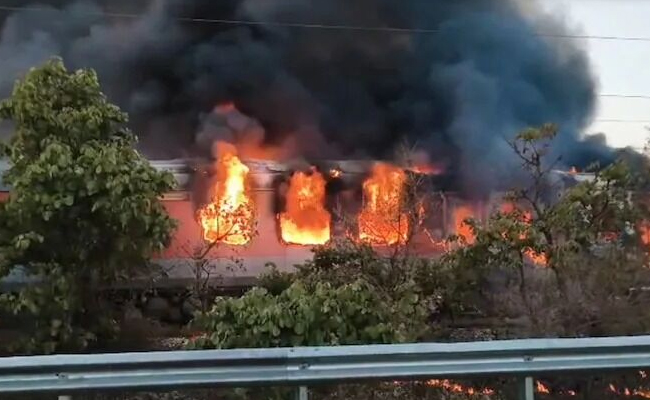
Ex-CMs Siddaramaiah & HDK say labour unrest not conducive for industrial growth in Karnataka
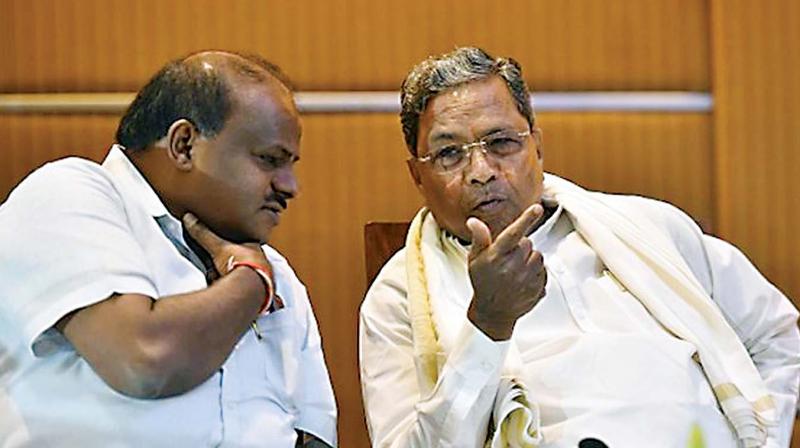
Bengaluru, Dec 20: Former Karnataka Chief Ministers Siddaramaiah and H D Kumaraswamy on Sunday voiced concern over recent incidents of labour unrest at some private units in the state, saying such incidents were not conducive for industrial growth and all issues must be resolved amicably.
The leaders in separate tweets, referred to the violence at Wistron's iPhone manufacturing facility at Narsapura in Kolar district and the ongoing strike at Toyota Kirloskar Motor (TKM) in the state.
"The crisis between management and employees of private companies must be resolved amicably with the intervention of the government and I appeal to the Chief Minister to abolish all anti-people laws already in force," Siddaramaiah tweeted.
The Congress leader claimed that Industries Management Association had stated that employees did not receive 80 per cent of their pay during the Coronavirus lockdown.
Quoting the association, he said about 70 per cent of temporary hands and trained workers were fired during this period, resulting in lakhs being rendered jobless.
Kumaraswamy, in his tweet, expressed concern over the ongoing strike at Toyota Kirloskar's plant at Bidadi, saying "no solution appears to be in sight."
Alleging that the 'apathy' of middle level managers and the government had resulted in the strike, the JD(S) leader said there was a dire need to end the impasse in the interest of industrial development.
"The company has pushed its 3,000 workers into the streets either by supporting the stand of the middle level managers or acting on flimsy charges against the staff.
"It is not proper on the part of the companies that thrive by utilizing our land, water, air and infrastructure to behave in such a cruel manner with our own people.
Those heading the company should set aside their prestige and act in a humane way," Kumaraswamy stated.
He said that in several meetings he had held to try and resolve the crisis, it clearly appeared the middle level managers were trying to create confusion and problems.
The JD(S) leader noted that Apple had acknowledged that managerial lapses were responsible for the violence at Wistrons Kolar plant that manufactures its I-phones.
A section of workers at the Wistron plant, run by the Taiwanese contract manufacturer for Apple at Narsapura in Kolar district, had gone on a rampage on Saturday over alleged delay in payment of salary and overtime wages.
"Wistron also stated that it would treat its workers with dignity.
Sending a strong signal, Wistron has removed its vice- president.
The Toyota company too should introspect in the wake of the stand taken by Apple," the JD(S) leader said.
TKM had suspended operations at its plants on November 24 over the continued strike by workers protesting against the suspension of a worker.
Kumaraswamy said the government should intervene and take an initiative to resolve the imbroglio on a priority basis as resolving the labour crisis would benefit the state.
"Incidents like workers strike, protests and rampages will lead to investors losing their confidence. It will create an opinion that the situation in the state is not conducive to run an industry," he tweeted.
Chief Minister B S Yediyurappa had on Thursday assured support to restart production at the iPhone manufacturing plant at Narsapura in Kolar district and said Prime Minister Narendra Modi is 'very much worried' about the incident
He also said the state government has given necessary instructions and such things would not be repeated.
Let the Truth be known. If you read VB and like VB, please be a VB Supporter and Help us deliver the Truth to one and all.
Ordinance issued to increase number of Supreme Court judges from 34 to 38
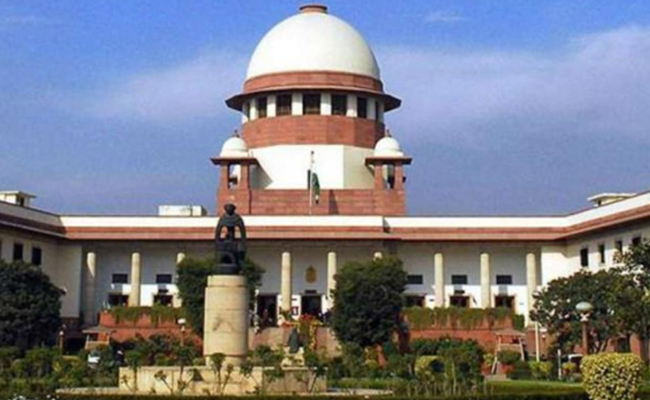
New Delhi (PTI): The government has promulgated an ordinance to increase the strength of the Supreme Court from the present 34 judges to 38, including the Chief Justice of India.
The law ministry notified the ordinance on Saturday, which amended the Supreme Court (Number of Judges) Act, 1956, to increase the sanctioned strength of the top court.
So far, the sanctioned strength of the top court was 34, including the Chief Justice of India (CJI). Now, the number of judges has been increased by four, taking the sanctioned strength to 38.
The top court will now have 37 judges, other than the CJI.
With the apex court having two vacancies at present, and the ordinance coming into force immediately, the Supreme Court Collegium will now have to recommend six names for appointment as judges in the top court.
A bill will be brought in the Monsoon Session of Parliament to convert the ordinance – an executive order – into a law passed by Parliament.
The Union Cabinet had cleared a draft bill on May 5 to increase the number of apex court judges.
The strength of the Supreme Court was last increased from 30 to 33 (excluding the CJI) in 2019.
The Supreme Court (Number of Judges) Act, as originally enacted in 1956, put the maximum number of judges (excluding the CJI) at 10.
This number was increased to 13 by the Supreme Court (Number of Judges), Amendment Act, 1960, and to 17 by another amendment to the law.
The Supreme Court (Number of Judges) Amendment Act, 1986, augmented the strength of judges from 17 to 25, excluding the CJI.
A fresh amendment in 2009 further increased the strength from 25 to 30.
Article 124(3) of the Constitution lists the qualifications required to become a Supreme Court judge.
An Indian citizen who has either served as a high court judge for at least five years, or as an advocate for 10 years, or is a distinguished jurist, can be appointed to the top court.
The strength of the Supreme Court is increased based on the recommendations of the CJI, who writes to the Union law minister. After consulting the finance ministry, the Department of Justice under the law ministry moves the Cabinet with a draft bill.