Fake website ‘impersonates’ KEA, collects information on students, schedules counseling session

Bengaluru: The Karnataka Examinations Authority (KEA) has filed a police complaint following an incident of a fraud website claiming to be that of KEA illegally obtaining information about students from various fields in the state.
The suspected people behind the fraudulent website ‘www-kcet.org’ had also scheduled a counseling session for the students on May 25 at the premier government medical college in the city Bengaluru Medical College and Research Institute (BMCRI), according to a report in the Deccan Herald.
The KEA has filed a complaint with cybercrime police, providing the Internet Protocol (IP) addresses and the screenshots it received from students who had registered with the fake website.
The fraudulent activity reportedly came to light when KEA officials received calls from parents and students who wanted to know why KEA was asking for their mobile numbers and other details. Executive Director of KEA, H Prasanna, said that the details of the fraudulent website came to light when KEA probed the matter.
The ED said also said that a few KEA employees in the Computer section were directed to pose as students and register in the fake website. He added that the personnel then got messages confirming their registration for an event titled ‘Medical Expo 2025’ to be held at BMCRI between 8 am and 8 pm on May 25.
The organizers had posed as a company titled Medical Mentor and also misused the KEA logo. The KEA officer said that the fraudsters had been conducting similar events for several years to trap medical students by assuring the candidates seats and guidance. The KEA had also found that the candidates were charged Rs 30,000 each, he said and added that the events were being conducted at the BMRCI, with more than 1,000 students registering for the event. The ED said that top officials of the Medical Education Department had also been invited for such events.
The officer suspected the seat-blocking mafia to have played a major role in the fraudulent activities.
Prasanna, however, said that the KEA is yet to confirm the number of students who registered with the fake website. He added that students as well as parents would be warned not to share their details on any websites as KEA never did so.
Let the Truth be known. If you read VB and like VB, please be a VB Supporter and Help us deliver the Truth to one and all.
Ordinance issued to increase number of Supreme Court judges from 34 to 38
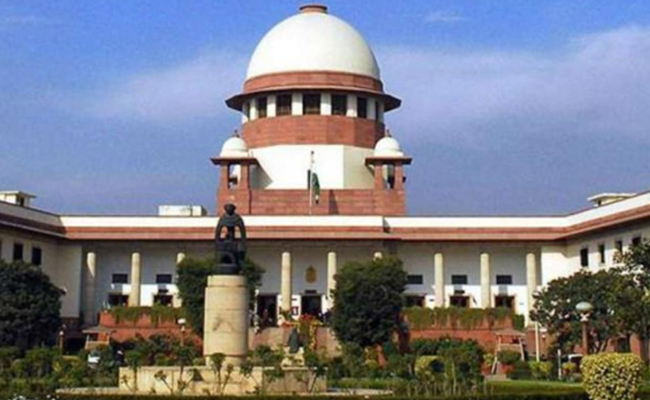
New Delhi (PTI): The government has promulgated an ordinance to increase the strength of the Supreme Court from the present 34 judges to 38, including the Chief Justice of India.
The law ministry notified the ordinance on Saturday, which amended the Supreme Court (Number of Judges) Act, 1956, to increase the sanctioned strength of the top court.
So far, the sanctioned strength of the top court was 34, including the Chief Justice of India (CJI). Now, the number of judges has been increased by four, taking the sanctioned strength to 38.
The top court will now have 37 judges, other than the CJI.
With the apex court having two vacancies at present, and the ordinance coming into force immediately, the Supreme Court Collegium will now have to recommend six names for appointment as judges in the top court.
A bill will be brought in the Monsoon Session of Parliament to convert the ordinance – an executive order – into a law passed by Parliament.
The Union Cabinet had cleared a draft bill on May 5 to increase the number of apex court judges.
The strength of the Supreme Court was last increased from 30 to 33 (excluding the CJI) in 2019.
The Supreme Court (Number of Judges) Act, as originally enacted in 1956, put the maximum number of judges (excluding the CJI) at 10.
This number was increased to 13 by the Supreme Court (Number of Judges), Amendment Act, 1960, and to 17 by another amendment to the law.
The Supreme Court (Number of Judges) Amendment Act, 1986, augmented the strength of judges from 17 to 25, excluding the CJI.
A fresh amendment in 2009 further increased the strength from 25 to 30.
Article 124(3) of the Constitution lists the qualifications required to become a Supreme Court judge.
An Indian citizen who has either served as a high court judge for at least five years, or as an advocate for 10 years, or is a distinguished jurist, can be appointed to the top court.
The strength of the Supreme Court is increased based on the recommendations of the CJI, who writes to the Union law minister. After consulting the finance ministry, the Department of Justice under the law ministry moves the Cabinet with a draft bill.