Farmers block roads during 'Bharat bandh', protest against agri bills
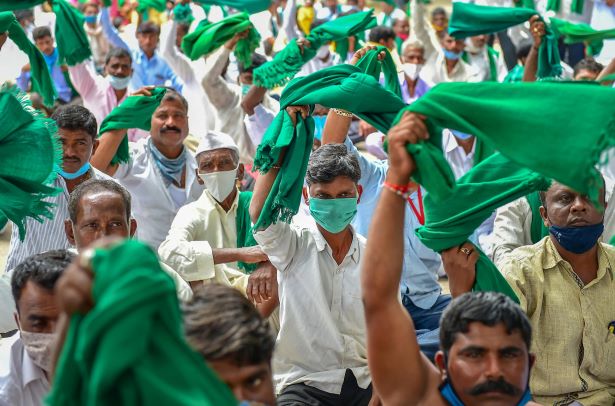
Farmers shouted slogans and blocked roads in several parts of the country Friday, protesting against the three agri-marketing bills passed recently by Parliament.
The most widespread protests were in Punjab and Haryana, but demonstrations were also reported from Uttar Pradesh, West Bengal, Kerala and Karnataka as part of the Bharat bandh call given by several farmer unions.
Over 30 organisations had given a separate Punjab bandh call, leading to farmers blocking roads and traders shutting shops and vegetable markets for the day. The bandh in the state appeared to be near total.
Hundreds of farmers -- on foot, two-wheelers and tractor-trolleys -- were stopped at Delhi's border with Uttar Pradesh as they tried to press ahead into the national capital, their agitation disrupting traffic in Noida and Ghaziabad.
Stopped from entering the city, the farmers staged 'panchayats' at the road blockades where they were addressed by Bhartiya Kisan Union office-bearers.
Addressing BJP leaders and workers on the birth anniversary of party's ideologue Deendayal Upadhyay, Prime Minister Narendra Modi again made a pitch for the new laws meant to deregulate the sale of farm produce.
But farmer unions and opposition parties say they will lead to the dismantling of the minimum support price (MSP) system.
In West Bengal, farmer bodies loyal to the Left parties staged protests.
CPI(M) farmers' wing 'Sara Bharat Krishak Sabha' and those of other left partners such as CPI, Forward Bloc and RSP took out rallies in Hooghly, Murshidabad, North 24 Parganas, Bankura and Nadia.
In Karnataka, there were demonstrations across the state and many farmers arrived in capital Bengaluru to take part in protests against amendments to the Agricultural Produce Marketing Committee Act and the Karnataka Land Reforms Act.
Farmers under the umbrella of All India Kisan Sabha (AIKS) staged protests in Kerala, including outside the Raj Bhavan in capital Thiruvananthapuram.
In Punjab's Barnala, a tractor was set on fire by protesters.
Punjab farmers blocked the Sangrur-Patiala, Chandigarh-Bathinda and Ambala-Rajpura-Ludhiana and Moga-Ferozepur roads, triggering traffic diversions and hardship to commuters.
Buses run by the state-owned Pepsu Road Transport also went off the roads in Punjab.
Shiromani Akali Dal chief Sukhbir Singh Badal drove a tractor while his wife and former Union minister Harsimrat Kaur Badal sat beside him in Muktsar district.
He led a tractor march from his Badal village to Lambi, where the party had organised a protest against the bills. At several other places, party workers blocked roads.
Prominent Punjabi singers like Harbhajan Mann and Ranjit Bawa took part in a farmers' protest in Nabha.
A three-day rail roko that began Thursday is also underway in Punjab, with farmers squatting on the tracks at many places in Punjab and the railways suspending many trains.
The Kisan Mazdoor Sangharsh Committee on Friday announced its extension by another three days. Buses run by state owned Pepsu Road Transport Corporation also remained off the roads on Friday.
In neighbouring Haryana, farmers blocked the Karnal-Meerut, Rohtak-Jhajjar and Delhi-Hisar and other roads.
Apart from Noida and Ghaziabad which border New Delhi, there were scattered farmer protests in western Uttar Pradesh and in districts like Deoria, Kushinagar and Maharajganj districts.
The Samajwadi Party said its workers held protests in all UP districts, submitting memorandums addressed to the Governor to the district magistrates.
The Farmer's Produce Trade and Commerce (Promotion and Facilitation) Bill, 2020, the Farmers (Empowerment and Protection) Agreement of Price Assurance and Farm Services Bill, 2020 and the Essential Commodities (Amendment) Bill, 2020, now await presidential assent.
Let the Truth be known. If you read VB and like VB, please be a VB Supporter and Help us deliver the Truth to one and all.
TN CM Vijay calls fuel price hike ‘unacceptable’, seeks rollback
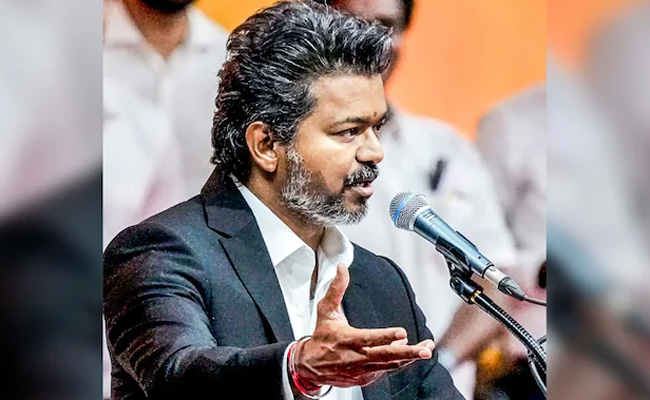
Chennai (PTI): Tamil Nadu Chief Minister C Joseph Vijay on Friday slammed the increase of Rs 3 per litre in petrol and diesel prices, calling it "unacceptable", and demanded its immediate rollback, claiming the revision would affect various sections of society.
He said oil marketing companies do not reduce prices in line with global crude price trends and "take the profits".
"Union government oil marketing companies have increased the price of petrol and diesel by Rs 3 per litre. This is not acceptable," Vijay said in a statement.
The hike has been effected after the "five-state polls" (four states and one union territory), he added.
This price rise will largely affect the income of the poor and middle class using two-wheelers and small vehicles, as well as others dependent on vehicles for their livelihood, the CM said.
It will ultimately result in an increase in the prices of daily commodities and also "affect the purchasing power of the poor," he added.
Citing the chain effect of the price revision, such as increased input costs for small units, he said it could lead to a "slowdown" in the market and exports.
"Therefore, I urge the union government to immediately roll back the price hike that will affect the poor and middle-class people and SMEs," Vijay added.
Global crude oil prices have surged more than 50 per cent since US-Israeli strikes on Iran on February 28 and Tehran’s subsequent retaliation, which disrupted energy flows through the Strait of Hormuz, a key artery for global oil shipments.
Petrol and diesel prices are now at their highest level since May 2022.