FIR filed against BJP IT cell chief, journalist Arnab Goswami
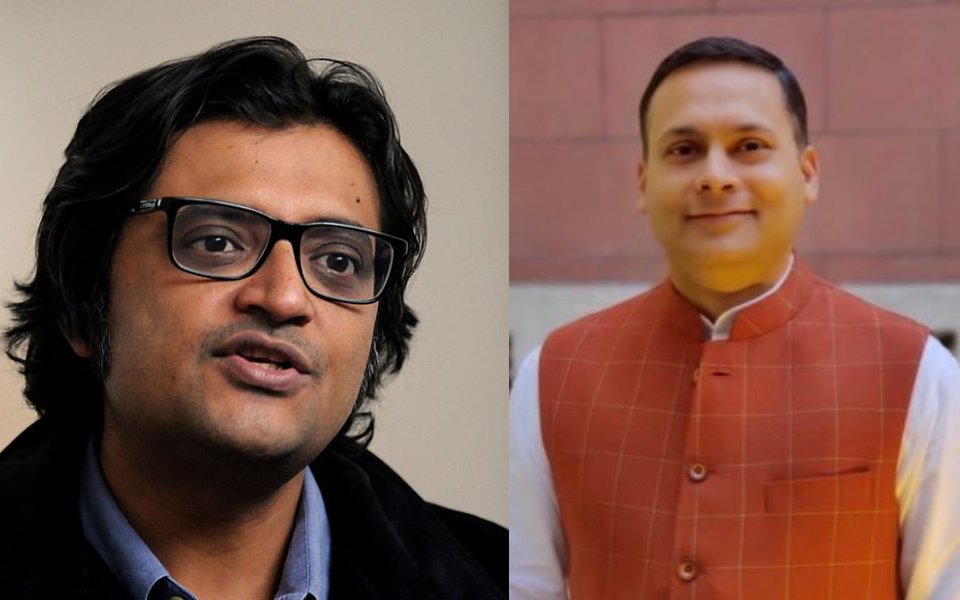
Bengaluru, May 20 (PTI): An FIR was registered on Tuesday against BJP IT cell head Amit Malviya and Editor-in-Chief of Republic TV, Arnab Goswami for allegedly running false information, police said.
The case was registered at High Grounds police station on the complaint of the Indian Youth Congress's legal cell head Shrikant Swaroop B N against the duo under section 192 (wantonly giving provocation with intent to cause riot) and 352 (Intentional insult with intent to provoke breach of peace) of the Bharatiya Nyaya Sanhita, they said.
Swaroop accused Malviya and Goswami of "masterminding a heinous and criminally motivated campaign to disseminate patently false information."
He alleged that the accused have "maliciously propagated the fabricated claim" that the Istanbul Congress Centre in Turkiye is the office of the Indian National Congress (INC).
"This act was executed with clear and undeniable criminal intent to deceive the Indian public, defame a major political institution, manipulate nationalist sentiments, incite public unrest, and undermine national security and democratic integrity," he stated.
Swaroop further stated that the actions of Malviya and Goswami are set against the volatile backdrop of strained relations between India and Turkey, driven by the latter's perceived support for Pakistan.
"The actions of Malviya and Goswami represent an unprecedented attack on India's democratic foundations, public safety, and national security. Their calculated misuse of influence to spread falsehoods with criminal intent demands the harshest response," the complainant alleged.
Swaroop also appealed to the Press Council of India, Ministry of Information and Broadcasting, CBI and other law enforcement agencies to treat this complaint as a emergency.
Let the Truth be known. If you read VB and like VB, please be a VB Supporter and Help us deliver the Truth to one and all.
Ordinance issued to increase number of Supreme Court judges from 34 to 38
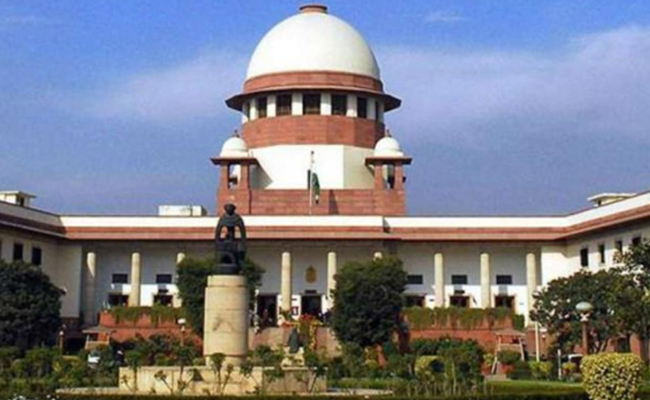
New Delhi (PTI): The government has promulgated an ordinance to increase the strength of the Supreme Court from the present 34 judges to 38, including the Chief Justice of India.
The law ministry notified the ordinance on Saturday, which amended the Supreme Court (Number of Judges) Act, 1956, to increase the sanctioned strength of the top court.
So far, the sanctioned strength of the top court was 34, including the Chief Justice of India (CJI). Now, the number of judges has been increased by four, taking the sanctioned strength to 38.
The top court will now have 37 judges, other than the CJI.
With the apex court having two vacancies at present, and the ordinance coming into force immediately, the Supreme Court Collegium will now have to recommend six names for appointment as judges in the top court.
A bill will be brought in the Monsoon Session of Parliament to convert the ordinance – an executive order – into a law passed by Parliament.
The Union Cabinet had cleared a draft bill on May 5 to increase the number of apex court judges.
The strength of the Supreme Court was last increased from 30 to 33 (excluding the CJI) in 2019.
The Supreme Court (Number of Judges) Act, as originally enacted in 1956, put the maximum number of judges (excluding the CJI) at 10.
This number was increased to 13 by the Supreme Court (Number of Judges), Amendment Act, 1960, and to 17 by another amendment to the law.
The Supreme Court (Number of Judges) Amendment Act, 1986, augmented the strength of judges from 17 to 25, excluding the CJI.
A fresh amendment in 2009 further increased the strength from 25 to 30.
Article 124(3) of the Constitution lists the qualifications required to become a Supreme Court judge.
An Indian citizen who has either served as a high court judge for at least five years, or as an advocate for 10 years, or is a distinguished jurist, can be appointed to the top court.
The strength of the Supreme Court is increased based on the recommendations of the CJI, who writes to the Union law minister. After consulting the finance ministry, the Department of Justice under the law ministry moves the Cabinet with a draft bill.