Former CM Siddaramaiah appeals to Karnataka govt to promote school students
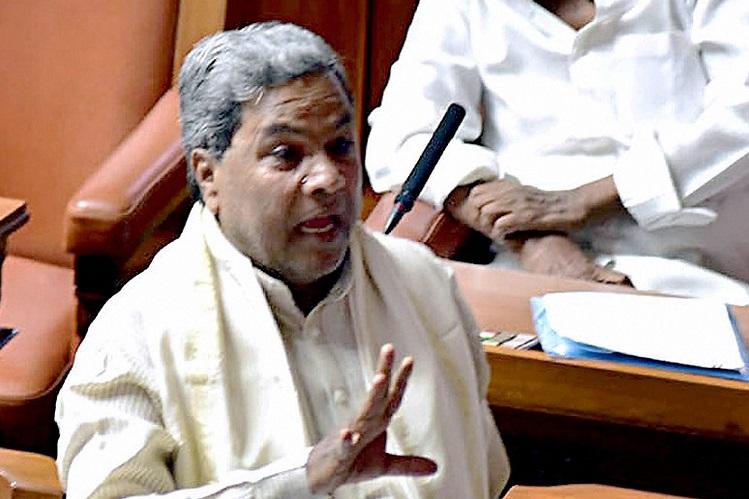
Bengaluru, Dec 22: Former Chief Minister Siddaramaiah on Monday appealed to the Karnataka government to promote school students in the wake of the COVID-19 pandemic.
The senior Congress leader claimed that online classes were not helping students as they were being conducted at the whims and fancies of teachers.
"That's why I advised the government to promote school students this year because of the prevailing COVID-19 situation," the leader of opposition in the legislative assembly told reporters.
Siddaramaiah said he had written three letters to the government highlighting the problems faced by the students but the latter did not pay heed to them.
Reiterating his allegation of the government being 'hand in glove' with the private institutions and wanting to "trouble" the students, he recalled protests staged by parents in the city against various education institutions.
Siddaramaiah in a series of tweets on Sunday charged that the government was aiding the private schools instead of helping the parents and their wards.
His statement had come on the day when the parents staged a demonstration in the city against the "exorbitant" fees charged by certain private schools.
Following his statement, Karnataka Primary and Secondary Education Minister S Suresh Kumar on Monday took to Twitter to hit out at him.
"Day before yesterday the leader of the opposition spoke an utter lie of 'Kodavas eat beef' and then regretted it. Today he spoke another big lie that I am (education minister) hand in glove with the private education institutions. May he get the inspiration to speak truth", the Minister said.
Kumar was referring to Siddaramaiah's recent statement -- in the context of the anti-cow slaughter bill passed in the Assembly -- that Kodavas eat beef to suggest that minorities are not the only ones who eat beef as the BJP projects.
As the statement triggered a backlash from Kodavas, the former Chief Minister regretted his remarks saying they were misinterpreted by the media.
"I never intended to say that Kodavas eat beef".
Let the Truth be known. If you read VB and like VB, please be a VB Supporter and Help us deliver the Truth to one and all.
Ordinance issued to increase number of Supreme Court judges from 34 to 38
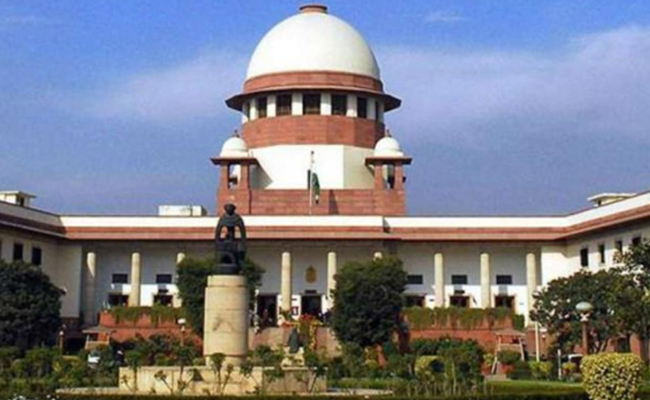
New Delhi (PTI): The government has promulgated an ordinance to increase the strength of the Supreme Court from the present 34 judges to 38, including the Chief Justice of India.
The law ministry notified the ordinance on Saturday, which amended the Supreme Court (Number of Judges) Act, 1956, to increase the sanctioned strength of the top court.
So far, the sanctioned strength of the top court was 34, including the Chief Justice of India (CJI). Now, the number of judges has been increased by four, taking the sanctioned strength to 38.
The top court will now have 37 judges, other than the CJI.
With the apex court having two vacancies at present, and the ordinance coming into force immediately, the Supreme Court Collegium will now have to recommend six names for appointment as judges in the top court.
A bill will be brought in the Monsoon Session of Parliament to convert the ordinance – an executive order – into a law passed by Parliament.
The Union Cabinet had cleared a draft bill on May 5 to increase the number of apex court judges.
The strength of the Supreme Court was last increased from 30 to 33 (excluding the CJI) in 2019.
The Supreme Court (Number of Judges) Act, as originally enacted in 1956, put the maximum number of judges (excluding the CJI) at 10.
This number was increased to 13 by the Supreme Court (Number of Judges), Amendment Act, 1960, and to 17 by another amendment to the law.
The Supreme Court (Number of Judges) Amendment Act, 1986, augmented the strength of judges from 17 to 25, excluding the CJI.
A fresh amendment in 2009 further increased the strength from 25 to 30.
Article 124(3) of the Constitution lists the qualifications required to become a Supreme Court judge.
An Indian citizen who has either served as a high court judge for at least five years, or as an advocate for 10 years, or is a distinguished jurist, can be appointed to the top court.
The strength of the Supreme Court is increased based on the recommendations of the CJI, who writes to the Union law minister. After consulting the finance ministry, the Department of Justice under the law ministry moves the Cabinet with a draft bill.