Founder of RNS Education and Business Groups R.N. Shetty dies at 92

Bengaluru: Eminent businessman and philanthropist R N Shetty died at his residence here due to a cardiac arrest in the early hours of Thursday, family members said.
He was 92 and is survived by his wife and three sons.
Born on August 15, 1928 at Murudeshwar in the coastal district of Uttara Kannada, Rama Nagappa Shetty founded the RN Shetty and Company in 1961 and ventured into the construction industry with focus on infrastructure building.
He built tunnels for the railways, dams, canals, bridges, and buildings in various parts of Karnataka and neighbouring states.
Later, he entered the hospitality and education sector and left a mark there as well.
The Federation of Karnataka Chambers of Commerce and Industries had bestowed on him the Visvesvaraya Memorial Award in 2004 and the Bengaluru University conferred an honorary doctorate in 2009.
A devout Hindu, Shetty had undertaken modernisation of the historic Murudeshwara Temple, which his ancestors had served, and was instrumental in building the 249 ft tall Raja Gopura of the temple, considered to be the tallest gopuram in Asia.
Condoling the philanthropist's death, Chief Minister B S Yediyurappa said Shetty, who was born in a peasant family ventured into various businesses and left a deep imprint in the construction, infrastructure development, hospitality and education sector.
Remembering him as 'Mahadani' (great philanthropist), former Prime Minister H D Deve Gowda said, "I am deeply pained to learn about the demise of great philanthropist and businessman Dr R N Shetty who had founded various education and religious institutions."
Let the Truth be known. If you read VB and like VB, please be a VB Supporter and Help us deliver the Truth to one and all.
Ordinance issued to increase number of Supreme Court judges from 34 to 38
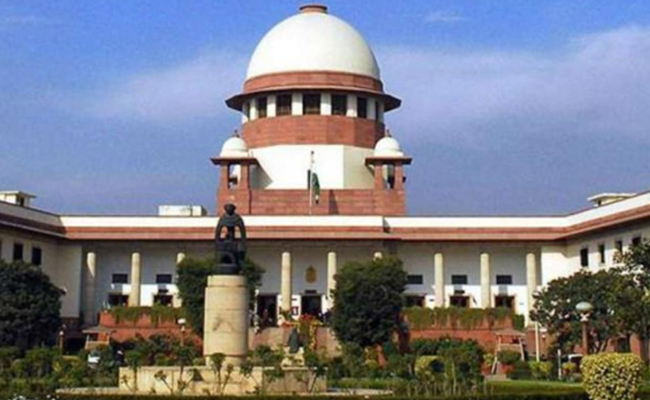
New Delhi (PTI): The government has promulgated an ordinance to increase the strength of the Supreme Court from the present 34 judges to 38, including the Chief Justice of India.
The law ministry notified the ordinance on Saturday, which amended the Supreme Court (Number of Judges) Act, 1956, to increase the sanctioned strength of the top court.
So far, the sanctioned strength of the top court was 34, including the Chief Justice of India (CJI). Now, the number of judges has been increased by four, taking the sanctioned strength to 38.
The top court will now have 37 judges, other than the CJI.
With the apex court having two vacancies at present, and the ordinance coming into force immediately, the Supreme Court Collegium will now have to recommend six names for appointment as judges in the top court.
A bill will be brought in the Monsoon Session of Parliament to convert the ordinance – an executive order – into a law passed by Parliament.
The Union Cabinet had cleared a draft bill on May 5 to increase the number of apex court judges.
The strength of the Supreme Court was last increased from 30 to 33 (excluding the CJI) in 2019.
The Supreme Court (Number of Judges) Act, as originally enacted in 1956, put the maximum number of judges (excluding the CJI) at 10.
This number was increased to 13 by the Supreme Court (Number of Judges), Amendment Act, 1960, and to 17 by another amendment to the law.
The Supreme Court (Number of Judges) Amendment Act, 1986, augmented the strength of judges from 17 to 25, excluding the CJI.
A fresh amendment in 2009 further increased the strength from 25 to 30.
Article 124(3) of the Constitution lists the qualifications required to become a Supreme Court judge.
An Indian citizen who has either served as a high court judge for at least five years, or as an advocate for 10 years, or is a distinguished jurist, can be appointed to the top court.
The strength of the Supreme Court is increased based on the recommendations of the CJI, who writes to the Union law minister. After consulting the finance ministry, the Department of Justice under the law ministry moves the Cabinet with a draft bill.