Four-year-old girl died in road mishap during traffic police checking in Mandya
Mandya (Karnataka), May 26 (PTI): A four-year-old girl died in a road mishap on Monday during a traffic police check sparking a public outrage.
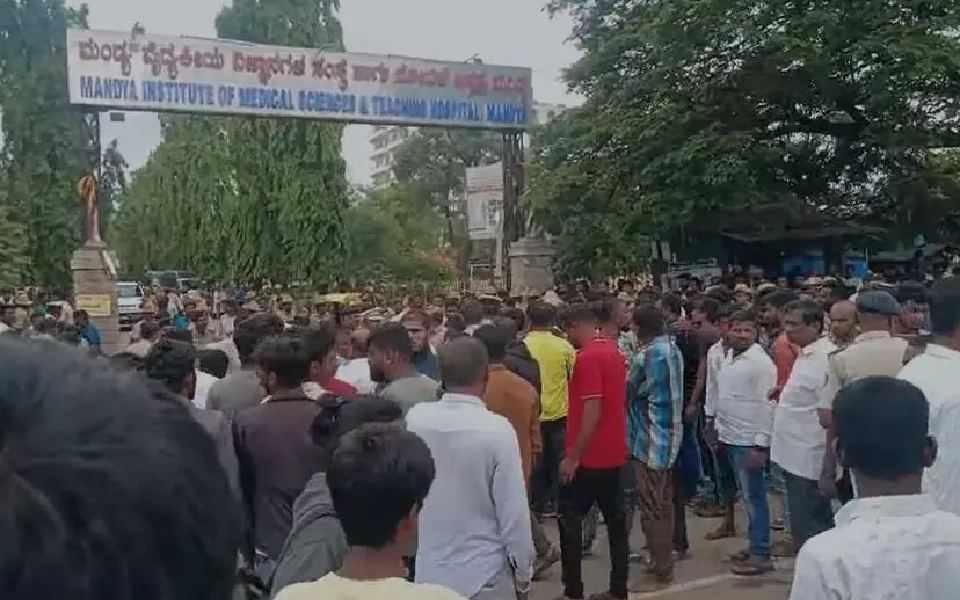
A large number of people staged protest blaming traffic police for the tragedy following which three ASIs (Assistant Sub-Inspectors) were suspended, police said.
Hrithiksha's parents were taking her to a hospital in Mandya city on their two-wheeler to get her immediate treatment after she was bitten by a dog at her village in Maddur taluk, they added.
According to Mandya Superintendent of Police, Mallikarjun Baldandi, the incident occurred when the couple en route to the hospital were intercepted by the traffic police for not wearing helmet.
When asked, the couple said they were rushing their daughter to the medical facility to get her treated for dog bite.
Subsequently, the traffic police released the motorcycle. However, just then another vehicle brushed past the two-wheeler following which the child fell off the motorcycle. In the meantime, a truck coming from behind ran over Hrithiksha.
She suffered severe head injuries and died on the spot due to excessive bleeding, police said, a case has has been registered in connection with the incident.
"We have suspended three ASIs (Assistant Sub-Inspectors) in connection with the incident," he added.
Following the incident, the victim's parents and public protested at the spot with the child's body demanding justice.
Public expressed outrage, accusing the police of prioritising rule enforcement over the family's emergency, leading to the loss of a life. The protest also led to traffic snarls which was later cleared after police assured action against the concerned policemen for "negligence" on their part.
Let the Truth be known. If you read VB and like VB, please be a VB Supporter and Help us deliver the Truth to one and all.
Ordinance issued to increase number of Supreme Court judges from 34 to 38
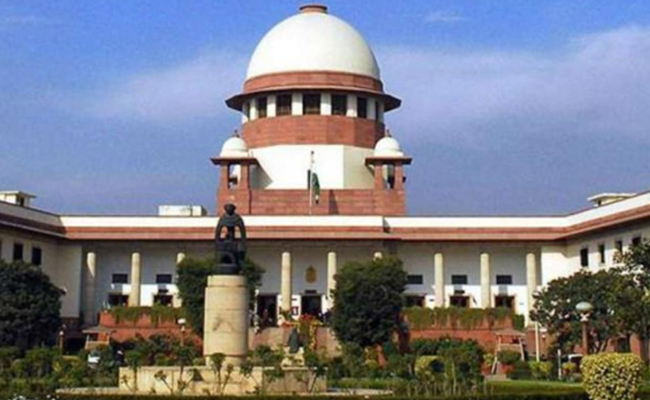
New Delhi (PTI): The government has promulgated an ordinance to increase the strength of the Supreme Court from the present 34 judges to 38, including the Chief Justice of India.
The law ministry notified the ordinance on Saturday, which amended the Supreme Court (Number of Judges) Act, 1956, to increase the sanctioned strength of the top court.
So far, the sanctioned strength of the top court was 34, including the Chief Justice of India (CJI). Now, the number of judges has been increased by four, taking the sanctioned strength to 38.
The top court will now have 37 judges, other than the CJI.
With the apex court having two vacancies at present, and the ordinance coming into force immediately, the Supreme Court Collegium will now have to recommend six names for appointment as judges in the top court.
A bill will be brought in the Monsoon Session of Parliament to convert the ordinance – an executive order – into a law passed by Parliament.
The Union Cabinet had cleared a draft bill on May 5 to increase the number of apex court judges.
The strength of the Supreme Court was last increased from 30 to 33 (excluding the CJI) in 2019.
The Supreme Court (Number of Judges) Act, as originally enacted in 1956, put the maximum number of judges (excluding the CJI) at 10.
This number was increased to 13 by the Supreme Court (Number of Judges), Amendment Act, 1960, and to 17 by another amendment to the law.
The Supreme Court (Number of Judges) Amendment Act, 1986, augmented the strength of judges from 17 to 25, excluding the CJI.
A fresh amendment in 2009 further increased the strength from 25 to 30.
Article 124(3) of the Constitution lists the qualifications required to become a Supreme Court judge.
An Indian citizen who has either served as a high court judge for at least five years, or as an advocate for 10 years, or is a distinguished jurist, can be appointed to the top court.
The strength of the Supreme Court is increased based on the recommendations of the CJI, who writes to the Union law minister. After consulting the finance ministry, the Department of Justice under the law ministry moves the Cabinet with a draft bill.