Future of 'Coalition' hanging in balance: Govt fears of losing majority

Bengaluru: Close on the heels of resignation drama of disgruntled MLAs, the resignation of two independent MLAs H Nagesh and R Shankar from their ministerial positions has put the coalition government on toes. The coalition government is fearing of losing its majority at any time.
Independent MLA R Shankar who attended a breakfast meeting at Deputy Chief Minister Dr G Parmeshwar's house, submitted his resignation to the Governor in the evening and flew to Mumbai causing the instability for the government.
Meanwhile, CM Kumaraswamy, Coordination Committee chairman Siddaramaiah, ministers and leaders held several roundabout meetings as part of their last minute efforts to save the government. But it is losing its strength day by day, while the activities for forming new government are active in the BJP fold.
Curiosity over Speaker's decision
The decision to be taken by Speaker KR Ramesh Kumar over the resignation of 12 MLAs of Congress and JDS tomorrow has created much curiosity.
Meanwhile, Siddaramaiah will conduct a legislature party meeting at the Vidhana Soudha and all Congress MLAs have been asked to attend the meeting compulsorily.
The Congress leadership has been discussing with the legal experts about disqualifying its MLAs under the 'Anti Detection Act'. Due to this, the future of both the coalition government and the resigned MLAs is hanging in balance.
It is said that all the 12 MLAs were assured of giving ministerial berth and asked them not to yield to the BJP's offer. Meanwhile, 21 Congress ministers and 9 from JDS have resigned from their positions.
When the coalition leaders are trying to save the government, BJP leaders are making all efforts to topple the government.
Total 14 members including 9 from Congress, 3 from JDS and two independent MLAs have maintained distance from the government. As the result, the coalition government has 106 MLAs including N Mahesh from BSP, while BJP has 105 MLAs in the House.
Amidst these developments, Minister DK Shivakumar rushed to New Delhi, while Maharashtra Congress MLAs staged a protest in front of the hotel in Mumbai where disgruntled MLAs have camped.
Let the Truth be known. If you read VB and like VB, please be a VB Supporter and Help us deliver the Truth to one and all.
Ordinance issued to increase number of Supreme Court judges from 34 to 38
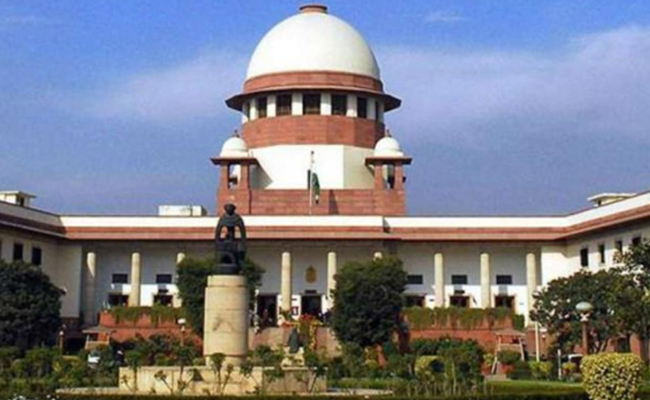
New Delhi (PTI): The government has promulgated an ordinance to increase the strength of the Supreme Court from the present 34 judges to 38, including the Chief Justice of India.
The law ministry notified the ordinance on Saturday, which amended the Supreme Court (Number of Judges) Act, 1956, to increase the sanctioned strength of the top court.
So far, the sanctioned strength of the top court was 34, including the Chief Justice of India (CJI). Now, the number of judges has been increased by four, taking the sanctioned strength to 38.
The top court will now have 37 judges, other than the CJI.
With the apex court having two vacancies at present, and the ordinance coming into force immediately, the Supreme Court Collegium will now have to recommend six names for appointment as judges in the top court.
A bill will be brought in the Monsoon Session of Parliament to convert the ordinance – an executive order – into a law passed by Parliament.
The Union Cabinet had cleared a draft bill on May 5 to increase the number of apex court judges.
The strength of the Supreme Court was last increased from 30 to 33 (excluding the CJI) in 2019.
The Supreme Court (Number of Judges) Act, as originally enacted in 1956, put the maximum number of judges (excluding the CJI) at 10.
This number was increased to 13 by the Supreme Court (Number of Judges), Amendment Act, 1960, and to 17 by another amendment to the law.
The Supreme Court (Number of Judges) Amendment Act, 1986, augmented the strength of judges from 17 to 25, excluding the CJI.
A fresh amendment in 2009 further increased the strength from 25 to 30.
Article 124(3) of the Constitution lists the qualifications required to become a Supreme Court judge.
An Indian citizen who has either served as a high court judge for at least five years, or as an advocate for 10 years, or is a distinguished jurist, can be appointed to the top court.
The strength of the Supreme Court is increased based on the recommendations of the CJI, who writes to the Union law minister. After consulting the finance ministry, the Department of Justice under the law ministry moves the Cabinet with a draft bill.