Gold smuggling case: ED raids continue at premises linked to Home Minister G Parameshwara

Bengaluru (PTI): The ED on Thursday continued its searches at places linked to Karnataka Home Minister G Parameshwara as part of the probe into alleged gold smuggling-linked money laundering case against Kannada actress Ranya Rao and others, official sources said.
According to sources, searches continued in Siddhartha Engineering College, Siddhartha Medical College and Siddhartha College in the state.
The ED sleuths on Wednesday raided 16 locations in the state under the Prevention of Money Laundering Act (PMLA) targeting hawala operators and accommodation entry operators who allegedly made "fake" financial transactions into Rao's accounts.
The Enforcement Directorate filed a PMLA case a few months ago after taking cognisance of a CBI and DRI (Directorate of Revenue Intelligence) complaint into a larger gold smuggling racket in India, including the case of Rao.
The ED sources said 'an educational trust' is suspected to have 'diverted' funds and made a payment of Rs 40 lakh towards the credit card bill of Rao, allegedly on the instructions of an influential individual.
Rao was arrested on March 3 at the Kempegowda International Airport in Bengaluru after arriving from Dubai. Acting on a tip-off, DRI officials detained her and seized gold bars weighing 14.2 kg and valued at over Rs 12.56 crore.
Rao and co-accused Tarun Kondaru Raju were granted bail on Tuesday by a special court for Economic Offences in Bengaluru in connection with the gold smuggling case.
The court approved their default bail applications after the DRI failed to file a chargesheet within the stipulated period. Rao, however, will continue to remain behind bars.
Authorities have filed a separate case against her under the stringent Conservation of Foreign Exchange and Prevention of Smuggling Activities Act, 1974 (COFEPOSA), a preventive detention law designed to tackle smuggling and preserve foreign exchange reserves.
Under COFEPOSA, individuals can be held without trial for up to a year based on suspicion of involvement in such activities.
Let the Truth be known. If you read VB and like VB, please be a VB Supporter and Help us deliver the Truth to one and all.
Ordinance issued to increase number of Supreme Court judges from 34 to 38
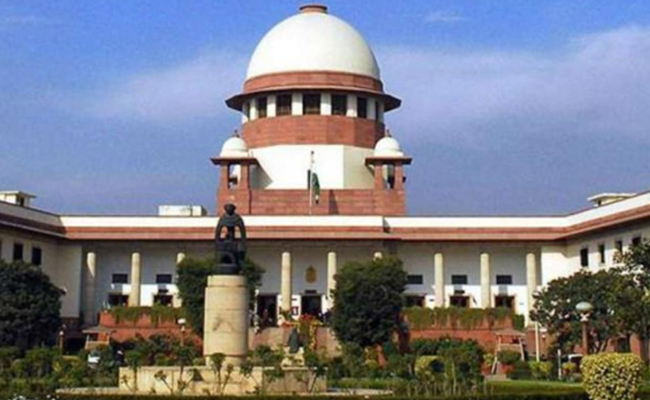
New Delhi (PTI): The government has promulgated an ordinance to increase the strength of the Supreme Court from the present 34 judges to 38, including the Chief Justice of India.
The law ministry notified the ordinance on Saturday, which amended the Supreme Court (Number of Judges) Act, 1956, to increase the sanctioned strength of the top court.
So far, the sanctioned strength of the top court was 34, including the Chief Justice of India (CJI). Now, the number of judges has been increased by four, taking the sanctioned strength to 38.
The top court will now have 37 judges, other than the CJI.
With the apex court having two vacancies at present, and the ordinance coming into force immediately, the Supreme Court Collegium will now have to recommend six names for appointment as judges in the top court.
A bill will be brought in the Monsoon Session of Parliament to convert the ordinance – an executive order – into a law passed by Parliament.
The Union Cabinet had cleared a draft bill on May 5 to increase the number of apex court judges.
The strength of the Supreme Court was last increased from 30 to 33 (excluding the CJI) in 2019.
The Supreme Court (Number of Judges) Act, as originally enacted in 1956, put the maximum number of judges (excluding the CJI) at 10.
This number was increased to 13 by the Supreme Court (Number of Judges), Amendment Act, 1960, and to 17 by another amendment to the law.
The Supreme Court (Number of Judges) Amendment Act, 1986, augmented the strength of judges from 17 to 25, excluding the CJI.
A fresh amendment in 2009 further increased the strength from 25 to 30.
Article 124(3) of the Constitution lists the qualifications required to become a Supreme Court judge.
An Indian citizen who has either served as a high court judge for at least five years, or as an advocate for 10 years, or is a distinguished jurist, can be appointed to the top court.
The strength of the Supreme Court is increased based on the recommendations of the CJI, who writes to the Union law minister. After consulting the finance ministry, the Department of Justice under the law ministry moves the Cabinet with a draft bill.