
Govt employees set to go on strike in Karnataka, CM Bommai attempts to assuage concerns
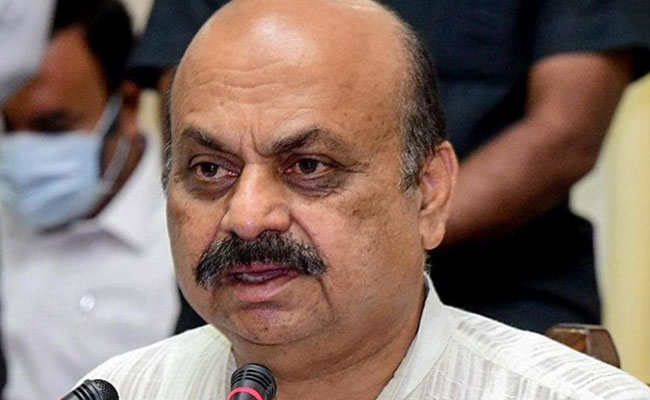
Hubballi/Bengaluru (PTI): With the government employees in Karnataka set to go on an indefinite strike from March 1, seeking fulfilment of various demands, Chief Minister Basavaraj Bommai on Tuesday reached out to them saying the administration was ready to seek 7th Pay commission's interim report immediately and implement it.
Most of the services, barring a few like transport, critical care at hospitals and crematoriums are likely to be hit due to the stir.
The employees have forwarded three major demands -- implementation of the 7th Pay Commission report, reverting to the Old Pension Scheme and implementation of at least 40 per cent of fitment facilities.
"Our senior officials are in touch with the government employees' association and their President, and are holding talks. I have already made it clear in the Assembly that we were the ones who formed the seventh pay commission and it will be implemented in 2023-24 itself, and funds for it have been allocated in the budget," Bommai told reporters at Hubballi.
He further said their demand is to seek an interim report and implement it, which he has agreed to.
"We are ready to immediately direct the seventh pay commission to submit the interim report and implement it," he added.
Karnataka State Government Employees' Association President C S Shadakshari had earlier said that all services including hospitals -- other than casualty and essential services, -- will be affected.
Also, all services of 'Mahanagara Palike' and 'Pura Sabha' including pourakarmika (civic workers) and various energy supply companies.
Revenue collection, schools and pre-university examinations, will also be hit, he said, adding that "there is already an 8-month delay, we cannot wait anymore, we don't know what will happen when the new government comes in, so the employees have decided to go on strike voluntarily".
Let the Truth be known. If you read VB and like VB, please be a VB Supporter and Help us deliver the Truth to one and all.
Talks with Iran ended after 21 hours without reaching agreement, says US Vice President Vance
_vb_41.jpeg)
Islamabad (PTI): US Vice President JD Vance said on Sunday that the Islamabad Talks with Iran failed as the two sides could not bridge the gulf of differences despite hectic efforts spreading more than 21 hours.
Vance addressed a press conference here after “substantive discussions” in direct talks between the two sides -- the first since 1979 at this level --mediated by Pakistan.
“We have been at it now for 21 hours, and we have had a number of substantive discussions, that’s the good news,” Vance said.
“The bad news is that we have not reached an agreement,” he added.
“We have made very clear what our red lines are, what things we are willing to accommodate them on and what things we are not,” the US vice president said, adding that the Iranian delegation had “chosen not to accept our terms”.
He was asked to elaborate the main sticking points of what did the Iranians reject but he refused to go into specifics.
“I won’t go into all the details because I don’t want to negotiate in public after we negotiated for 21 hours in private. But the simple fact is that we need to see an affirmative commitment that they will not seek a nuclear weapon and that they will not seek the tools that would enable them to quickly achieve a nuclear weapon,” Vance said
He said stopping Iran from getting a "nuke" was the “core goal of the US president, and that’s what we have tried to achieve through these negotiations”.
Vance also praised Pakistan Prime Minister Shehbaz Sharif and Chief of Army Staff Field Marshal Asim Munir, terming them “incredible hosts”.
“Whatever shortcomings were in the negotiations were not because of Pakistanis, who did an amazing job and really tried to help us and the Iranians bridge the gap and get to a deal,” he said.
Separately, the spokesperson for Iran’s Ministry of Foreign Affairs, Esmaeil Baqaei, in an X message also confirmed that the two sides failed to make a deal and “numerous messages and texts have been exchanged between the two sides".
“In the past 24 hours, discussions were held on various dimensions of the main negotiation topics, including the Strait of Hormuz, the nuclear issue, war reparations, lifting of sanctions, and the complete end to the war against Iran and in the region,” he wrote.
“The success of this diplomatic process depends on the seriousness and good faith of the opposing side, refraining from excessive demands and unlawful requests, and the acceptance of Iran’s legitimate rights and interests.”
Baqaei also expressed appreciation to the “government and the warm-hearted and noble people of the Islamic Republic of Pakistan for hosting the negotiations and their benevolent efforts in advancing this process”.
_vb_48.jpeg)

_vb_17.jpeg)