Greater Bengaluru Authority to take shape by September 15: DCM DK Shivakumar
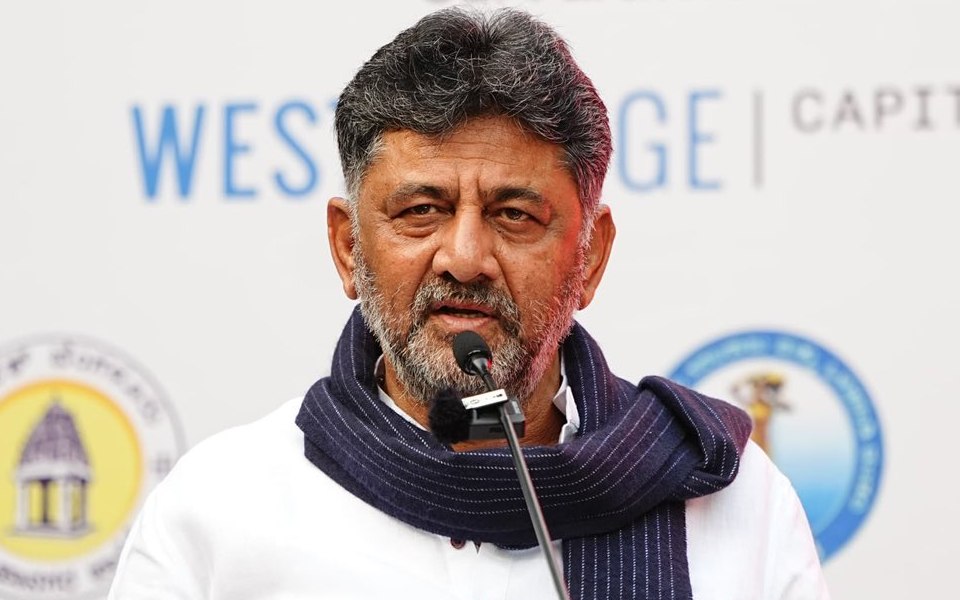
Bengaluru, May 24 (PTI): Deputy Chief Minister D K Shivakumar on Saturday announced that the process of forming the Greater Bengaluru Authority (BGA) will be completed by September 15.
The BGA is set to replace the Bruhat Bengaluru Mahanagara Palike (BBMP), with the aim of bringing more efficient and transparent governance to the city, he told reporters here.
Shivakumar said a notification was issued on May 15 to convert BBMP into Greater Bengaluru Authority.
“We have to form corporations within 120 days. I have asked all the MLAs of Bengaluru for suggestions on how many corporations to make. Then we will decide where to expand further. These corporations should be formed by September 15," he pointed out.
The Deputy Chief Minister also discussed various other initiatives aimed at improving the city's infrastructure and services.
These include clearing footpath shops, providing push vehicles to street vendors, and widening roads.
Shivakumar emphasised that the government is committed to working with all stakeholders, including MLAs, to ensure that the city's development is inclusive and sustainable.
Regarding clearing of footpath shops, the Deputy Chief Minister said that 27,665 street vendors have registered, and the government is ready to provide them with push vehicles.
"They should keep their vehicles at the designated place and do business," he said.
On Road widening, Shivakumar said the issue has been discussed with MLAs, and wherever they recommend road widening, TDR (Transfer of Development Rights) will be given to property owners.
He also announced that basement parking will not be allowed in low-lying areas to prevent flooding and ensure safety.
The Deputy Chief Minister directed that optical fiber cables that have been laid in sewage and water channels should be cut and removed.
Shivakumar informed that the government is working on digitising 25 lakh property details in the city, with the aim of bringing transparency in tax and property registration.
"We have already digitised 5 lakh properties and are working on a big campaign to complete the process," he said.
Shivakumar acknowledged that implementing these initiatives may face challenges, but emphasised that the government is committed to working with all stakeholders to ensure that the city's development is inclusive and sustainable.
Let the Truth be known. If you read VB and like VB, please be a VB Supporter and Help us deliver the Truth to one and all.
Ordinance issued to increase number of Supreme Court judges from 34 to 38
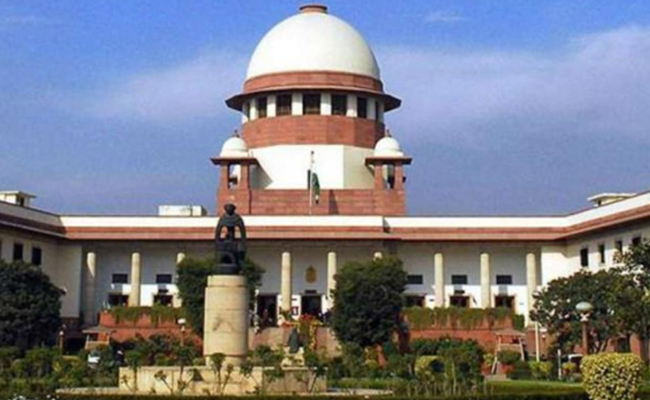
New Delhi (PTI): The government has promulgated an ordinance to increase the strength of the Supreme Court from the present 34 judges to 38, including the Chief Justice of India.
The law ministry notified the ordinance on Saturday, which amended the Supreme Court (Number of Judges) Act, 1956, to increase the sanctioned strength of the top court.
So far, the sanctioned strength of the top court was 34, including the Chief Justice of India (CJI). Now, the number of judges has been increased by four, taking the sanctioned strength to 38.
The top court will now have 37 judges, other than the CJI.
With the apex court having two vacancies at present, and the ordinance coming into force immediately, the Supreme Court Collegium will now have to recommend six names for appointment as judges in the top court.
A bill will be brought in the Monsoon Session of Parliament to convert the ordinance – an executive order – into a law passed by Parliament.
The Union Cabinet had cleared a draft bill on May 5 to increase the number of apex court judges.
The strength of the Supreme Court was last increased from 30 to 33 (excluding the CJI) in 2019.
The Supreme Court (Number of Judges) Act, as originally enacted in 1956, put the maximum number of judges (excluding the CJI) at 10.
This number was increased to 13 by the Supreme Court (Number of Judges), Amendment Act, 1960, and to 17 by another amendment to the law.
The Supreme Court (Number of Judges) Amendment Act, 1986, augmented the strength of judges from 17 to 25, excluding the CJI.
A fresh amendment in 2009 further increased the strength from 25 to 30.
Article 124(3) of the Constitution lists the qualifications required to become a Supreme Court judge.
An Indian citizen who has either served as a high court judge for at least five years, or as an advocate for 10 years, or is a distinguished jurist, can be appointed to the top court.
The strength of the Supreme Court is increased based on the recommendations of the CJI, who writes to the Union law minister. After consulting the finance ministry, the Department of Justice under the law ministry moves the Cabinet with a draft bill.