Greater Bengaluru Governance Bill tabled in Karnataka Assembly
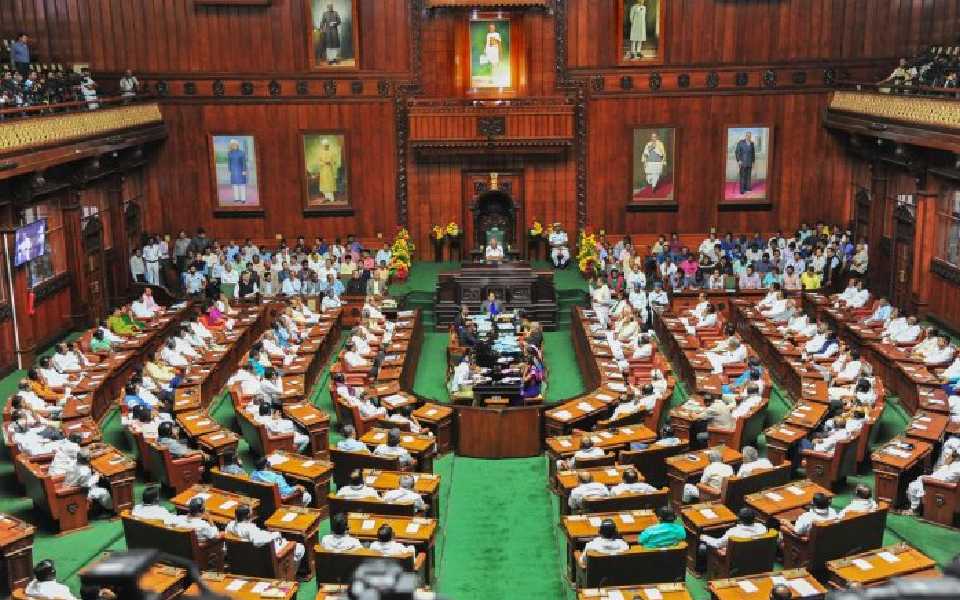
Bengaluru, Jul 23: The Karnataka government on Tuesday tabled the Greater Bengaluru Governance Bill which aims at establishing a maximum of 10 city corporations in order to decentralise municipal administration.
The bill moots the founding of the Greater Bengaluru Authority (GBA) in which the chief minister will be the ex-officio chairperson, the minister in charge of Bengaluru will be the vice-chairperson and the chief commissioner of the Greater Bengaluru Authority will be the ex-officio member secretary.
Karnataka ministers holding home, urban development, transport and energy portfolios and ministers from Bengaluru will be the ex-officio members.
Apart from them, the mayors of the city corporations, two members from each city corporation nominated by city corporation members will a part of the GBA as members.
ALSO READ: Nirmala Sitharaman has done injustice to Karnataka, says CM Siddaramaiah on budget
Bangalore Development Authority commissioner, Bangalore Water Supply and Sewerage Board chairperson, and managing directors of Bangalore Metro Rail Corporation Limited, Bengaluru Solid Waste Management Limited and Bangalore Electricity Supply Company, as well as Bengaluru police commissioner, chief executive officer of the Bengaluru Metropolitan Land Transport Authority, chief town planner and engineer-in-chief of GBA, and the director of Karnataka State Fire and Emergency Services will be the ex-officio members.
The commissioners of the city corporations will also be GBA ex-officio members but will not have voting rights.
All members of the House of the People and state Legislative Assembly whose constituencies lie within or substantially within the Greater Bengaluru Area shall be permanent invitees to the Greater Bengaluru Authority and may attend the meeting but will not have the right to vote, according to the bill.
The chief commissioner will be an officer not below the rank of additional chief secretary.
There will be city corporation authorities comprising of a mayor, commissioner, joint commissioners as well as standing committees, zonal committees, ward committees and ‘area sabhas’.
The mayor and the deputy mayor will hold office for a period of five years and it shall be co-terminus with the term of the office of the city corporation.
The BJP opposed the bill in the Karnataka Assembly saying it will divide Bengaluru further and its identity will be lost.
However, Deputy Chief Minister D K Shivakumar, who is in charge of Bengaluru Development, dismissed the apprehensions of the opposition leaders as baseless.
He said he has only tabled the bill and it has not been passed yet. He added that he would take everyone along while forming the GBA.
Shivakumar said there will be a meeting on July 27 with all the legislators from Bengaluru and the ministers on this issue to clear all doubts.
BJP leader and former councilor Padmanabha Reddy commented that this bill in fact centralises the municipal corporations instead of decentralising city governance.
Let the Truth be known. If you read VB and like VB, please be a VB Supporter and Help us deliver the Truth to one and all.
Karnataka launches India’s first digital grievance system for gig workers
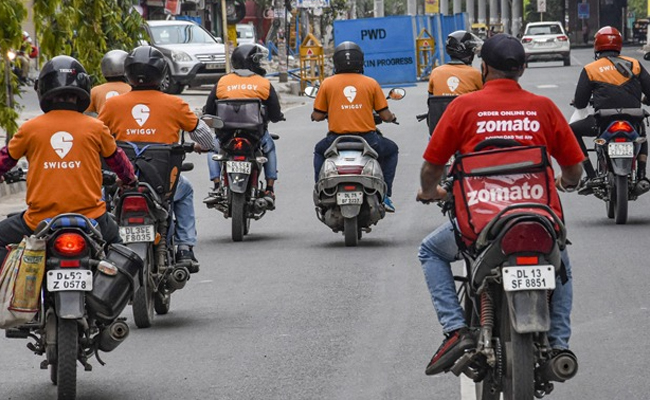
Bengaluru: In a first-of-its-kind initiative in India, the Karnataka government has launched a digital grievance redressal system for gig workers to provide structured support and protection to platform-based workers.
According to The Hindu, the system, developed by the Karnataka Platform-based Gig Workers’ Board in collaboration with the Department of e-Governance, allows workers to file complaints through the Integrated Public Grievance Redressal System (IPGRS).
Gig workers can raise issues related to pay, working conditions, and platform-specific disputes. Complaints will be routed to the Internal Dispute Resolution Committees (IDRCs) of respective platforms and are expected to be resolved within a defined timeframe. This is expected to bring transparency and legal recourse for a workforce that has so far operated without a formal dispute resolution framework.
Under The Karnataka Platform-Based Gig Workers (Social Security and Welfare) Act and Rules, every aggregator platform must constitute an Internal Dispute Resolution Committee (IDRC). Platforms such as Namma Yatri and Yulu have already integrated their IDRC contact details with the government portal.
Around 12 lakh gig workers have been identified in the state, and a unique identification system is being developed to remove duplicate entries. Officials said welfare schemes are also being designed based on type of work, working hours, and contribution.
Labour Minister Santosh Lad said that Karnataka, technology capital of the country, is leveraging this potential for worker welfare as well. “By launching this system, we are ensuring that the gig economy is no longer an informal space, but a structured one where every worker’s voice is heard,” he said.
“The schemes will vary based on the type of platforms. For example, cab rides are mostly undertaken by men whereas urban domestic activity is undertaken mostly by women. It may also be based on the contribution made, and the quantum of gig work done by a gig worker. Some gig workers work for more than eight hours while some may work on a few gigs. So, work load, nature of work, and time period of work could vary,” TH quoted G. Manjunath, Additional Labour Commissioner and CEO of the Board as saying.
“It has to be scientifically structured based on their effort and labour. We are working with experts, including academicians from Briston University, King’s College, and IISc, and other stake holders, including board members,” he said.
Officials added that aggregator platforms will be required to contribute 1 per cent towards worker welfare, with implementation beginning July 5.