Hindu outfit urges Karnataka governor to withhold assent to anti-hate speech bill
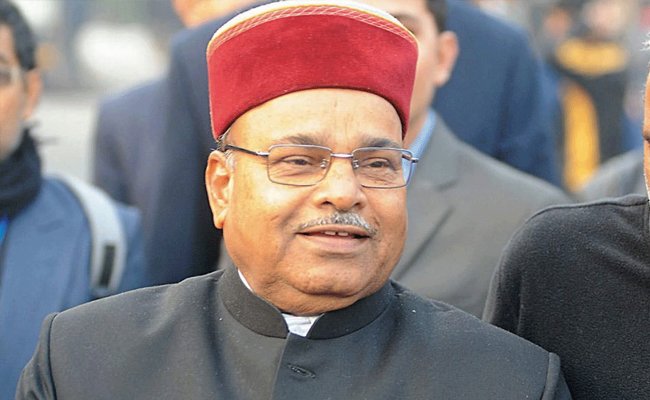
Bengaluru (PTI): The Hindu Janajagruti Samiti, a right-wing organisation, has urged Karnataka Governor Thaawarchand Gehlot to withhold assent to a bill aimed at curbing hate speech and hate crime, terming it "unconstitutional" and a "serious threat" to freedom of speech and religious liberty.
In a memorandum, the representatives of the organisation and other outfits opposed the Karnataka Hate Speech and Hate Crimes (Prevention) Bill, 2025, and warned that its provisions could be misused, like suppressing dissent.
It claimed that the bill is "vague, overbroad and unconstitutional, and poses a serious threat to freedom of speech guaranteed under Article 19(1)(a) of the Constitution, as well as to religious freedom."
ALSO READ: Delhi polluted owing to Aravalli, says anchor Rajat Sharma; netizens troll him
The Samiti, on Sunday, flagged what it termed "excessively vague and broad" definitions of "hate speech", "hate crime" and "bias-motivated interest", cautioning that these could criminalise speech even "in the absence of intent or imminent violence", thereby enabling arbitrary and selective action by authorities.
Raising concern over religious practices, the memorandum said the Bill shifts the burden of proof on the accused to establish "public interest" or "bona fide religious purpose". This said is contrary to established criminal jurisprudence, it said.
The Samiti warned that core Hindu activities such as "referencing Vedic scriptures, religious discourse, doctrinal debates, proselytisation discussions, or criticism of religious ideologies" could be criminalised under the proposed legislation.
Objecting to speech-related offences being made cognisable and non-bailable, the Samiti said this could result in immediate arrests, harassment of saints, social activists and journalists, and suppression of dissent and free expression.
The memorandum also criticised the Bill for granting "sweeping powers to executive magistrates and police officials" without adequate judicial oversight, including authority to remove content "without proper inquiry or a robust appellate mechanism"
This violates the principles of natural justice, the Samiti said.
Pointing to overlap with existing Central laws, it said matters covered under the Bill are already addressed in the Bharatiya Nyaya Sanhita, Bharatiya Nagarik Suraksha Sanhita and the Information Technology Act. It warned that the state law risks conflict under Article 254 of the Constitution.
The Samiti requested the governor to "withhold assent to the Bill under Article 200 of the Constitution" and "return the Bill to the legislature for reconsideration, with clear definitions, safeguards for freedom of speech and religion, and judicial oversight mechanisms".
Let the Truth be known. If you read VB and like VB, please be a VB Supporter and Help us deliver the Truth to one and all.
Maharashtra sets up state vaccination task force to strengthen immunisation programme

Mumbai (PTI): The Maharashtra government has set up a State Vaccination Task Force to strengthen the regular immunisation programme and review the progress of related campaigns, a health department official said on Monday.
The State Vaccination Task Force will comprise at least 29 members and will be headed by the administrative head of the health department, he informed.
The government has also constituted separate district-level and municipal vaccination task forces to improve implementation and address challenges at the grassroots level, he said.
Municipal task forces, chaired by respective civic commissioners, have been constituted in view of the vast urban population in Maharashtra and the role of civic bodies in implementing different health programmes.
The district-level task forces will function under the chairmanship of collectors.
"Complete immunisation of children at the appropriate age is an extremely simple, cost-effective and highly effective measure to reduce child mortality and the prevalence of diseases among kids. Immunisation is a powerful tool for reducing illness in children," maintained the official.
To ensure full vaccination of all children, the state government implements various campaigns from time to time as per the central government guidelines, he pointed out.
"Active participation and cooperation of other relevant government departments are essential (in making these campaigns successful)," according to the official.
The state-level body will review the regular immunisation programme, associated campaigns and vaccine-preventable diseases in detail. It will also conduct focused assessments of high-risk districts and municipal corporations, including vacancies at district, municipal and sub-district levels, availability of cold chain equipment, resource gaps and training requirements, he noted.
The state task force will review allocation and utilisation of funds for immunisation and ensure timely action by officers concerned based on reports from district and municipal task forces and state-level monitoring mechanisms, the official said.
It will also ensure active coordination and participation of other government departments in immunisation drives, while district and municipal task forces will carry out similar functions at their respective levels, the official added.