Hoysala Temples in Karnataka finalised as India's nomination for World Heritage List for 2022-2023
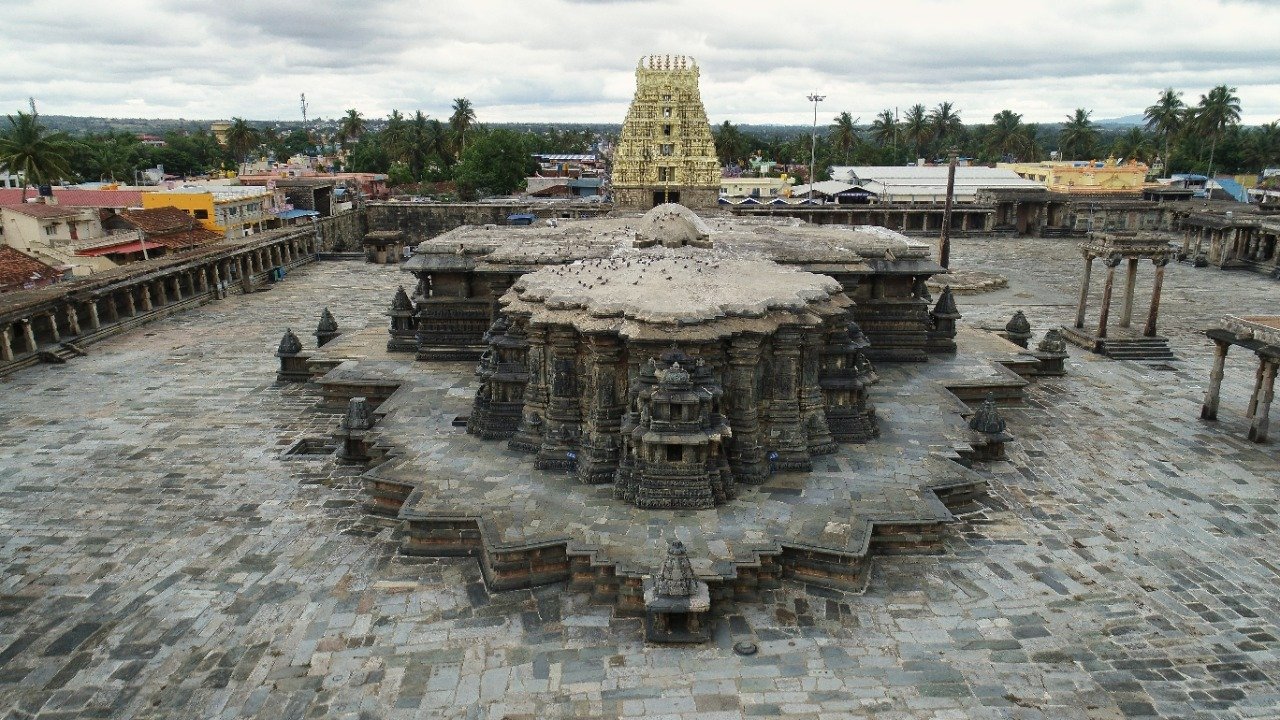
New Delhi, Jan 31: The Hoysala Temples of Belur, Halebid and Somnathapura in Karnataka have been finalised as India's nomination for World Heritage List for the year 2022-2023, the Union Culture Ministry said on Monday.
The 'Sacred Ensembles of the Hoysala' are on UNESCO's Tentative list since April 15, 2014, and stand testimony to the rich historical and cultural heritage of this country.
On Monday, Permanent Representative of India to UNESCO Vishal V Sharma formally submitted the nomination of Hoysala Temples to UNESCO Director of World Heritage Lazare Eloundou.
Following the submission of the dossier, technical scrutiny will be carried out.
In a tweet, Sharma said, "India is proud to nominate The Sacred Ensembles of the Hoysalas for UNESCO's World Heritage List! Art historians recognize the exceptional sculptural artistry of the ensembles to be among the masterpieces of Asian art."
The site evaluation will happen in September/October this year and the dossier will be taken up for consideration in July/August next year.
G Kishan Reddy, the Union Minister of Culture, Tourism and Development of Northeastern Region, said, "This is a great moment for India to see the Sacred Ensembles of the Hoysalas temples being submitted for inscription in the World Heritage List."
"The government under the leadership of Prime Minister Narendra Modi is committed to both 'vikas' and 'virasat' (heritage).
"Our efforts in protecting our heritage is evident from the work the government has been putting in inscribing both our tangible and intangible heritage and also repatriating the cultural heritage that was stolen or taken away from India," the Minister added.
All the three Hoysala temples are protected monuments of the Archaeological Survey of India and therefore their conservation and maintenance will be done by its, culture ministry said.
The state government will ensure the conservation of state-protected monuments which are around these three monuments since it would add to the visual integrity of the place, it said.
भारत को @UNESCO की विश्व विरासत सूची के लिए "होयसाल के पवित्र कलाकारों की टुकड़ी" को नामित करते हुए गर्व हो रहा है।@UNESCO ದ ವಿಶ್ವ ಪರಂಪರೆಯ ಪಟ್ಟಿಯ ಪಟ್ಟಿಗೆ "ಹೊಯ್ಸಳರ ಪವಿತ್ರ ಮೇಳಗಳನ್ನು" ನಾಮನಿರ್ದೇಶನ ಮಾಡಲು ಭಾರತವು ಹೆಮ್ಮೆಪಡುತ್ತದೆ.
— Vishal V. Sharma 🇮🇳 (@VishalVSharma7) January 31, 2022
Hoysala Temples of Belur, Halebid & Somnathapura in Karnataka finalized as India’s nomination for consideration as World Heritage for the year 2022-2023 pic.twitter.com/0b8N7dJyyn
— ANI (@ANI) January 31, 2022
Let the Truth be known. If you read VB and like VB, please be a VB Supporter and Help us deliver the Truth to one and all.
Allen, Raghuvanshi, Green power KKR to 29-run win over GT
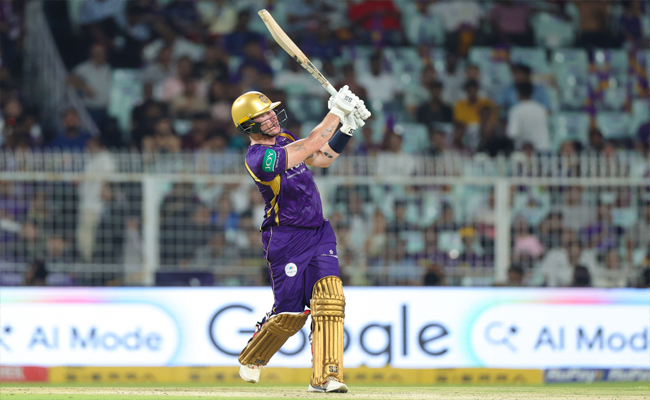
Kolkata (PTI): Finn Allen blasted a 35-ball 93, while Angkrish Raghuvanshi hit an unbeaten 44-ball 82 as Kolkata Knight Riders kept their playoff hopes alive with a 29-run win over Gujarat Titans in the IPL match here on Saturday.
Sent in to bat, Allen went on a six-hitting spree, smashing 10 maximums and four boundaries to add 95 off 41 balls with Raghuvanshi (82).
Raghuvanshi then shared another 108 off 53 balls with Cameron Green (52 not out) to power KKR to a challenging 247 for 2.
In reply, GT could manage 218-4, riding on skipper Shubman Gill's 49-ball 85 and a 35-ball 57 from Jos Buttler. Opener Sai Sudarsan was retired hurt but returned to make a 28-ball 53 not out.
Sunil Narine (2/29) claimed two wickets and Saurabh Dubey snapped one for KKR.
For GT, Mohammed Siraj (1/50), Sai Kishore (1/38) were the wicket-takers.
Brief Score:
KKR: 247 for 2 in 20 overs (Finn Allen 93, Angkrish Raghuvanshi 82 not out, Camero Green 52 not out; Mohammed Siraj 1/50).
GT: 218 for 4 in 20 overs (Shubman Gill 85, Sunil Narine 2/29).