"Important decisions" in days to come to counter increasing COVID, Omicron cases: CM Bommai
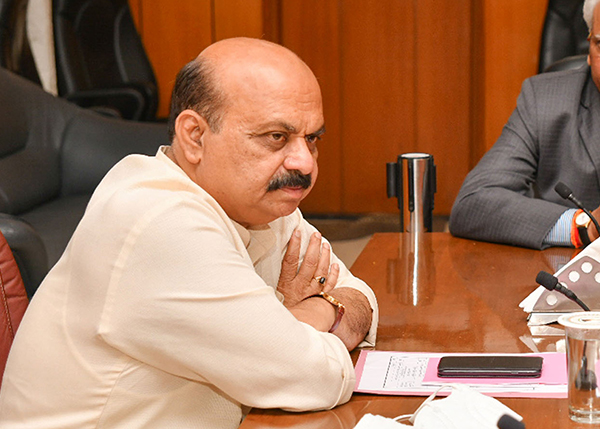
Bengaluru, Dec 31: Amid spike in COVID-19 and Omicron variant cases in the state, Karnataka Chief Minister Basavaraj Bommai on Friday said the government will take certain "important decisions" in the days to come, and put in place necessary health infrastructure to deal with the situation that might arise.
"It is increasing across the country, the Centre has identified Karnataka also as one among the eight states. We have already taken certain precautions," Bommai said in response to a question on the increase in COVID-19 and Omicron cases in the state.
Speaking to reporters here, he said looking at cases in the days to come, health infrastructure such as beds, oxygen, medicines, ICU have to be put in place.
"In the days to come we will take certain important decisions," he added.
The central government on Thursday had said that Maharashtra, West Bengal, Tamil Nadu, Delhi, Karnataka and Gujarat are emerging as states and UTs of concern on the basis of weekly COVID-19 cases and positivity rate.
In the letter, Union Health Secretary Rajesh Bhushan asked Delhi, Haryana, Tamil Nadu, West Bengal, Maharashtra, Gujarat, Karnataka and Jharkhand to be vigilant in view of the recent increase in domestic travel and various events such as marriages, festive celebrations, and vacations having either recently concluded or underway.
Witnessing a spike for the second consecutive day, Karnataka on Thursday reported 707 new COVID-19 cases and three deaths, taking the total number of infections to 3,006,505 and the toll to 38,327.
Twenty-three more cases of the Omicron variant of the coronavirus have been detected in Karnataka on Friday. This takes the State's tally of Omicron cases to 66.
Let the Truth be known. If you read VB and like VB, please be a VB Supporter and Help us deliver the Truth to one and all.
Ordinance issued to increase number of Supreme Court judges from 34 to 38
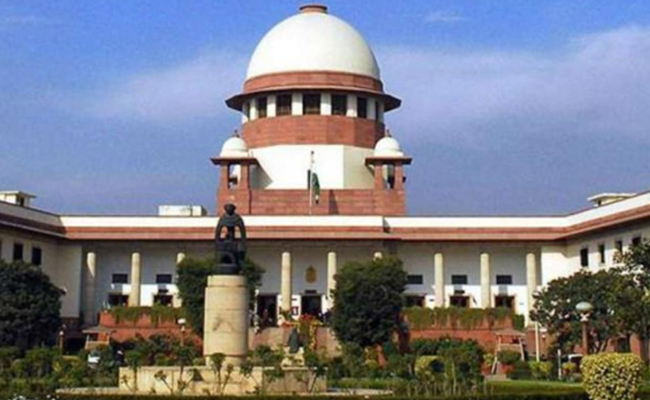
New Delhi (PTI): The government has promulgated an ordinance to increase the strength of the Supreme Court from the present 34 judges to 38, including the Chief Justice of India.
The law ministry notified the ordinance on Saturday, which amended the Supreme Court (Number of Judges) Act, 1956, to increase the sanctioned strength of the top court.
So far, the sanctioned strength of the top court was 34, including the Chief Justice of India (CJI). Now, the number of judges has been increased by four, taking the sanctioned strength to 38.
The top court will now have 37 judges, other than the CJI.
With the apex court having two vacancies at present, and the ordinance coming into force immediately, the Supreme Court Collegium will now have to recommend six names for appointment as judges in the top court.
A bill will be brought in the Monsoon Session of Parliament to convert the ordinance – an executive order – into a law passed by Parliament.
The Union Cabinet had cleared a draft bill on May 5 to increase the number of apex court judges.
The strength of the Supreme Court was last increased from 30 to 33 (excluding the CJI) in 2019.
The Supreme Court (Number of Judges) Act, as originally enacted in 1956, put the maximum number of judges (excluding the CJI) at 10.
This number was increased to 13 by the Supreme Court (Number of Judges), Amendment Act, 1960, and to 17 by another amendment to the law.
The Supreme Court (Number of Judges) Amendment Act, 1986, augmented the strength of judges from 17 to 25, excluding the CJI.
A fresh amendment in 2009 further increased the strength from 25 to 30.
Article 124(3) of the Constitution lists the qualifications required to become a Supreme Court judge.
An Indian citizen who has either served as a high court judge for at least five years, or as an advocate for 10 years, or is a distinguished jurist, can be appointed to the top court.
The strength of the Supreme Court is increased based on the recommendations of the CJI, who writes to the Union law minister. After consulting the finance ministry, the Department of Justice under the law ministry moves the Cabinet with a draft bill.