Integrated industrial township to be developed in 970 acres near KGF
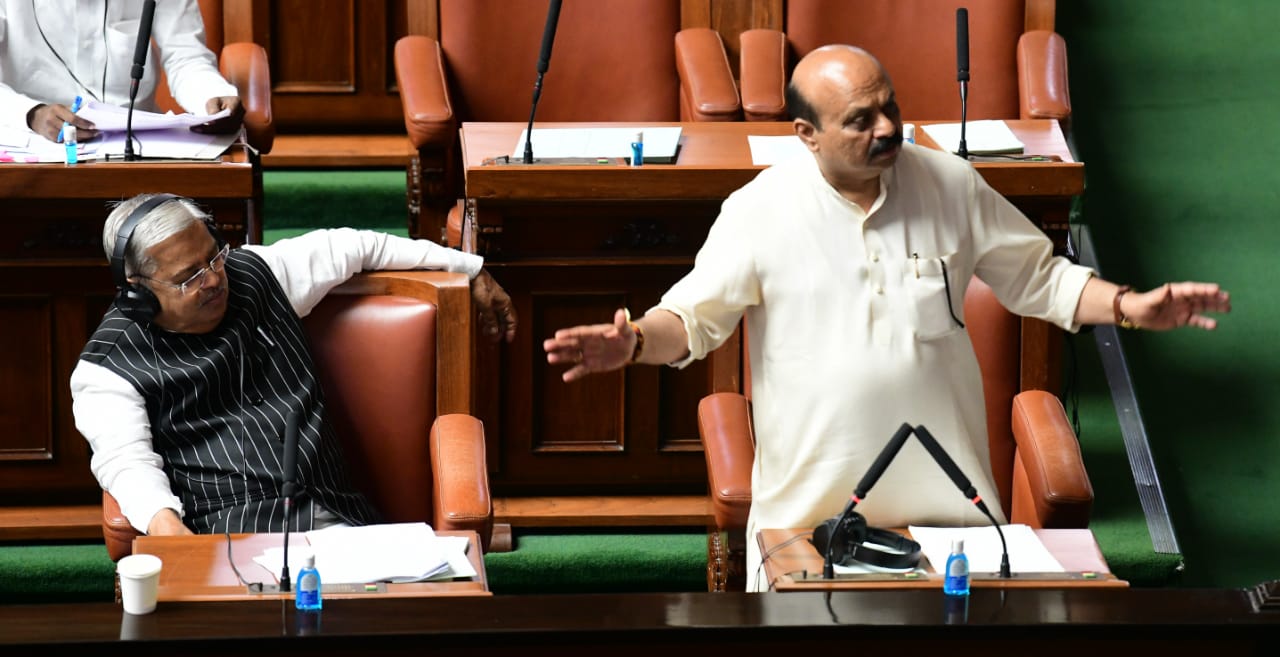
Bengaluru, Sep 16: Karnataka Chief Minister Basavaraj Bommai on Friday said his government will ensure the development of an integrated industrial township in over 970 acres of land in Kolar district, aimed at prompting industries in the region to provide jobs for locals.
The Chief Minister was responding to a question raised by KGF (Kolar Gold Fields) MLA Roopakala M in the legislative assembly during the question hour regarding developing an industrial township in the land the government has taken back from Bharat Earth Movers Limited (BEML) and alleged delay in transfer of land to Karnataka Industrial Areas Development Board (KIADB) for the purpose.
"There is a proposal to transfer BEML land from Revenue to the Industries Department and to develop it through KIADB. It is difficult to get land around Bengaluru and if we have to acquire land it is costly and those who set up industries will have to bear it. Also the region is deprived of industries despite being so close to Bengaluru."
Pointing out that after the Kolar Gold Field mines stopped functioning there are employment issues in the region, he said, "considering all these factors, we will ensure the land is transferred and is developed into an industrial township. I have already said in the budget that industrial townships will be developed. So an integrated industrial township will be developed there."
Earlier raising the issue, Roopakala lamented that out of about 1,870 acres of land given to BEML, the state government since the last three years is in the process of taking back about 970 acres of remaining unused land, and asked "what should the people of my constituency do? What's their fate?"
Questioning the delay and why the government was not acting swiftly, she said the place was not even 100 km away from Bengaluru and has a large number of working class population.
Replying to her, Medium and Large Industries Minister Murugesh Nirani said, the land has to be transferred from Revenue to Industries department.
"We have sent several communications to the Revenue Department through KIADB, but they have not transferred it yet. We have brought it to the notice of both the Revenue Minister and Chief Minister, and as soon as they transfer, we will start the work on the industrial township," he said.
Intervening, Senior Congress MLA and former Industries Minister R V Deshpande said, Industries and Revenue are sister departments in the government and should sort out the issue with proper coordination in the interest of the people, setting up of industries and to create jobs. He urged the Chief Minister to also intervene.
According to the Minister's written reply, state government had given about 1,870 acres of land to BEML to set up a factory at a village in Robertsonpet hobli of KGF taluk in Kolar district, and out of this the Kolar Deputy Commissioner had on November 12, 2020 issued an order for Revenue department to take back about 971 acres of remaining unused land, as per prescribed norms.
It also said that the Industries department has written letters to the Revenue department seeking to transfer the land to KIADB to develop industrial townships there in March, August and December 2021, and the land has still not been allotted to KIADB.
Let the Truth be known. If you read VB and like VB, please be a VB Supporter and Help us deliver the Truth to one and all.
UP man gets life term for electrocuting mentally challenged wife to death in Bareilly
Bareilly (UP) (PTI): A local court here has sentenced a man to life imprisonment for murdering his mentally challenged wife by repeatedly electrocuting her while she was tied to a cot, lawyers said on Thursday.
Additional district government counsel Harendra Singh Rathore said Additional Sessions Judge Avinash Kumar Singh on Wednesday convicted Vinod Kumar (45) for killing his wife, Satyavati, in Chaina village of Bareilly district and imposed a fine of Rs 15,000 on him.
According to the prosecution, he was allegedly frustrated with his wife Satyavati's mental illness and often assaulted her.
Rathore said the prosecution examined nine witnesses to establish the charges against him.
As per court records, on the night of May 1-2, 2022, when Satyavati was asleep, Vinod tied her hands and legs to a cot using ropes and then connected an aluminium cable to an electric board to repeatedly administer electric shocks to her.
"She writhed in pain, but the accused continued to electrocute her until she died," the prosecution said.
The court observed that the murder was carried out in an inhuman manner.
After committing the crime, the accused threw the rope and cable on the roof and left for work at a brick kiln around 2 am to create a false alibi.
He later tried to mislead the police and the victim's family by claiming that Satyavati, whose mental condition was unstable, had accidentally died by suicide after grabbing a live electric wire.
However, the victim's brother, Sanjeev, a resident of Shahjahanpur district, suspected foul play and lodged an FIR under sections 498A (husband subjecting wife to cruelty) and 302 (murder) of the Indian Penal Code at Nawabganj police station.
During the trial, the prosecution relied on the post-mortem report prepared by Dr Faraz Anwar, who stated that multiple electrocution marks found on different parts of the victim's body could not have been self-inflicted.
The police also recovered the rope and electric wire used in the crime on the accused's identification, officials said.