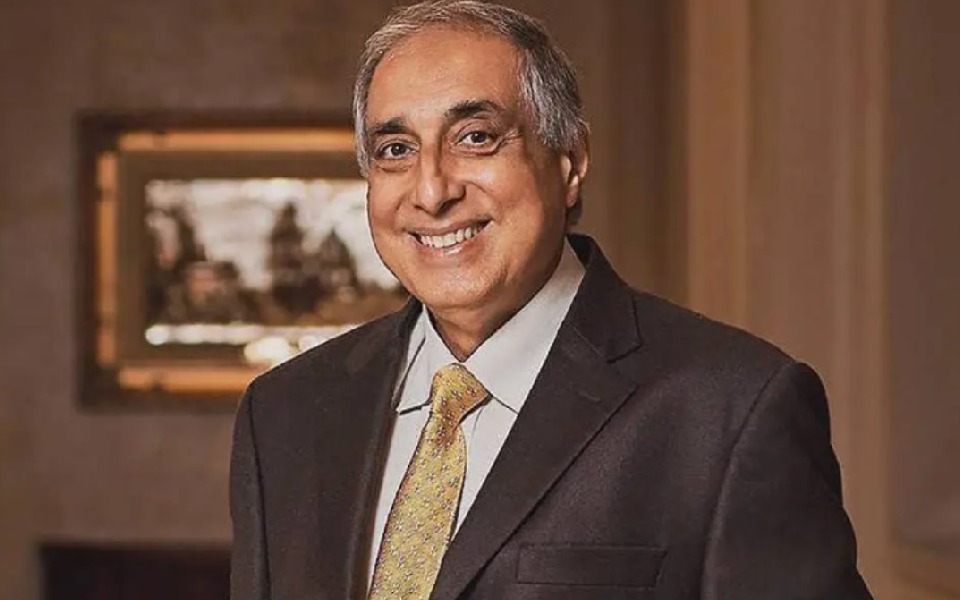
Bengaluru: The Karnataka Government has announced Irfan Razack, Chairman and Managing Director of Prestige Group, as one of the recipients of this year’s prestigious Karnataka Rajyotsava Award.

Razack, a prominent figure in the real estate and retail industry, has been recognized for his significant contributions to Karnataka’s growth and development through his work in the real estate sector.

With over 48 years of experience, Razack has led Prestige Group with a strong commitment to ethical business practices and a visionary approach to development. Under his guidance, Prestige Group has grown into a major player in the industry, with a reputation for excellence in real estate across India. Razack has received numerous awards and recognitions throughout his career, including the Fellowship of the Royal Institution of Chartered Surveyors (FRICS), the ‘Real Estate Professional of the Year’ award at the Real Estate Excellence Awards in 2008, and the prestigious Sir M. Visvesvaraya Memorial Award in 2015 for his contributions to Karnataka’s growth.

He has also been recognized for his exceptional leadership, being voted one of Asia’s Best CEOs in 2014 by Institutional Investor magazine and receiving ‘The World’s Greatest Leaders’ award by Asia One in 2015-16. His achievements have placed him among India’s top builders and leaders. In addition to his professional accomplishments, Razack is actively involved in numerous philanthropic and corporate social responsibility (CSR) initiatives, supporting causes that benefit society at large.

The Karnataka Rajyotsava Award, the state’s second-highest civilian honor, celebrates individuals who have made outstanding contributions to Karnataka in fields such as arts, education, industry, literature, science, social service, sports, and public affairs. The award will be formally presented on November 1, Kannada Rajyotsava Day, which marks Karnataka’s formation as a state.

Let the Truth be known. If you read VB and like VB, please be a VB Supporter and Help us deliver the Truth to one and all.


New Delhi (PTI): The Supreme Court on Tuesday said it will ask states to pay a "heavy compensation" for dog-bite incidents and hold dog feeders accountable as it flagged its concern over the lack of implementation of norms on stray animals for the past five years.

A bench of Justices Vikram Nath, Sandeep Mehta, and NV Anjaria said that even dog lovers and feeders will be held “responsible” and “accountable” for dog-bite incidents.

"For every dog bite, death or injury caused to children or elderly, we are going to ask the state governments to pay heavy compensation, as they did not do anything on implementation of norms in the past five years. Also, responsibility and accountability will be fixed on those who are feeding these stray dogs. If you love these animals so much, then why don’t you take them to your house. Why should these dogs loiter around, bite and scare people?" Justice Nath said.

Justice Mehta concurred with the views of Justice Nath and said, “Who should be held accountable when dogs attack a 9-year-old? The organisation that is feeding them? You want us to shut our eyes to the problem."

The top court was hearing several petitions seeking modification of its November 7, 2025 order directing the authorities to remove these stray animals from the institutional areas and roads.

ALSO READ:  Beant Singh murder: SC defers hearing on Hawara's plea for transfer to Punjab jail

The top court said the worst part is that a lawyer from Gujarat was bitten in a park and when civic authorities went to catch that animal, the lawyers, who claimed to be dog lovers, attacked the civic officials.

The top court also lamented that for four days, it has been hearing arguments on the issue and was not allowed to proceed further in the matters by activists and NGOs and was not able to hear the views of the Centre and the states.

"Our request to all the lawyers is to allow us to take to task the union, the state authorities and other bodies… Allow us to pass an order. We need to spend half a day with the States and Union. To see whether they have a plan of action or not. The problem has multiplied a thousand times. We just want implementation of statutory provision. Allow us to do that. Allow us to work. Allow us to proceed further," the top court observed during the hearing.

At the outset, senior advocate Arvind Datar, appearing for an NGO, defended the apex court's November 7, 2025 order dealing with institutional areas, arguing that it was fully justified and supported by statutory rules. He contended that there was no need to constitute any new expert committee since reports of the existing committees were already on record.

Justice Mehta remarked that Datar was “the first who has come to the rescue of the order."

Datar argued that stray dogs have no legal right to occupy institutional premises or other public spaces to which people have access. He submitted that dogs do not have a right to be brought back to the institutional area because these animals have no right to be in that place at the first instance.

Datar referred to a separate writ petition filed by conservation groups regarding feral dogs in wildlife areas, especially Ladakh. He told the court that reports placed before it showed the presence of around 55,000 free-ranging feral dogs in Ladakh, posing a grave threat to critically endangered species.

Senior advocate Vikas Singh, appearing for an animal welfare trust, urged the court to view the matter not merely as a human-versus-animal issue but from the perspective of ecological balance.

During the hearing, Justice Mehta said, "A young counsel just showed us statistics of orphan children on the streets. Perhaps some lawyers could argue for adoption of those children. Since the year 2011 when I was elevated (as a judge), these are the longest arguments I have heard. And till now no one has argued so long for human beings."

Senior advocate Pinky Anand emphasised that the law required animals to be treated with compassion, cautioning against approaches that amounted to culling.

Similarly, senior advocate Menaka Guruswamy and other lawyers made arguments on the issue.

On January 9, the top court said it would not go into the allegations of harassment of women dog feeders and caregivers by purported anti-feeder vigilantes since it was a law and order issue and the aggrieved persons could lodge FIRs about it.

The top court also refused to go into the claims about certain derogatory remarks being made about women on the issue.

Taking note of the "alarming rise" in dog-bite incidents within institutional areas such as educational institutions, hospitals and railway stations, the apex court on November 7 directed relocation of stray canines forthwith to designated shelters after due sterilisation and vaccination.

It also said stray dogs picked up shall not be released back to the place they were picked up from. It directed the authorities to ensure the removal of all cattle and other stray animals from the state highways, national highways and expressways.

The top court is hearing a suo motu case, initiated on July 28 last year, over a media report on stray dog bites leading to rabies, particularly among children, in the national capital.