Jan 01: Over 1,000 COVID-19 cases in Karnataka, 5 deaths

Bengaluru, Jan 1: Witnessing a spike for the fourth consecutive day, Karnataka on Saturday reported over 1,000 new COVID-19 cases and 5 deaths, taking the total number of infections to 30,08,370 and the death toll to 38,340.
The total number of active cases is now at 9,386.
The state today registered 1,033 fresh infections, compared to 832 on Friday, 707 on Thursday and 566 on Wednesday.
There were 354 discharges today, taking the total number of recoveries to 29,60,615, a health department bulletin said.
Of the new cases, 810 were from Bengaluru Urban, as the city saw 218 discharges and 2 deaths.
While the positivity rate for the day stood at 0.86 per cent, the Case Fatality Rate (CFR) was 0.48 per cent.
Of the deaths, two are from Bengaluru Urban, and one each from Mandya, Tumakuru and Uttara Kannada.
Apart from Bengaluru Urban, Dakshina Kannada accounted for the second highest of 48 new cases, Mysuru 29, Udupi 28 and Mandya 23.
Bengaluru Urban district now has a total of 12,64,428 positive cases, followed by Mysuru 1,80,304 and Tumakuru 1,21,349.
According to the bulletin, Bengaluru Urban tops the list among discharges with 12,40,149, followed by Mysuru 1,77,759 and Tumakuru 1,20,144.
Cumulatively a total of 5,65,87,422 samples have been tested in the state of which 1,19,225 were tested on Saturday alone.
To view today's health bulletin: CLICK HERE
Let the Truth be known. If you read VB and like VB, please be a VB Supporter and Help us deliver the Truth to one and all.
Ordinance issued to increase number of Supreme Court judges from 34 to 38
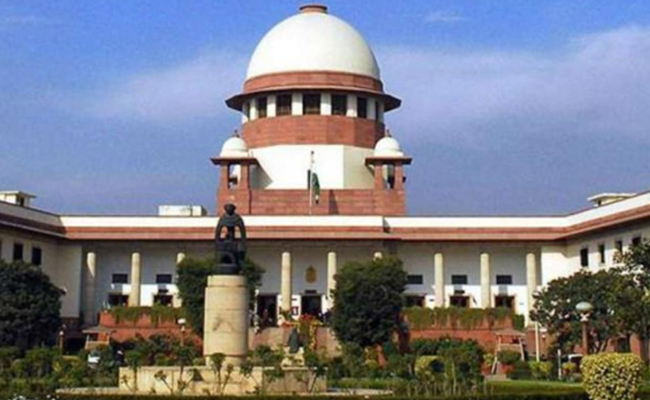
New Delhi (PTI): The government has promulgated an ordinance to increase the strength of the Supreme Court from the present 34 judges to 38, including the Chief Justice of India.
The law ministry notified the ordinance on Saturday, which amended the Supreme Court (Number of Judges) Act, 1956, to increase the sanctioned strength of the top court.
So far, the sanctioned strength of the top court was 34, including the Chief Justice of India (CJI). Now, the number of judges has been increased by four, taking the sanctioned strength to 38.
The top court will now have 37 judges, other than the CJI.
With the apex court having two vacancies at present, and the ordinance coming into force immediately, the Supreme Court Collegium will now have to recommend six names for appointment as judges in the top court.
A bill will be brought in the Monsoon Session of Parliament to convert the ordinance – an executive order – into a law passed by Parliament.
The Union Cabinet had cleared a draft bill on May 5 to increase the number of apex court judges.
The strength of the Supreme Court was last increased from 30 to 33 (excluding the CJI) in 2019.
The Supreme Court (Number of Judges) Act, as originally enacted in 1956, put the maximum number of judges (excluding the CJI) at 10.
This number was increased to 13 by the Supreme Court (Number of Judges), Amendment Act, 1960, and to 17 by another amendment to the law.
The Supreme Court (Number of Judges) Amendment Act, 1986, augmented the strength of judges from 17 to 25, excluding the CJI.
A fresh amendment in 2009 further increased the strength from 25 to 30.
Article 124(3) of the Constitution lists the qualifications required to become a Supreme Court judge.
An Indian citizen who has either served as a high court judge for at least five years, or as an advocate for 10 years, or is a distinguished jurist, can be appointed to the top court.
The strength of the Supreme Court is increased based on the recommendations of the CJI, who writes to the Union law minister. After consulting the finance ministry, the Department of Justice under the law ministry moves the Cabinet with a draft bill.