JD(S) to contest assembly bypolls in Karnataka, announces candidate for one seat
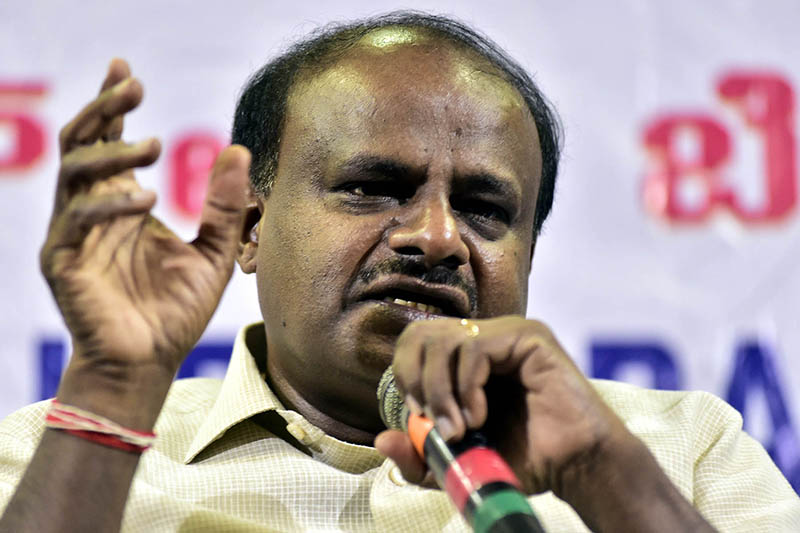
Bengaluru, Mar 18: Ending confusion, JD(S) leader HD Kumaraswamy on Thursday made it clear his party will contest April 17 bypolls to two assembly segments in Karnataka on its own and declared the candidate for Basavakalyan seat.
However, there seems to be no clarity yet about contesting Belgaum Lok Sabha byelection, with the former chief minister saying it will be decide in a couple of days.
JD(S) announced a Muslim candidate for Basavakalyan, seen as a move by the party to re-project its secular credentials, amid talks of its growing closeness to the BJP.
"We have decided to field candidates for Basavakalyan and Maski assembly constituency.....there is no question of any internal or outward understanding with any party in this polls," Kumaraswamy said.
Speaking to reporters after meeting JD(S) office bearers and leaders from both constituencies, he said, the party has taken the assembly bypolls seriously and will fight for victory.
"In Basavakalyan, after consulting our people it has been decided to field Syed Yasrab Ali Quadri - he's descendant of Basavakalyan's famous Hazrat Shah Dada Karar dargah. He was with the Congress for 15 years. He has ties with all sections of society," Kumaraswamy said.
For Maski, the candidate will be decided by Friday, he said, adding a decision on contesting Belgaum Lok Sabha seat would be taken in a couple of days after consulting local party leaders.
The bypolls will be held on April 17 and the counting of votes is slated for May 2.
By-elections to Belgaum Lok Sabha and Basavakalyan assembly seats have been necessitated by the death of Union Minister Suresh Angadi of the BJP and MLA B Narayan Rao of Congress respectively due to COVID-19 in September last year.
Maski seat fell vacant following the disqualification of MLA Prathapagouda Patil, who had won in 2018 on a Congress ticket and is now with the BJP.
Some amount of confusion had persisted about JD(S) contesting the bypolls with patriarch H D Deve Gowda stating that the party will not contest by-elections citing financial constraints while Kumaraswamy maintained it will field candidates.
Responding to a question about it, Kumaraswamy said Gowda had earlier said the party had not yet decided on fielding candidates for the bypolls. But later at a party meeting, with his permission it was decided to contest.
The JD(S) leader also noted that Raichur under which Maski constituency comes, is an extremely potential district for the party, and out of the seven assembly seats there, it can win 5-6 in the next assembly elections.
Let the Truth be known. If you read VB and like VB, please be a VB Supporter and Help us deliver the Truth to one and all.
Inappropriate for MLAs seeking free IPL tickets, says D.K. Suresh
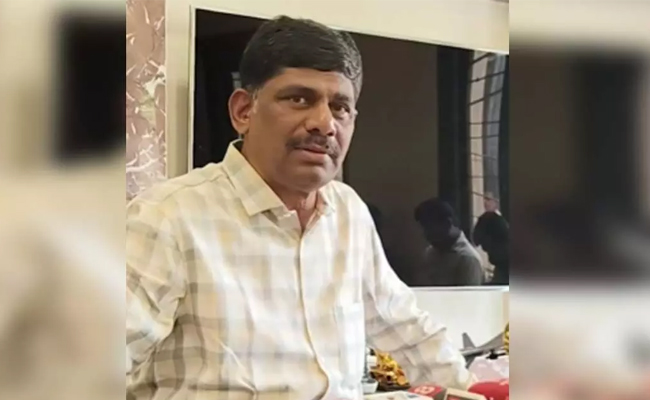
Bengaluru: Bengaluru Milk Union Ltd President D.K. Suresh on Monday said it is inappropriate for MLAs to seek free IPL tickets, adding that those interested in watching matches should pay for them personally.
Speaking to reporters near his residence in Sadashivanagar, he said, “IPL is a commercial tournament and does not represent the country. It is not right for public representatives to focus too much on such matters.”
Referring to the recent controversy during the RCB celebrations, he said, “let us find out who benefited the most from the statements made during the incident.” He also pointed out that BJP MLAs had received IPL tickets as well.
Responding to discussions about relocating the Chinnaswamy Stadium, Suresh said the government has already approved the construction of a new stadium at a location he had proposed.
“I had suggested building a stadium in Surya City and submitted a proposal for it. Bengaluru needs four stadiums in four directions to cater to its growing population and encourage youth participation in sports,” he said.
He noted that apart from Kanteerava Stadium, KSCA, and the Football Stadium, there are limited facilities in the city.
“When I was a Lok Sabha member, I had proposed allocating 100 acres in my constituency at Surya City. The land was later earmarked and the plan approved,” he added.
Suresh said he has discussed the project with Minister Zameer Ahmed Khan, Rajiv Gandhi Housing Corporation Chairman Shivalingegowda, and Anekal MLA Shivanna.
“The Cabinet has now approved the project, and a stadium will be developed on around 50–60 acres,” he said.
He further added that he has requested the Deputy Chief Minister to build another stadium at Shivarama Karanth Layout through the BDA, where 40 acres have been allocated. Plans are also being discussed to develop a well-equipped stadium in Bidadi.
Commending state government's recent bilingual policy move, Suresh said forcing children to learn three languages could affect their comprehension.
“It is a good decision to make two languages compulsory. Learning a third language should be left to the choice of students and parents,” he said.
Responding to criticism from BJP leaders, he said their tendency is to oppose every decision of the government.
“To please their central leadership, they take a pro-Hindi stance. Instead, they should advocate for the adoption of Kannada in all states,” he said.
When asked about the earlier three-language policy under Congress, he said, “the situation is different now. Today, the focus should be on quality learning. Kannada should remain the primary language, while students and parents can choose an additional language.”