Karnataka cabinet likely to decide on lockdown-like curbs on all days of the week on Monday

Bengaluru, Apr 25: A decision on imposing lockdown like restrictions on all days of the week in Karnataka, which is facing a huge spike in COVID-19 cases, is likely to be taken by the state cabinet on Monday.
While ministers on Sunday said a decision in this regard was likely during the cabinet meeting, official sources said another one on the matter of free of cost vaccinations might also be taken.
"Weekend curfew restrictions are in place till May 4 and as per the guidelines, it will be there next Saturday, Sunday also.
Discussions are on whether to enforce curfew on weekdays, whether to go for complete lockdown or not," Industries Minister Jagadish Shettar said.
Speaking to reporters in Dharwad, he said it would be discussed at the cabinet meeting tomorrow, following which Chief Minister B S Yediyurappa would announce the decision.
"We are not in favour of lockdown, but the situation is such that we have to impose restrictions to bring things under control...we have to break the chain, it is a matter of 10-12 days, let's see... once the numbers (cases) come down, restrictions will also reduce," he added.
The state cabinet is scheduled to meet at 11 am on Monday.
According to COVID-19 guidelines that are in place from April 21 to May 4, night curfew has been imposed in the entire state from 9 pm to 6 am every day and there will be weekend curfew from Friday 9 pm to Monday 6 am.
During the weekend curfew that began on Friday night, Bengaluru and most other parts of the state wore a deserted look with businesses and restaurants remaining shut and vehicles staying off the roads.
Barring the 6 am to 10 am period when the public were allowed to purchase essential items like milk, groceries and vegetables, among others, people largely stayed indoors and cooperated by following the restrictions.
Stating that no decision has yet been taken by the government on lockdown, Deputy Chief Minister C N Ashwath Narayan said it would discuss and take take a decision, based on what the CM or the Health Minister places before the cabinet on this issue.
He said suggestions have been put forward for "Janata curfew", wherein people voluntarily decide not come out unnecessarily.
However, Home Minister Basavaraj Bommai said "such proposals (lockdown) did not come during yesterday's meeting.
So I don't want to comment on speculations. For now things will continue as it is."
The state government had last week imposed night and weekend curfew amid intense speculation that it may go for lockdown like restrictions in Bengaluru and few other places, with former Chief Minister and JD(S) leader H D Kumaraswamy too demanding for it.
State Congress President D K Shivakumar had subsequently said it seemed that the government,which had planned to impose lockdown last week, changed it, after Prime Minister Nardendra Modi's address to the nation, during which he requested states to use it as a last resort.
Let the Truth be known. If you read VB and like VB, please be a VB Supporter and Help us deliver the Truth to one and all.
Allahabad HC orders probe into 'reinstatement' of teacher in UP's Barabanki
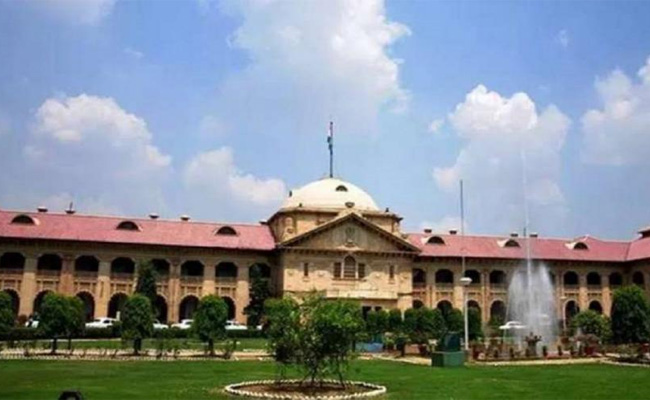
Lucknow (PTI): The Lucknow Bench of the Allahabad High Court on Friday ordered a probe by the special task force (STF) into alleged irregularities in the rejoining of a teacher at City Intermediate College in Barabanki, observing that the reinstatement appeared to be prima facie illegal.
The court also directed the recovery of the salary paid to the teacher during the disputed period.
A bench of Justice Rajeev Singh passed the order on a petition filed by the college management committee. The court expressed doubts over the roles of the District Inspector of Schools (DIOS), Barabanki, the college principal and the teacher concerned and hence, directed a detailed inquiry into the matter.
Taking note of alleged manipulation of records and misleading submissions, the court ordered the immediate transfer of the Barabanki DIOS to ensure a fair probe. It also directed the initiation of disciplinary proceedings against the then joint director of education of the Ayodhya division.
In its order, the court found that the teacher, Abhay Kumar, was initially appointed as an assistant teacher in 2018 but joined an Eklavya Model Residential School in Chhattisgarh as a lecturer in June 2024 without obtaining permission from the management. His subsequent request to retain the lien was rejected.
Despite this, he was allowed to rejoin the Barabanki College in September 2025 on the directions of the joint director of education and the DIOS, and was even paid the salary for October 2025. The court termed the rejoining "wholly illegal" and lacking any legal basis.
The bench also expressed concern over lapses in communication within the education department and directed the Uttar Pradesh chief secretary to ensure that official orders are communicated through email and WhatsApp as well, to prevent disputes.
The matter is next listed for hearing on May 28 when a compliance report is sought.