Karnataka clears investment proposals worth Rs 26,659 crore and potential to generate 13,341 jobs

Bengaluru, Dec 21: The State High Level Clearance Committee (SHLCC) meeting chaired by Karnataka Chief Minister B S Yediyurappa on Monday cleared five projects with an total investment potential of Rs 26,659 crore and can generate employment to 13,341 people.
Investments cleared in the 55th SHLCC meeting include two proposals by Elest Pvt Ltd in Hubli/Dharwad - one worth Rs 14,255 crore on 85 acres of land for electric vehicle manufacturing, with a potential to generate employment for 867 people.
The other is worth Rs 6,339 crore on 88 acres for lithium ion cells and battery manufacturing unit, that can generate 1,804 jobs.
Also cleared are proposals worth Rs 1,825 crore by Hyunet Private Ltd on 300 acres to be allotted by Karnataka Industrial Areas Development Board in Bagepalli taluk of Chikkaballapur district for Lithium batteries and electric vehicles, that can produce 2,210 jobs.
Investment of Rs 1,290 crore by Miraculum Green Power Pvt Ltd on 700 acres to be taken on lease at villages in Jagalur Taluk of Davengere district to set up 110 MW hybrid wind solar power project, with a potential to generate 2,820 jobs.
Proposal worth Rs 2,950 crore by Sanali Power Pvt Ltd on 1,710 acres also taken on lease at villages in Jagalur Taluk of Davengere district to set up hybrid wind solar power project, that can create jobs to 5,640 people.
The SHLCC meet was attended by Large and Medium Industries Minister Jagadish Shettar, Deputy Chief Minister Ashwat Narayan, Gaurav Gupta, Principal Secretary - Commerce and Industries department and other senior officials.
While projects with investments between Rs 15 to 100 crore are cleared by the State Level Single Window Clearance Committee (SLSWCC), chaired by the Minister for Large and Medium Scale Industries, investments above Rs 100 crore are cleared by the SHLCC, chaired by the Chief Minister.
Let the Truth be known. If you read VB and like VB, please be a VB Supporter and Help us deliver the Truth to one and all.
Ordinance issued to increase number of Supreme Court judges from 34 to 38
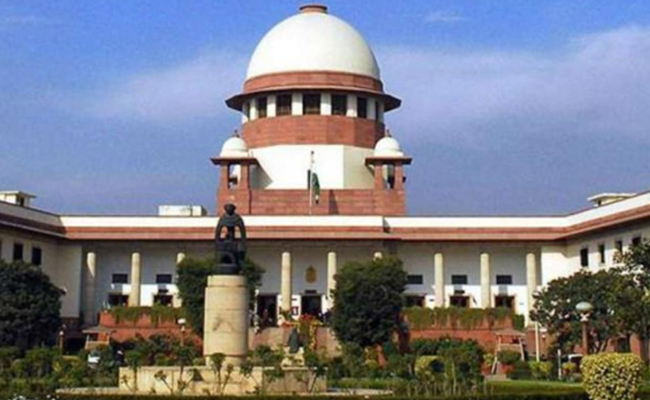
New Delhi (PTI): The government has promulgated an ordinance to increase the strength of the Supreme Court from the present 34 judges to 38, including the Chief Justice of India.
The law ministry notified the ordinance on Saturday, which amended the Supreme Court (Number of Judges) Act, 1956, to increase the sanctioned strength of the top court.
So far, the sanctioned strength of the top court was 34, including the Chief Justice of India (CJI). Now, the number of judges has been increased by four, taking the sanctioned strength to 38.
The top court will now have 37 judges, other than the CJI.
With the apex court having two vacancies at present, and the ordinance coming into force immediately, the Supreme Court Collegium will now have to recommend six names for appointment as judges in the top court.
A bill will be brought in the Monsoon Session of Parliament to convert the ordinance – an executive order – into a law passed by Parliament.
The Union Cabinet had cleared a draft bill on May 5 to increase the number of apex court judges.
The strength of the Supreme Court was last increased from 30 to 33 (excluding the CJI) in 2019.
The Supreme Court (Number of Judges) Act, as originally enacted in 1956, put the maximum number of judges (excluding the CJI) at 10.
This number was increased to 13 by the Supreme Court (Number of Judges), Amendment Act, 1960, and to 17 by another amendment to the law.
The Supreme Court (Number of Judges) Amendment Act, 1986, augmented the strength of judges from 17 to 25, excluding the CJI.
A fresh amendment in 2009 further increased the strength from 25 to 30.
Article 124(3) of the Constitution lists the qualifications required to become a Supreme Court judge.
An Indian citizen who has either served as a high court judge for at least five years, or as an advocate for 10 years, or is a distinguished jurist, can be appointed to the top court.
The strength of the Supreme Court is increased based on the recommendations of the CJI, who writes to the Union law minister. After consulting the finance ministry, the Department of Justice under the law ministry moves the Cabinet with a draft bill.