Karnataka Forest Department issues guidelines to tackle rising elephant-human conflict
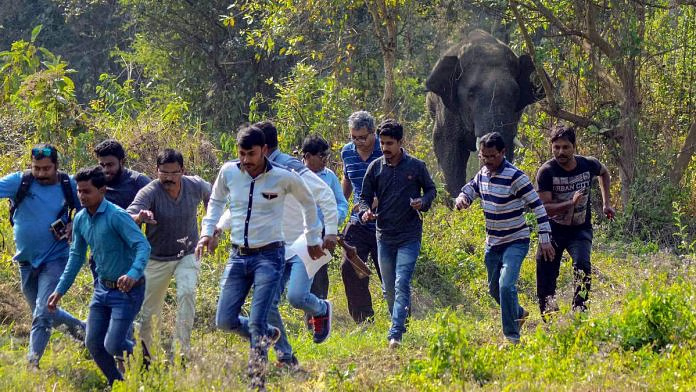
Bengaluru: In response to the increasing number of elephant-related incidents across the state, the Karnataka Forest Department has issued detailed guidelines to its staff in thirteen divisions to manage human-elephant conflict during various emergency situations.
The move comes amid questions raised by the Karnataka High Court regarding the exercise of powers under Section 11 of the Wildlife (Protection) Act. It permits the Chief Wildlife Warden to authorise the hunting of an animal deemed dangerous to human life, among other criteria. The court’s scrutiny follows a public interest litigation that challenged the alleged indiscriminate capture of elephants in the Hassan district, Deccan Herald reported on Monday.
These interactions are often driven by habitat encroachment, fragmentation or loss, scarcity of food and water in natural habitats, and attraction to cultivated crops or human settlements are the other reasons,” the guidelines state.
Emphasis is placed on the safety of both humans and elephants, with a focus on preventing the recurrence of such incidents through improved preparedness.
Elephants account for nearly two-thirds of all wildlife conflict cases in the state. Data from the department, cited by DH, shows that in the 2024–25 financial year alone, 35,580 conflict incidents were recorded, with 22,483 involving elephants.
In addition to human and animal fatalities, the department has had to contend with injuries leading to disability, crop destruction, and property damage. Of the Rs 22 crore ex gratia paid, elephants accounted for Rs 13.5 crore. Meanwhile, around 15,000 pending cases, where damages claimed amount to Rs 23 crore, are still awaiting resolution.
The guidelines also cover procedures for the rescue and relocation of problematic elephants. In the event of a wild elephant’s death, whether by natural causes, accidents, or human action, the department is expected to respond promptly and systematically.
However, implementation may face challenges on the ground. An official from the elephant conflict division termed the guidelines "ambitious," highlighting few issues.
“Mobilisation of resources is a big challenge. Rushing elephant task forces from one division to another when 60% sanctioned staff positions are vacant is not a solution. The outsourced staff who earn a pittance are exposing themselves to danger. These basic matters need to be addressed,” DH quoted him as saying.
Let the Truth be known. If you read VB and like VB, please be a VB Supporter and Help us deliver the Truth to one and all.
Fadnavis rides motorcycle to Vidhan Bhavan, says PM Modi asked only for 'small sacrifices'
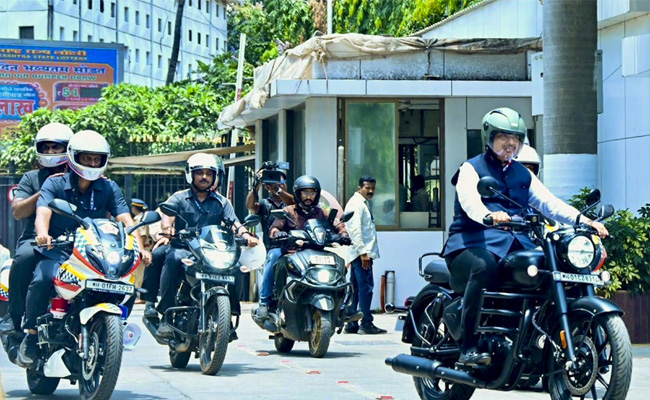
Mumbai (PTI): Maharashtra Chief Minister Devendra Fadnavis on Thursday rode a motorcycle to the Vidhan Bhavan here and later defended the Centre's austerity measures, saying Prime Minister Narendra Modi has only "asked people to make small sacrifices".
He also criticised the Opposition for creating "unnecessary controversy" over the matter, adding that questioning the PM's foreign visits - aimed at strategic alliances and economic benefits - was "sheer foolishness".
Fadnavis arrived at the Vidhan Bhavan in South Mumbai on a motorbike from his residence 'Varsha', with BJP leader and minister Ashish Shelar accompanying him, to attend the swearing-in of new members of the legislative council.
The move comes as part of the measures after PM Modi's appeal to conserve fuel and foreign exchange in view of the ongoing conflict in West Asia, which has disrupted global energy supplies. India relies heavily on West Asia for crude oil and gas imports.
On Wednesday, CM Fadnavis announced a series of austerity measures, including halving the number of vehicles in the convoys of his cabinet colleagues, and cancelling foreign tours of ministers and officials.
Addressing reporters here on Thursday, Fadnavis said the state government had curtailed convoys, cancelled avoidable foreign tours and decided against holding large government events for the next six months.
Targeting the Opposition, the CM said similar austerity measures had been adopted by previous governments, including during the tenures of former prime ministers Indira Gandhi and P V Narasimha Rao, as well as by former finance minister P Chidambaram in 2012.
"The Opposition needs to show some maturity. Countries across the world have taken even tougher decisions. The prime minister has only asked people to make small sacrifices while himself taking very tough decisions. Creating unnecessary controversy over this is not appropriate," he said.
Fadnavis said he travelled by motorcycle to send a message on fuel conservation, adding that symbolic actions by political leaders help spread awareness among people.
"When leaders act symbolically in this manner, the message reaches the people. That is why I came here on a motorcycle," he stressed.
The chief minister said all unnecessary foreign visits by officials and ministers had been stopped, and efforts were underway to reduce fuel consumption and save foreign exchange.
"We have reduced our convoys. Wherever petrol and diesel can be saved, wherever foreign exchange can be conserved, we are making every possible effort," he said.
Fadnavis said a major government event scheduled in Satara on Friday would, however, go ahead as it was planned in advance and expenditure had already been incurred.
He said around 25 lakh families would receive benefits valued at Rs 10,000 crore under the Centre's Pradhan Mantri Awas Yojana during the programme.
"After this event, however, no large government programmes will be organised over the next six months," he added.
The CM also dismissed criticism on social media over PM Modi's foreign visits, saying overseas trips aimed at strategic alliances and economic gains for the country should not be equated with avoidable travel.
"The appeal is only against unnecessary foreign travel. It does not mean businessmen should cancel important overseas deals. Criticising the prime minister's foreign visits is sheer foolishness," he said.