Karnataka govt appoints Tamannaah Bhatia as KSDL brand ambassador

Bengaluru, May 22 (PTI): The Karnataka government has appointed Bollywood actress Tamannaah Bhatia as the brand ambassador of Karnataka Soaps and Detergents Limited (KSDL), which manufactures Mysore Sandal Soap.
The state government’s order issued on Wednesday said Bhatia has been appointed as the brand ambassador for two years and two days at a cost of Rs 6.2 crore.
The decision drew flak from certain sections of society who questioned her appointment.
“When local Kannada young actresses like @AshikaRanganath could be taken as brand ambassador why appoint and promote Hindi ones?” a woman questioned the decision on ‘X’.
We're thrilled to welcome the iconic Ms Tamannaah Bhatia (@tamannaahspeaks) as the brand ambassador for Mysore Sandal Soap! A symbol of grace and versatility, Tamannaah perfectly mirrors the legacy, purity, and timeless appeal of our heritage brand
— House Of Mysore Sandal (@MysoreSandalIn) May 22, 2025
.
.#Ksdl #BrandAmbassador pic.twitter.com/TQe2tjeY4O
Reacting to it, state Commerce and Industries Minister M B Patil on Thursday explained that the decision was taken after much deliberation “to penetrate markets beyond Karnataka aggressively”.
The KSDL has the deepest respect and regards to the Kannada film industry, Patil said, adding that some Kannada movies are giving competition to even Bollywood films.
“Mysore Sandal has a very good brand recall within Karnataka, which shall be strengthened. However the intent of Mysore Sandal is to also penetrate markets beyond Karnataka aggressively,” the minister clarified.
“The pride of Karnataka is also a Jewel of the Nation. Hence it’s an independent strategic decision of the PSU board after consulting various marketing experts,” Patil noted.
According to him, choosing a brand ambassador takes a lot of deliberation and also considerations like availability for any given category if they have a non-competition agreement, social media presence, coherence with the brand, product and target audience and marketing fit and reach.
“Our vision is for KSDL to touch annual revenue of Rs 5,000 crore by 2028,” the minister said.
Let the Truth be known. If you read VB and like VB, please be a VB Supporter and Help us deliver the Truth to one and all.
Ordinance issued to increase number of Supreme Court judges from 34 to 38
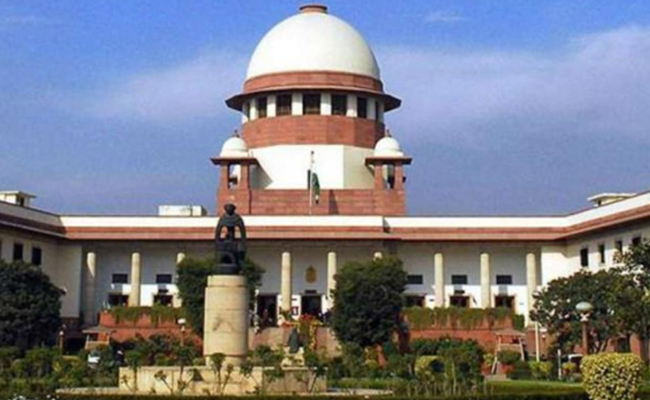
New Delhi (PTI): The government has promulgated an ordinance to increase the strength of the Supreme Court from the present 34 judges to 38, including the Chief Justice of India.
The law ministry notified the ordinance on Saturday, which amended the Supreme Court (Number of Judges) Act, 1956, to increase the sanctioned strength of the top court.
So far, the sanctioned strength of the top court was 34, including the Chief Justice of India (CJI). Now, the number of judges has been increased by four, taking the sanctioned strength to 38.
The top court will now have 37 judges, other than the CJI.
With the apex court having two vacancies at present, and the ordinance coming into force immediately, the Supreme Court Collegium will now have to recommend six names for appointment as judges in the top court.
A bill will be brought in the Monsoon Session of Parliament to convert the ordinance – an executive order – into a law passed by Parliament.
The Union Cabinet had cleared a draft bill on May 5 to increase the number of apex court judges.
The strength of the Supreme Court was last increased from 30 to 33 (excluding the CJI) in 2019.
The Supreme Court (Number of Judges) Act, as originally enacted in 1956, put the maximum number of judges (excluding the CJI) at 10.
This number was increased to 13 by the Supreme Court (Number of Judges), Amendment Act, 1960, and to 17 by another amendment to the law.
The Supreme Court (Number of Judges) Amendment Act, 1986, augmented the strength of judges from 17 to 25, excluding the CJI.
A fresh amendment in 2009 further increased the strength from 25 to 30.
Article 124(3) of the Constitution lists the qualifications required to become a Supreme Court judge.
An Indian citizen who has either served as a high court judge for at least five years, or as an advocate for 10 years, or is a distinguished jurist, can be appointed to the top court.
The strength of the Supreme Court is increased based on the recommendations of the CJI, who writes to the Union law minister. After consulting the finance ministry, the Department of Justice under the law ministry moves the Cabinet with a draft bill.