Karnataka govt condemns graft charges levelled by contractors body
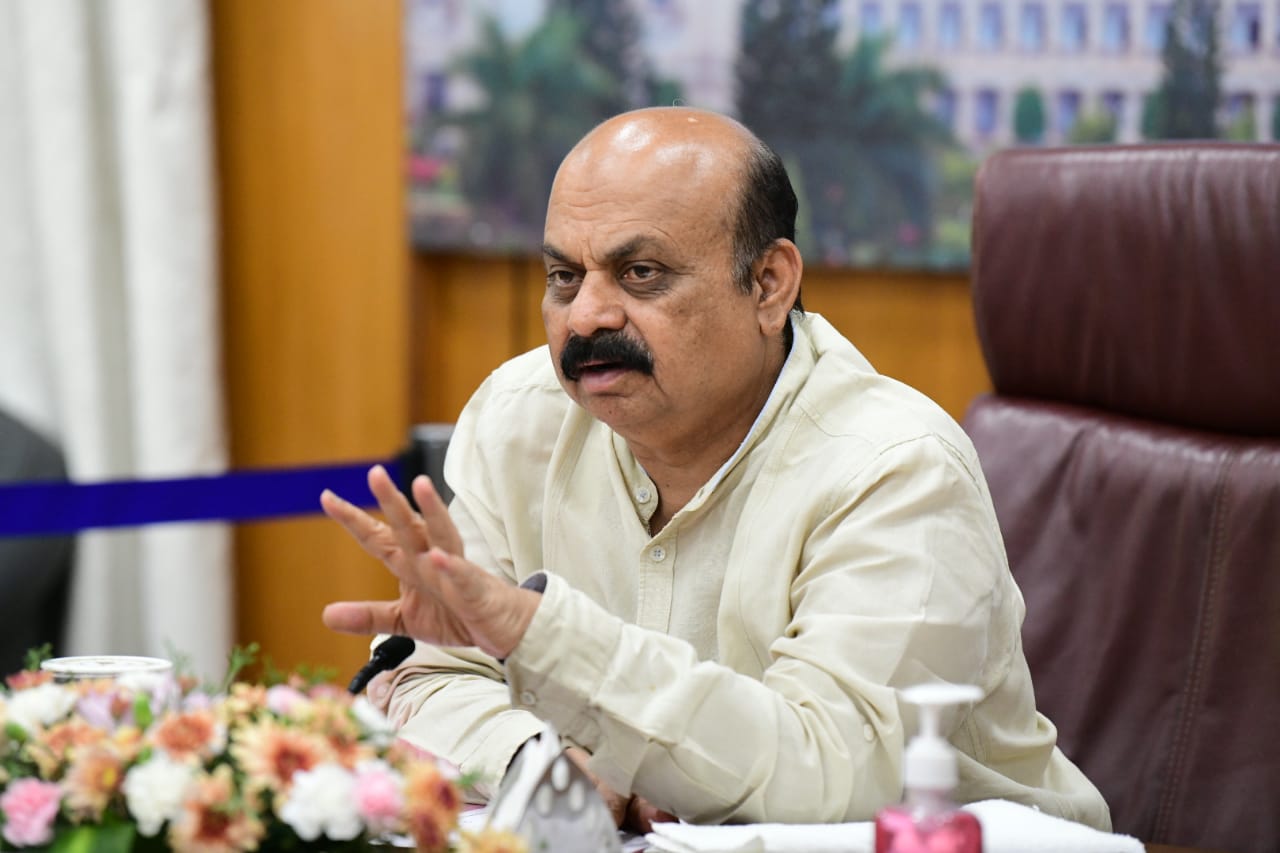
Bengaluru (PTI): The Karnataka cabinet on Thursday condemned the 40 per cent commission allegations made by the State contractors association, calling it 'baseless' and asked it to prove with evidence.
Chief Minister Basavaraj Bommai, who termed the allegations as "nothing but politically motivated", hit out at the Congress, which along with the association is demanding a judicial probe.
"I demand details and evidence for allegations made; if given, will an order inquiry in 24 hours", Bommai said.
The contractors' association has renewed its 40 per cent commission charge and said that it would continue its fight demanding an independent judicial inquiry.
An association delegation, led by its president D Kempanna, had on Wednesday met Congress leader and Leader of Opposition in the state Assembly Siddaramaiah and later alleged that the whole system was corrupt.
He accused Ministers and MLAs of demanding a percentage, and that they would be writing another letter to the Prime Minister Narendra Modi in this regard.
"The cabinet informally discussed it (commission charge), this is not an issue that brings pride to the state. If anyone has to make any charge or make any allegations they will have to provide evidence...we are saddened by such baseless allegations and as a government we condemn it," Law and Parliamentary Affairs Minister J C Madhuswamy said.
Speaking to reporters after the cabinet meeting, he said, "If they have evidence, let them give it to Lokayukta who is a judicial officer or at least to the media, instead just making a statement calling all 224 MLAs as corrupt will not bring respect to the state. If they provide evidence we will initiate an inquiry, we are not here to protect anyone."
Ahead of the cabinet briefing, Bommai said the intention of Kempanna and team is clear from the fact that they met Siddaramaiah, before making the allegations.
Pointing to Kempanna's claim that corruption existed in earlier governments too, and all parties and all legislators are involved, without any evidence, the CM questioned as to why he and his associates were silent during the previous government's tenure.
"First of all, if there is any instance (of corruption) there should be a complaint, there should be an accused and evidence to establish how it happened, without any of this, just giving a press statement and demanding a judicial inquiry is not right," he said.
Seeking to know whether Congress leaders were "Satya Harishchandra" for demanding judicial probe without any evidence, he said, "Has Siddaramaiah forgotten that there were several scams during his government, did he order judicial probe, and what has come out from those given?"
"These are attempts to make up false cases with irresponsible comments", Bommai alleged saying that there is an independent Lokayukta to investigate corruption charges, and any one can lodge a complaint if they have evidence and they will investigate.
Highlighting measures taken by the government after a meeting with the contractors' delegation a few months ago, the CM said, just making sweeping remarks that officials are not following the orders of the government will not do, let them give names and provide evidence.
"Till now, Kempanna has been making vague allegations, this is the first time he has named Minister Munirathna, who has reacted stating that he will file a defamation suit if allegations are not proved. So there will be action for baseless allegations," he noted.
Kempanna on Wednesday accused the Kolar district in-charge Minister (Munirathna), without mentioning names, of threatening officials to collect and get the money.
Let the Truth be known. If you read VB and like VB, please be a VB Supporter and Help us deliver the Truth to one and all.
No need for guv: DMK leader Kanimozhi
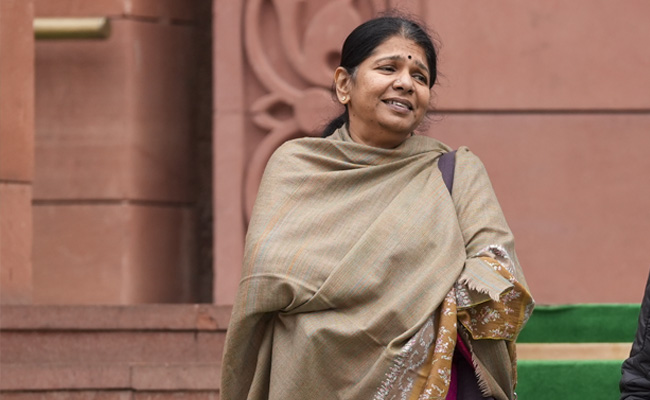
Chennai (PTI): Senior DMK leader Kanimozhi Karunanidhi on Friday reiterated her party’s opposition to the office of the governor amid uncertainty over government formation in Tamil Nadu after a fractured election mandate.
Speaking to PTI Videos, Kanimozhi emphasised that the DMK’s demand for the abolition of the governor’s post remained unchanged, especially as questions arise over constitutional propriety during the current political transition.
"Our position that we do not need a governor at all is something the DMK has never changed at any point in time," she said.
When asked about the governor’s actions following the election results—particularly the delay in inviting the leading party to form the government—Kanimozhi pointed to what she described as the "inherent friction" between the office of the governor and the political interests of the state.
She said the current situation "raises a lot of questions" and requires introspection regarding constitutional procedures.
Kanimozhi described the election results as lacking a "clear mandate", which she identified as the primary reason for the prevailing political uncertainty in the state.
"What the people decide is supreme," she said, adding that while the mandate was not decisive, it must be respected.
The Thoothukudi MP attributed the ongoing delays and "many confusions" to the absence of a decisive majority for any single party.
She firmly dismissed rumours about the DMK potentially supporting the AIADMK from outside to help stabilise the government.
She described such reports as mere "speculation" and "rumours".
"We can’t be responding to every rumour," she said, declining to comment on the AIADMK’s claims regarding its numbers to form the government.
The political situation in Tamil Nadu remains fluid as stakeholders await the governor’s next constitutional step in an Assembly where no party has secured a clear majority.
The DMK and AIADMK—both of which suffered significant losses to the TVK—are reportedly exploring tactical manoeuvres to navigate the hung Assembly.
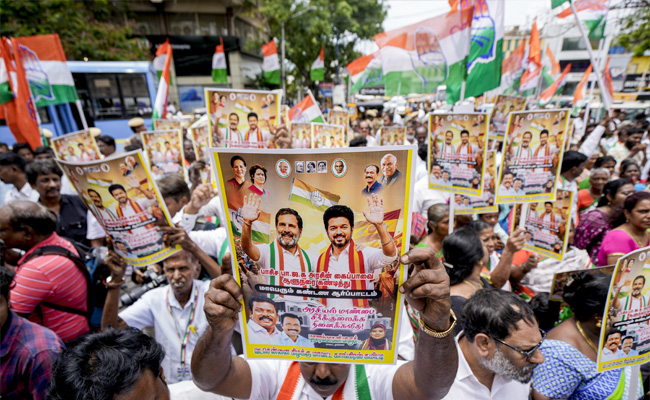
The TVK, with 108 seats and the support of Congress’s five MLAs, is still short of the majority mark. The DMK and AIADMK secured 59 and 47 seats, respectively.