Karnataka govt partners with British Council to bolster bilateral cooperation in higher education
Bengaluru, Dec 17: The Karnataka government and the British Council on Thursday signed a Memorandum of Understanding (MoU) to further bilateral cooperation in higher education.
The MoU will facilitate collaborative and mutually beneficial programmes in the state and contribute to increased research and social linkages in the field of Higher Education between the two entities, an official release from the CMO said.
It said the MoU between British Council and Karnataka State Council for Higher Education is aimed at deeper collaboration between the state and the UK to achieve the outcomes envisioned through the New Education Policy of the Centre.
The release further said student mobility and faculty exchange across higher education institutions (HEIs) in Karnataka and the UK is a key priority of the MoU to enhance research and support internationalisation of HEIs.
The two entities will work closely to strengthen Karnataka's higher education academic landscape through systemic initiatives such as leadership development for faculty and education and research partnerships between institutions of the state and the UK, it added.
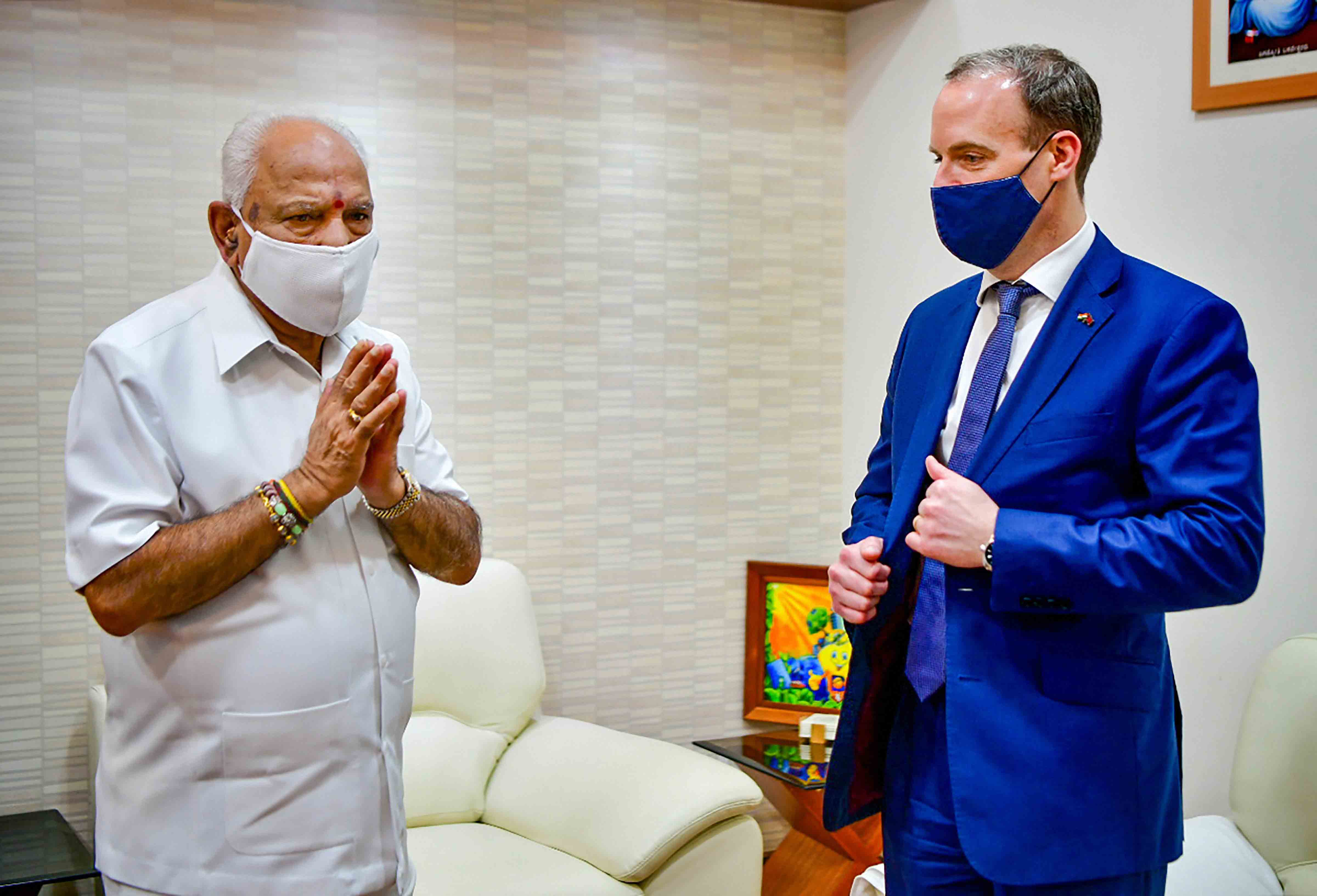
The MoU was signed in the presence of Chief Minister B S Yediyurappa, UK Secretary of State for foreign and development affairs Dominic Raab, Deputy Chief Minister C N Ashwath Narayan among others.
The two governments are signing a first-of-its-kind three years MoU involving collaboration on leadership development in higher education institutions, Yediyurappa said.
Pointing out that Karnataka's Global Innovation Alliance (GIA) initiative for innovation partnerships with countries across the globe has contributed to the state's global image as the leading tech hub, he said UK has been a very important GIA partner for Karnataka and 38 per cent of UK investment into India in 2017-18 came into Karnataka.
The government's Urban Development department has collaborated with the UK through the Climate Resilient Cities for Shared Prosperity Urban Development programme, he said.
This will deliver a transformational project on design and delivery of Multimodal Transport Hubs in Bengaluru, an Integrated Transport Authority and Transport Observatory in partnership with UK Catapults.
Barbara Wickham OBE, Director India of British Council, said the MoU is a further step in realising the mutual vision of a deep, strong India-UK education relationship while supporting the knowledge ambitions laid out in India's National Education Policy 2020.
Through this MoU, we look forward to creating more education and employment opportunities for aspiring students of Karnataka as well as supporting the state's vision for stronger higher education systems, she added.
Director South India of British Council, Janaka Pushpanathan said employability and upskilling is a focus area for governments across the world and we are confident that the co-developed programmes as part of the MoU will help drive the desired results for both Karnataka and the UK in these areas.
India and the UK are countries that prioritise education. The MoU between the British Council & KSCHE will further deepen the collaboration between Karnataka & UK to achieve the outcomes envisioned by PM @narendramodi in India's New Education Policy.@inBritish pic.twitter.com/ntHLrjP0Oc
— B.S. Yediyurappa (@BSYBJP) December 17, 2020
Had a productive meeting with @FCDOGovUK minister @DominicRaab to strengthen tie-ups in areas of technology, education, conservation, and trade & investment. I wish all the success for #Karnataka & @UkinIndia to become partners of choice. @PhilipRBarton @PilmoreBedford pic.twitter.com/93a9PHwr2I
— B.S. Yediyurappa (@BSYBJP) December 17, 2020
Let the Truth be known. If you read VB and like VB, please be a VB Supporter and Help us deliver the Truth to one and all.
Ordinance issued to increase number of Supreme Court judges from 34 to 38
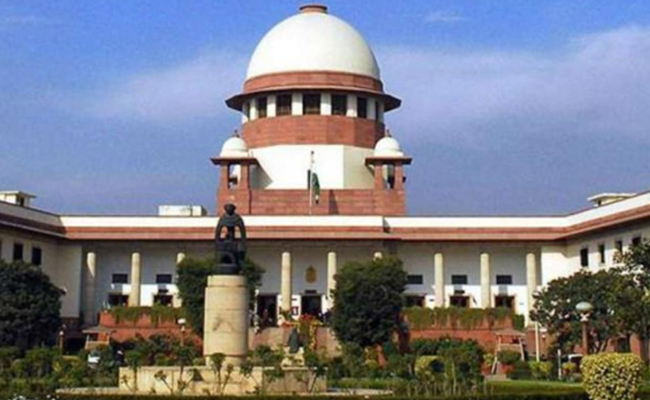
New Delhi (PTI): The government has promulgated an ordinance to increase the strength of the Supreme Court from the present 34 judges to 38, including the Chief Justice of India.
The law ministry notified the ordinance on Saturday, which amended the Supreme Court (Number of Judges) Act, 1956, to increase the sanctioned strength of the top court.
So far, the sanctioned strength of the top court was 34, including the Chief Justice of India (CJI). Now, the number of judges has been increased by four, taking the sanctioned strength to 38.
The top court will now have 37 judges, other than the CJI.
With the apex court having two vacancies at present, and the ordinance coming into force immediately, the Supreme Court Collegium will now have to recommend six names for appointment as judges in the top court.
A bill will be brought in the Monsoon Session of Parliament to convert the ordinance – an executive order – into a law passed by Parliament.
The Union Cabinet had cleared a draft bill on May 5 to increase the number of apex court judges.
The strength of the Supreme Court was last increased from 30 to 33 (excluding the CJI) in 2019.
The Supreme Court (Number of Judges) Act, as originally enacted in 1956, put the maximum number of judges (excluding the CJI) at 10.
This number was increased to 13 by the Supreme Court (Number of Judges), Amendment Act, 1960, and to 17 by another amendment to the law.
The Supreme Court (Number of Judges) Amendment Act, 1986, augmented the strength of judges from 17 to 25, excluding the CJI.
A fresh amendment in 2009 further increased the strength from 25 to 30.
Article 124(3) of the Constitution lists the qualifications required to become a Supreme Court judge.
An Indian citizen who has either served as a high court judge for at least five years, or as an advocate for 10 years, or is a distinguished jurist, can be appointed to the top court.
The strength of the Supreme Court is increased based on the recommendations of the CJI, who writes to the Union law minister. After consulting the finance ministry, the Department of Justice under the law ministry moves the Cabinet with a draft bill.