Karnataka govt revises COVID protocol for travellers from Kerala
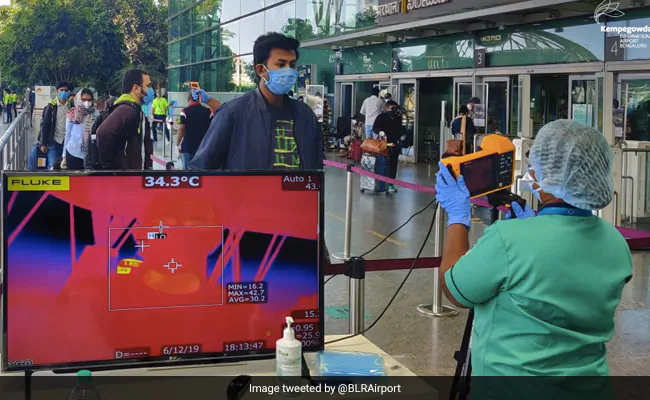
Bengaluru, Sep 2: The Karnataka government has revised its COVID-19 protocol for people coming from Kerala, exempting a set of people from mandatory seven days institutional quarantine.
It had earlier stated that all those coming from Kerala have to be under institutional quarantine for seven days in view of the alarming rise in COVID cases.
The revised protocol exempted constitutional functionaries, healthcare professionals and their spouses from institutional quarantine.
Apart from them, children below two years, people in dire emergency situation such as death in the family or medical treatment, short term travellers (within three days), students arriving to Karnataka for examination along with one parent each and go back within three days and passengers in transit from and to Kerala via any mode of transport have been exempted, the order said.
According to the government order, all students and employees should compulsorily bring negative RT-PCR certificate that is not older than 72 hours irrespective of their COVID-19 vaccination status. It clarified that the validity of such certificates is for one week.
Meanwhile, state Health Minister Dr K Sudhakar said the situation in Kerala was "scary."
"We are scared of the prevailing situation in Kerala. The number of COVID patients is not reducing. Yesterday also more than 30,000 people were tested positive for COVID-19," Sudhakar told reporters in Bengaluru on Thursday.
He also said that the situation had prompted the Karnataka government to make institutional quarantine mandatory for those coming from Kerala.
"Students appearing for the National Eligibility cum Entrance Test (NEET) have complained that institutional quarantine for a week will affect them. Hence, keeping in view the academic future of the students, the government has directed the centres and institutions to arrange for institutional quarantine," Sudhakar said.
He further said the employers will have to make arrangement for institutional quarantine of their staff.
Others coming here will be home quarantined, he explained.
The Karnataka government had earlier made it mandatory for everyone coming from Kerala to get quarantined for a week even if they possess a negative RT-PCR report or have taken the COVID-19 vaccine.
These measures were taken in view of the alarming rise in COVID cases in the neighbouring Kerala which reported 32,803 new COVID-19 cases and 173 deaths on Wednesday.
Passengers arriving from #Kerala, please make note of the latest GoK guidelines. For queries, write to us on feedback@bialairport.com or call us on 080-22012001. #BLRAirport #Bengaluru #StaySafe pic.twitter.com/WNdpemyxnF
— BLR Airport (@BLRAirport) September 2, 2021
Let the Truth be known. If you read VB and like VB, please be a VB Supporter and Help us deliver the Truth to one and all.
Allahabad HC orders probe into 'reinstatement' of teacher in UP's Barabanki
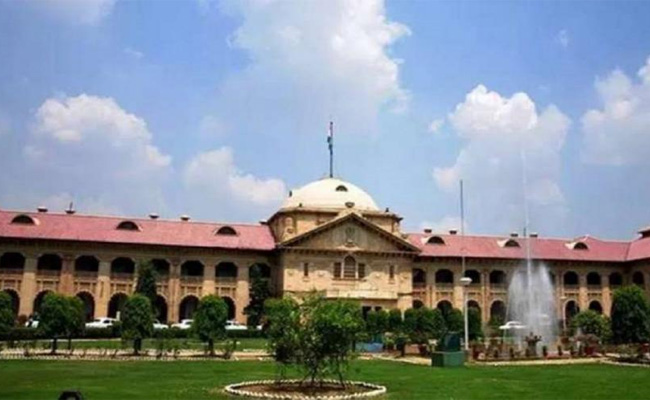
Lucknow (PTI): The Lucknow Bench of the Allahabad High Court on Friday ordered a probe by the special task force (STF) into alleged irregularities in the rejoining of a teacher at City Intermediate College in Barabanki, observing that the reinstatement appeared to be prima facie illegal.
The court also directed the recovery of the salary paid to the teacher during the disputed period.
A bench of Justice Rajeev Singh passed the order on a petition filed by the college management committee. The court expressed doubts over the roles of the District Inspector of Schools (DIOS), Barabanki, the college principal and the teacher concerned and hence, directed a detailed inquiry into the matter.
Taking note of alleged manipulation of records and misleading submissions, the court ordered the immediate transfer of the Barabanki DIOS to ensure a fair probe. It also directed the initiation of disciplinary proceedings against the then joint director of education of the Ayodhya division.
In its order, the court found that the teacher, Abhay Kumar, was initially appointed as an assistant teacher in 2018 but joined an Eklavya Model Residential School in Chhattisgarh as a lecturer in June 2024 without obtaining permission from the management. His subsequent request to retain the lien was rejected.
Despite this, he was allowed to rejoin the Barabanki College in September 2025 on the directions of the joint director of education and the DIOS, and was even paid the salary for October 2025. The court termed the rejoining "wholly illegal" and lacking any legal basis.
The bench also expressed concern over lapses in communication within the education department and directed the Uttar Pradesh chief secretary to ensure that official orders are communicated through email and WhatsApp as well, to prevent disputes.
The matter is next listed for hearing on May 28 when a compliance report is sought.