Karnataka govt to remove textbook content that hurt feelings of Brahmins
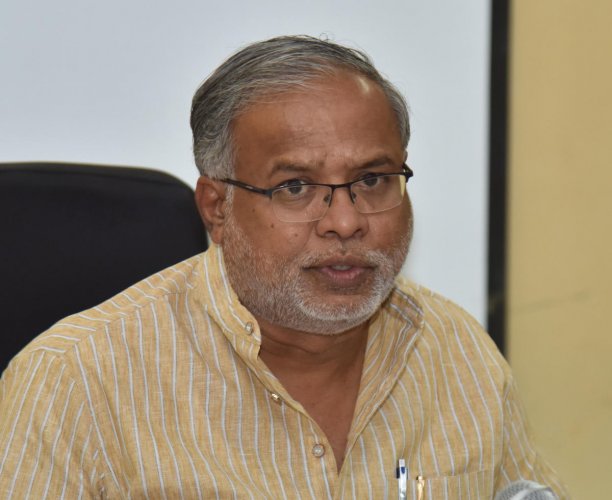
Bengaluru, Dec 18: The Karnataka Government has instructed removal of contents from the class 6 social science textbooks after the Brahmin Development Board complained it was "insulting" to the Brahmin community.
The Primary and Secondary Education Minister S Suresh Kumar in a note to top officials of his department has also directed that a committee be constituted including teachers and experts to examine such contents in the social science and language textbooks from class 1 to 10, and submit a report in 15 days to take necessary action.
The move came after a delegation from the Brahmin Development Board petitioned Chief Minister B S Yediyurappa in this regard and said these contents were "insulting" to the Brahmin community.
Stating that the seer of Mantralaya mutt had telephoned him and informed him about the feelings of the Brahmin community, Suresh Kumar in Facebook post clarified that revision of textbook or addition of any fresh chapter has not taken place after the current government came to power.
"I have promised to the seer that the blunder that has taken place in the past and has come to light now will be rectified immediately," he said.
While citing the reasons for the birth of new religions, the content in the class 6 social science textbook states Sanskrit was the language of priests and the common man could not understand it, the minister said in his note.
According to the textbook, there was a food scarcity because 'homa' and 'havana' (fire rituals) were performed by offering large quantities of foodgrains, milk, ghee and other materials.
Also it has been said sacrificing animals that were helpful to farmers in cultivation contributed to it, he pointed out.
Further highlighting similar such portions, Suresh Kumar in his note said the opinion of majority of the people is that such content was unnecessary and was above the standard of the students of the age group to whom it was taught.
Such provocative content will not only lead to confusion in the society, but also hurt the feelings of the people of certain sections of community or society, he added.
Let the Truth be known. If you read VB and like VB, please be a VB Supporter and Help us deliver the Truth to one and all.
Ordinance issued to increase number of Supreme Court judges from 34 to 38
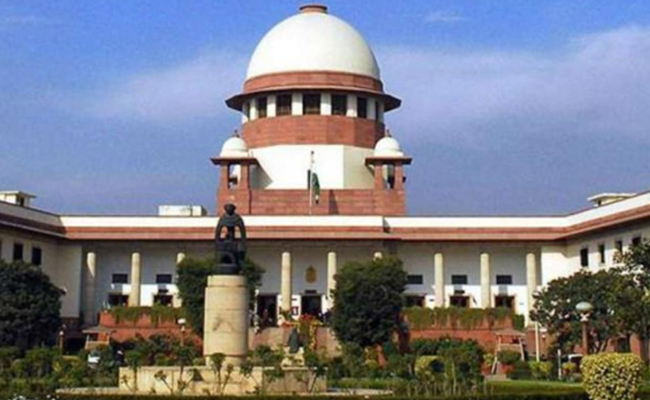
New Delhi (PTI): The government has promulgated an ordinance to increase the strength of the Supreme Court from the present 34 judges to 38, including the Chief Justice of India.
The law ministry notified the ordinance on Saturday, which amended the Supreme Court (Number of Judges) Act, 1956, to increase the sanctioned strength of the top court.
So far, the sanctioned strength of the top court was 34, including the Chief Justice of India (CJI). Now, the number of judges has been increased by four, taking the sanctioned strength to 38.
The top court will now have 37 judges, other than the CJI.
With the apex court having two vacancies at present, and the ordinance coming into force immediately, the Supreme Court Collegium will now have to recommend six names for appointment as judges in the top court.
A bill will be brought in the Monsoon Session of Parliament to convert the ordinance – an executive order – into a law passed by Parliament.
The Union Cabinet had cleared a draft bill on May 5 to increase the number of apex court judges.
The strength of the Supreme Court was last increased from 30 to 33 (excluding the CJI) in 2019.
The Supreme Court (Number of Judges) Act, as originally enacted in 1956, put the maximum number of judges (excluding the CJI) at 10.
This number was increased to 13 by the Supreme Court (Number of Judges), Amendment Act, 1960, and to 17 by another amendment to the law.
The Supreme Court (Number of Judges) Amendment Act, 1986, augmented the strength of judges from 17 to 25, excluding the CJI.
A fresh amendment in 2009 further increased the strength from 25 to 30.
Article 124(3) of the Constitution lists the qualifications required to become a Supreme Court judge.
An Indian citizen who has either served as a high court judge for at least five years, or as an advocate for 10 years, or is a distinguished jurist, can be appointed to the top court.
The strength of the Supreme Court is increased based on the recommendations of the CJI, who writes to the Union law minister. After consulting the finance ministry, the Department of Justice under the law ministry moves the Cabinet with a draft bill.