Karnataka HC reviews trial court’s use of non-existent judgments in commercial dispute case
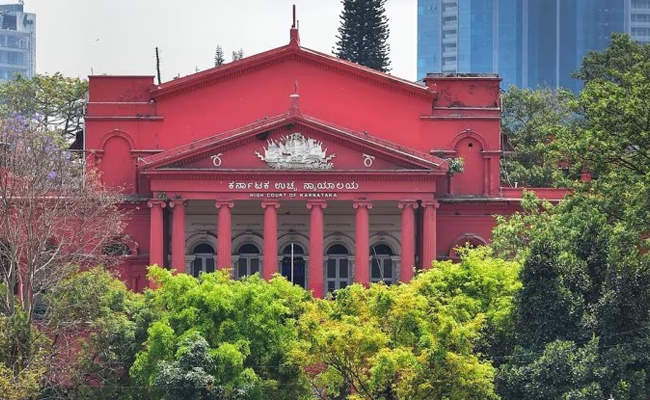
Bengaluru (PTI): The Karnataka High Court on Tuesday heard a petition challenging a trial court order that allegedly cited non-existent Supreme Court and High Court judgments to reject an application for the return of plaint.
The high court has stayed further action by the trial court until the next hearing on February 5. The upcoming proceedings are expected to provide clarity on judicial reliance on AI-generated legal research and its impact on case rulings.
The petition was filed by Sammaan Capital Limited, a non-banking finance company, contesting the November 25, 2024 order of the trial court.
The case is linked to a commercial dispute involving Mantri Infrastructure Private Limited and the alleged non-payment of debt.
Senior advocate Prabhuling K Navadgi, representing Sammaan Capital, argued before Justice R Devdas that the trial court had referenced judgments that do not exist. He said that the order relied on fabricated case citations.
“If such non-existent judgments are relied upon, it is a sorry state of affairs. Sometimes AI-generated research gives wrong conclusions,” he argued.
The contentious trial court order was based on references to: M/s. Jalan Trading Co., Pvt. Ltd. Vs Millenium Telecom Ltd. (Civil Appeal No. 5860/2010, Supreme Court); M/s. Kvalrner Cimentation India Ltd. Vs M/s. Achil Builders Pvt. Ltd. (Civil Appeal No. 6074/2018, Supreme Court); M/s. S.K. Gopal Vs M/s. UNI Deritend Ltd. (CS (Comm) 1114/2016, Delhi High Court).
The petitioners claim these judgments do not exist and were not introduced as evidence by either party during the hearing, raising serious concerns over the trial court’s credibility.
The dispute arose over non-payment of debt by Mantri Infrastructure. The plaintiffs initially filed a commercial suit but later withdrew it without permission to refile. They, then, filed a fresh suit under the civil jurisdiction, seeking injunctions against SARFAESI and NCLT proceedings, and a declaration that their debts had been discharged.
The trial court, however, rejected the defendants’ application under Order VII Rule 10 and Section 151 of the Civil Procedure Code, which sought the return of plaint—a decision now being contested before the high court.
The case has triggered a debate among legal professionals about the risks of unverified AI-generated research in court proceedings.
Supreme Court lawyer Vamshi Polsani criticised AI dependence, stating, “A lawyer’s analysis, research, and framing of arguments cannot be delegated to software or technology. AI can’t be depended upon.”
Advocate Vishwaja Rao echoed similar concerns, adding, “AI should be used to make legal work efficient, not a shortcut for accuracy.”
Former Telangana High Court judge Challa Kodanda Ram acknowledged AI’s usefulness but warned, “AI often gets legal principles right but can mix up citations. If the principle is correct, a citation error shouldn’t impact the outcome.”
Let the Truth be known. If you read VB and like VB, please be a VB Supporter and Help us deliver the Truth to one and all.
RCB beat MI by 18 runs after batters fire
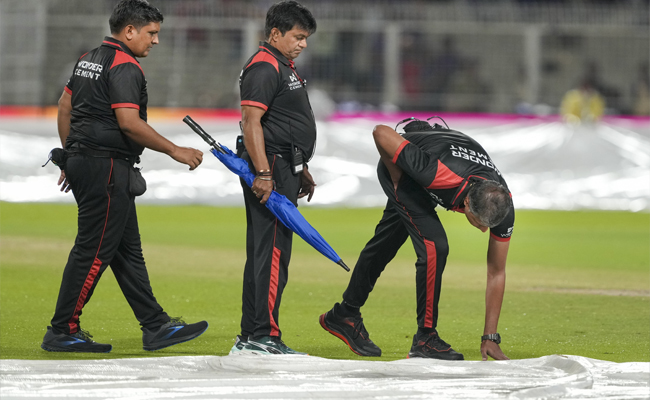
Mumbai (PTI): Royal Challengers Bengaluru skipper Rajat Patidar, Phil Salt and Virat Kohli blasted half-centuries as the defending champions beat Mumbai Indians by 18 runs in an Indian Premier League match here on Sunday.
Salt (78 off 36 balls) and Kohli (50 off 38 balls) stitched together a 120-run stand for the opening wicket before Patidar scored a rapid 53 off just 20 balls as RCB posted 240 for 4.
In response, Mumbai Indians were restricted to 222 for 5, with RCB spinner Suyash Sharma (2/47) putting the skids on the home side with a double strike in the eighth over, from which they could not recover.
Sherfane Rutherford top-scored for MI with an unbeaten 71 off 31 balls.
While opener Rohit Sharma appeared to be struggling with a hamstring issue and had to retire hurt on 19, his partner Ryan Rickelton made 37, while Suryakumar Yadav (33) and Hardik Pandya (40) were the other contributors for MI.
Brief scores:
Royal Challengers Bengaluru 240 for 4 in 20 overs (Phil Salt 78, Virat Kohli 50, Rajat Patidar 53, Tim David 35 not out).
Mumbai Indians: 222 for 5 in 20 overs (Sherfane Rutherford 71 not out, Ryan Rickelton 37, Hardik Pandya 40; Suyash Sharma 2/47).