Karnataka HC stays cases against BJP IT cell chief, Arnab Goswami over Cong' 'Turkiye Office' issue
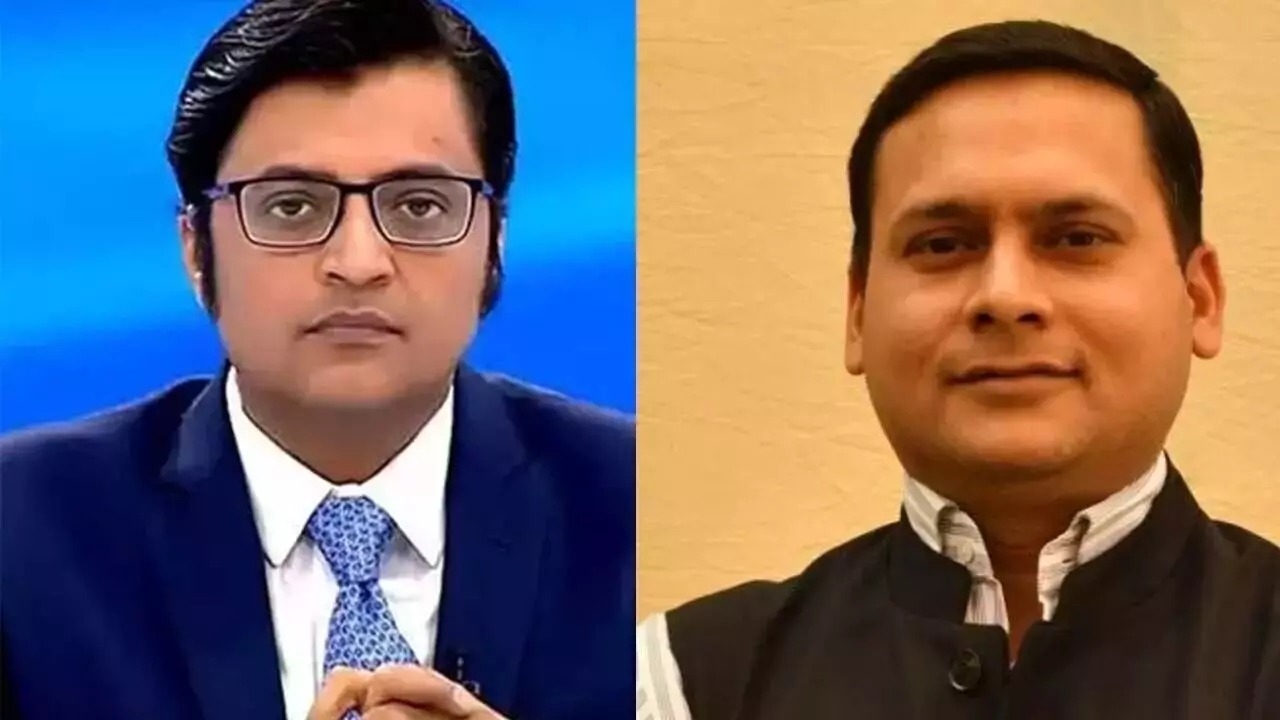
Bengaluru (PTI): The Karnataka High Court has granted an interim stay on criminal proceedings initiated against BJP leader Amit Malviya and Republic TV's Editor-in-Chief Arnab Goswami, in connection with allegations of spreading false claims that the Indian National Congress (INC) operates an office in Istanbul, Turkiye.
Justice S Rachiah passed the order on Thursday while hearing petitions filed by both Malviya and Goswami, seeking the quashing of the cases lodged against them. The stay will remain in effect until the next hearing.
Malviya is also facing a separate case over a controversial social media post in which he shared a morphed image showing half the face of Gandhi merged with that of Pakistan's Army Chief Asim Munir.
The caption alleged that Gandhi was aligning with Pakistan's narrative, particularly in the wake of India's military offensive Operation Sindoor, in response to the April 22 Pahalgam terror attack. Malviya's post further questioned whether Gandhi was aspiring for the Nishan-e-Pakistan, Pakistan's highest civilian award.
Both cases have now been stayed following petitions to quash them.
The Congress had filed multiple complaints across the country, including in Karnataka, accusing Malviya and Goswami of orchestrating a "criminally motivated campaign" to spread fabricated claims that the Istanbul Congress Centre in Turkiye is an official Congress office.
The party alleged that the misinformation was aimed at defaming the INC, inciting unrest, and compromising national security, particularly sensitive in light of strained diplomatic ties between India and Turkiye following the Pahalgam attack and India's retaliatory action.
On May 20, Republic TV issued a public correction, stating that an image used in its digital coverage, which was purportedly linked to the alleged Congress office in Turkey, was mistakenly included by a video editor. The channel clarified that the image had no relevance to the broadcast content and was never aired on Goswami's primetime debate show. The error, the channel said, occurred after the live show had ended and was swiftly corrected. Republic TV extended an "unconditional and sincere" apology.
The next day, a post on Malviya's 'X' handle reiterated that the Congress had opened an office in Turkiye in 2019, shortly after it voiced support for Pakistan on the Kashmir issue at the UN. He dismissed the legal actions as evasive and insisted the party had yet to provide a credible explanation.
During Thursday's court proceedings, Senior Advocate Aruna Shyam, representing Malviya and Goswami, argued that the cases were politically driven and lacked substance. He highlighted inconsistencies in the application of legal provisions, particularly how an initially bailable charge under Section 352 of the Bharatiya Nyaya Sanhita (BNS) was reportedly upgraded to a non-bailable one under Section 353 after police approached a magistrate. Section 353 pertains to statements intended to incite public disorder.
Shyam questioned the applicability of Section 353, stating, "He (Gandhi) is not a government functionary but the opposition leader," suggesting that the legal escalation was politically motivated.
The State's counsel responded that the investigation was at a preliminary stage and only notices had been issued, with no intention of making arrests. He urged the court to allow the inquiry to proceed to ascertain the nature and context of the disseminated information.
Let the Truth be known. If you read VB and like VB, please be a VB Supporter and Help us deliver the Truth to one and all.
Ordinance issued to increase number of Supreme Court judges from 34 to 38
New Delhi (PTI): The government has promulgated an ordinance to increase the strength of the Supreme Court from the present 34 judges to 38, including the Chief Justice of India.
The law ministry notified the ordinance on Saturday, which amended the Supreme Court (Number of Judges) Act, 1956, to increase the sanctioned strength of the top court.
So far, the sanctioned strength of the top court was 34, including the Chief Justice of India (CJI). Now, the number of judges has been increased by four, taking the sanctioned strength to 38.
The top court will now have 37 judges, other than the CJI.
With the apex court having two vacancies at present, and the ordinance coming into force immediately, the Supreme Court Collegium will now have to recommend six names for appointment as judges in the top court.
A bill will be brought in the Monsoon Session of Parliament to convert the ordinance – an executive order – into a law passed by Parliament.
The Union Cabinet had cleared a draft bill on May 5 to increase the number of apex court judges.
The strength of the Supreme Court was last increased from 30 to 33 (excluding the CJI) in 2019.
The Supreme Court (Number of Judges) Act, as originally enacted in 1956, put the maximum number of judges (excluding the CJI) at 10.
This number was increased to 13 by the Supreme Court (Number of Judges), Amendment Act, 1960, and to 17 by another amendment to the law.
The Supreme Court (Number of Judges) Amendment Act, 1986, augmented the strength of judges from 17 to 25, excluding the CJI.
A fresh amendment in 2009 further increased the strength from 25 to 30.
Article 124(3) of the Constitution lists the qualifications required to become a Supreme Court judge.
An Indian citizen who has either served as a high court judge for at least five years, or as an advocate for 10 years, or is a distinguished jurist, can be appointed to the top court.
The strength of the Supreme Court is increased based on the recommendations of the CJI, who writes to the Union law minister. After consulting the finance ministry, the Department of Justice under the law ministry moves the Cabinet with a draft bill.