Karnataka HC stays govt order dropping 61 charges against Ministers, elected representatives
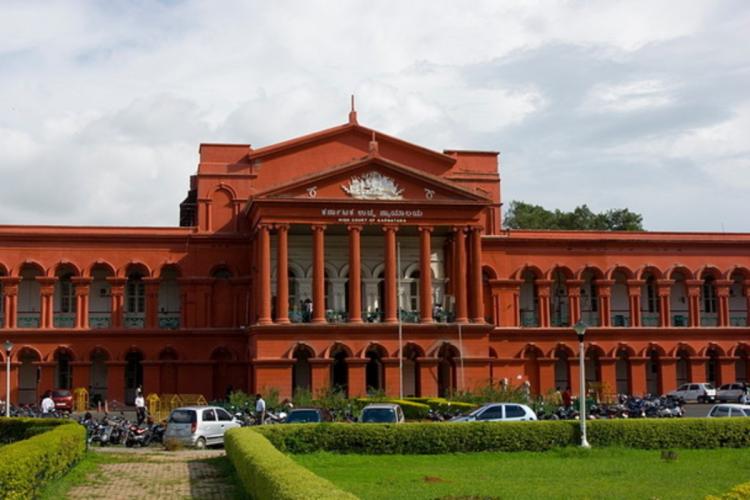
Bengaluru, Dec 21: The Karnataka High Court on Monday stayed the State government's order dropping 61 charges against ministers and the elected representatives.
"We direct that no further steps shall be taken on the basis of the order dated August 31, 2020," the division bench, comprising Chief Justice Abhay Shreeniwas Oka and Justice Vishwajith Shetty, ordered.
The court ordered the government to file its objection by January 22, next year.
The order was based on a petition filed by an NGO, People's Union of Civil Liberties, challenging the government decision to withdraw prosecution of 61 cases under section 321 of the Criminal Procedure Code.
During previous hearing of the case on December 1, the High Court cited an Apex Court order.
It maintained that even if Government instructs to the public prosecutor to withdraw from the prosecution of a case, the latter after applying his mind to the facts of the case may either agree with the instructions and file a petition before the Court stating grounds of withdrawal or disagree therewith having found a good case for prosecution and refuse to file the withdrawal petition.
"It is further observed that in the event the Public Prosecutor disagrees, he will have to return the brief.
It is further observed that the Public Prosecutor cannot act like a postbox or act on the dictates of the State Government and he has to act objectively as he is also an officer of the Court," the court noted.
It further stated that the action under Section 321 of the CrPC can be taken only with the permission of the Court.
"No Court is bound by such a decision taken to withdraw from the prosecution.
Even if an application is made under Section 321 of CrPC, the Courts are duty bound to assess whether a prima facie case is made out or not and that the Court has power to reject the prayer," the court had observed.
Let the Truth be known. If you read VB and like VB, please be a VB Supporter and Help us deliver the Truth to one and all.
Ordinance issued to increase number of Supreme Court judges from 34 to 38
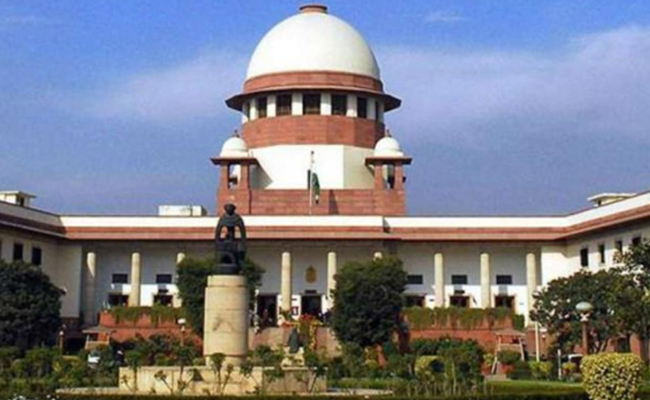
New Delhi (PTI): The government has promulgated an ordinance to increase the strength of the Supreme Court from the present 34 judges to 38, including the Chief Justice of India.
The law ministry notified the ordinance on Saturday, which amended the Supreme Court (Number of Judges) Act, 1956, to increase the sanctioned strength of the top court.
So far, the sanctioned strength of the top court was 34, including the Chief Justice of India (CJI). Now, the number of judges has been increased by four, taking the sanctioned strength to 38.
The top court will now have 37 judges, other than the CJI.
With the apex court having two vacancies at present, and the ordinance coming into force immediately, the Supreme Court Collegium will now have to recommend six names for appointment as judges in the top court.
A bill will be brought in the Monsoon Session of Parliament to convert the ordinance – an executive order – into a law passed by Parliament.
The Union Cabinet had cleared a draft bill on May 5 to increase the number of apex court judges.
The strength of the Supreme Court was last increased from 30 to 33 (excluding the CJI) in 2019.
The Supreme Court (Number of Judges) Act, as originally enacted in 1956, put the maximum number of judges (excluding the CJI) at 10.
This number was increased to 13 by the Supreme Court (Number of Judges), Amendment Act, 1960, and to 17 by another amendment to the law.
The Supreme Court (Number of Judges) Amendment Act, 1986, augmented the strength of judges from 17 to 25, excluding the CJI.
A fresh amendment in 2009 further increased the strength from 25 to 30.
Article 124(3) of the Constitution lists the qualifications required to become a Supreme Court judge.
An Indian citizen who has either served as a high court judge for at least five years, or as an advocate for 10 years, or is a distinguished jurist, can be appointed to the top court.
The strength of the Supreme Court is increased based on the recommendations of the CJI, who writes to the Union law minister. After consulting the finance ministry, the Department of Justice under the law ministry moves the Cabinet with a draft bill.