Karnataka HC stays proceedings to hand over Jayalalithaa's jewellery to TN in DA case
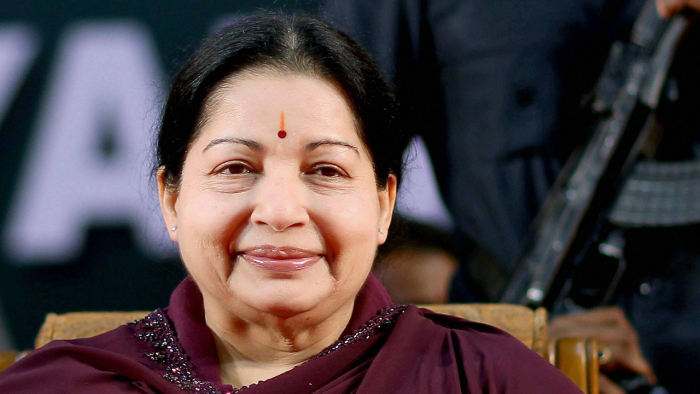
Bengaluru (PTI): The Karnataka High Court has stayed the process of handing over gold and diamond jewellery belonging to former Tamil Nadu Chief Minister late J Jayalalithaa to the neighbouring state Government till March 26.
The stay was granted by a single judge bench of Justice Mohammed Nawaz on a plea by Jayalalithaa's niece J Deepa on Tuesday.
The valuables were confiscated in a disproportionate assets case against the late AIADMK leader and slated to be handed over to the Tamil Nadu authorities from Wednesday by a special court.
The petitioner questioned the July 12, 2023 special court order contending that Jayalalithaa should be treated as "acquitted" as the Apex court had stopped the proceedings against her.
The special court here had said 27 kg of gold and diamond jewellery - part of the material evidence in the case against Jayalalithaa and others - would be handed over to the Tamil Nadu government on March six and seven, paving the way for unlocking value of the assets to mobilise Rs 100 crore fine imposed on her.
While 20 kg were allowed to be sold or auctioned, the remaining seven kg had been exempted by the Court considering the fact that it was inherited from her mother.
The Tamil Nadu Government will then take necessary action on the disposal of these gold and diamond jewellery, it had said.
The trial was held in Karnataka on the direction of the Supreme Court and therefore all material evidence is in the Karnataka treasury now under the custody of the court.
Ordering the transfer of the jewellery to the Tamil Nadu Government, the Special Court judge had said, "Instead of auctioning the jewels, it is better to transfer the same to Tamil Nadu by handing over the same through the Department of Home, State of Tamil Nadu."
The Court had then issued the direction that the Tamil Nadu Home Department authorise "competent persons preferably in the rank of Secretary along with police to come and collect the jewels."
In the same order, the special court had ordered the payment of Rs five crore to Karnataka for the expenses of the trial conducted in the State. The payment will be made from a fixed deposit in an account related to Jayalalithaa in the State Bank of India branch in Chennai.
The trial against Jayalalithaa, her former close aide V Sasikala, V N Sudhakaran, who is the disowned foster son of Jayalalithaa, and Sasikala's sister-in-law J Ilavarasi was conducted by the special court here, which convicted them nearly ten years ago.
Let the Truth be known. If you read VB and like VB, please be a VB Supporter and Help us deliver the Truth to one and all.
DMK seeks separate seating in Lok Sabha after split with Congress alliance
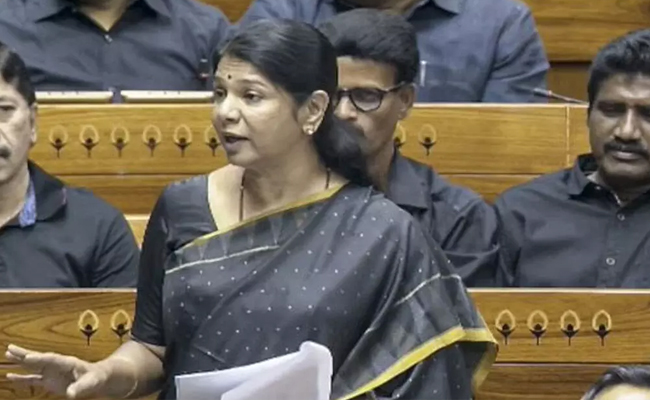
New Delhi: Kanimozhi Karunanidhi has written to the Lok Sabha Speaker seeking a separate seating arrangement for Members of Parliament belonging to the Dravida Munnetra Kazhagam (DMK) following the end of the party’s alliance with the Indian National Congress.
In a letter dated May 7 addressed to the Speaker of the Lok Sabha, Kanimozhi said the changed political situation made it inappropriate for DMK MPs to continue sitting alongside Congress members in the House.
She requested the Speaker to make “suitable changes” in the seating arrangement of the DMK Parliamentary Party and allot separate seating for its MPs.
“In view of the changed political circumstances and as our alliance with the Indian National Congress has come to an end, it may not be appropriate for our Members to continue occupying the present seating arrangement alongside them in the House,” the letter stated.
Kanimozhi further said separate seating would help DMK members effectively discharge their responsibilities in the Lok Sabha.