Karnataka introduces quota for 'male third gender' in police constable recruitment
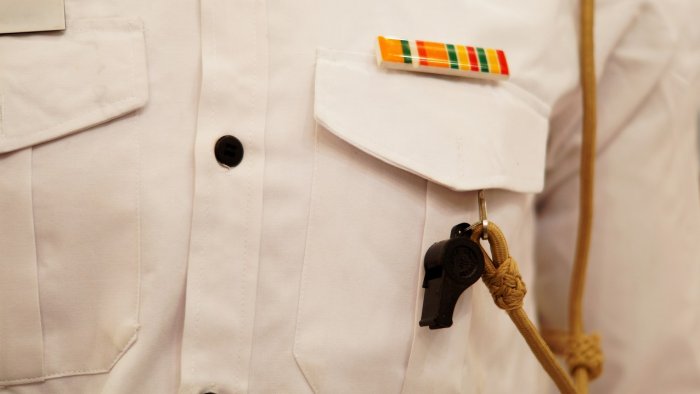
Bengaluru, Sep 13: In a first for the state, the Karnataka government has announced reservation for 'male third gender' in recruitment to the state armed forces.
State Home Minister Araga Jnanendra on Tuesday said the process to recruit constables to fill 3,484 posts in the Karnataka Armed Forces has started.
"For the first time in the state, 79 posts have been reserved for the 'male third gender'," he said.
Transgender activists hailed the move to provide quota.
"I welcome the decision," Karnataka 'Rajyotsava' awardee Akkai Padmashali, a transgender and founder of 'Ondede' which works for transgenders' welfare, told PTI.
The queer activist said the announcement is "a mainstreaming of the third gender" but added "there is no third gender called 'Male Third Gender'."
"What I understand from their (government) point of view is that probably, they are referring to the 'female to male transformed transgender man'," Padmashali said.
Minister Jnanendra said of the total vacancies, 420 posts have been reserved for candidates from 'Kalyana Karnataka' region or the erstwhile Hyderabad-Karnataka region, with 11 of them for the 'male third gender'.
For the rest of Karnataka, recruitment will be held to 3,064 posts, of which 68 are reserved for the 'male transgender', Jnanendra said.
He said the recruitment will take place in a "most transparent manner", and the last date for submitting the form online is October 31.
Regarding the plight of transgenders, Padmashali said: "Even if someone wants to go to the police department, then it requires certain qualifications. Here most of us transgenders are illiterate and school dropouts -- not even passed 10th standard, forget the (college) degree. There are so many nuances behind it."
There is also a need to understand various "cultural identities and diversity of existence" within the transgender community such as 'Jogappa', 'Marla', 'Jogta', 'Shakti', and 'Akka', Padmashali pointed out.
The activist also appealed to the government to undertake an 'immediate survey' to understand the community better and set up a 'Transgender Welfare Board' to promote their well-being.
Let the Truth be known. If you read VB and like VB, please be a VB Supporter and Help us deliver the Truth to one and all.
Mumbai family deaths: Rat poison ingredient zinc phosphide found in viscera, watermelon sample
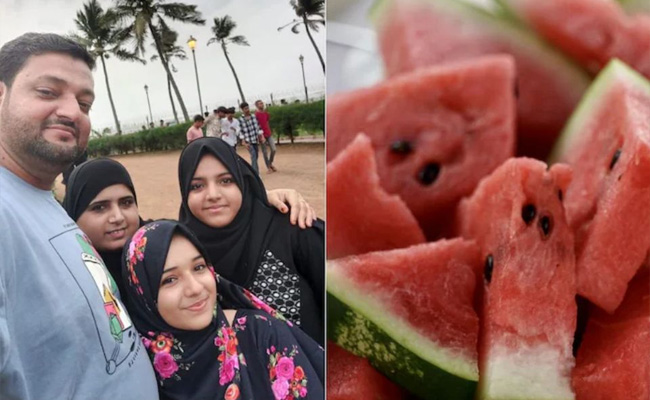
Mumbai (PTI): Four members of a family in Pydhonie area of south Mumbai died last month due to rat poison, police officials said on Thursday.
The Forensic Science Laboratory (FSL) report has confirmed the presence of zinc phosphide in viscera (liver, kidney, spleen), stomach contents, bile, and abdominal fat samples of the deceased identified as Abdulla Dokadia (44), his wife Nasrin (35) and their daughters Aayesha (16) and Zaineb (13), said Deputy Commissioner of Police Pravin Mundhe.
"The watermelon sample also tested positive for zinc phosphide, while all other food items were negative. The report will be studied in depth. We will consult forensic doctors. Further probe in the case is underway," the DCP said.
ALSO READ: Man dragged into river by crocodile in Vadodara; search ops underway
Zinc phosphide is used primarily as a highly toxic acute rodenticide to control rats and mice.
"The forensic experts who examined the viscera of deceased Abdulla Dokadia, Nasrin (35), Aayesha (16) and Zaineb (13) found traces of zinc phosphide. It is, however, unclear whether the rat poison was consumed accidentally (or on purpose). So far, we have found no strong reason why the whole family would take such an extreme step," another official said.
Further probe is being conducted by the JJ Marg police station, which has recorded statements of kin and neighbours, he added.
The Dokadia family, residents of Ghari Mohalla on Ismail Kurte Road, had hosted a get-together of relatives on the night of April 25. At around 1 am, hours after the guests had left, Abdullah Dokadia, his wife Nasreen, and daughters Ayesha and Zaineb ate pieces of a watermelon.
They suffered severe bouts of vomiting and diarrhoea in the early hours of April 26 and were rushed to a local hospital before being referred to the government-run J J Hospital where all four died during treatment.