Karnataka IT minister expresses concern over US tariffs; says Centre must act fast
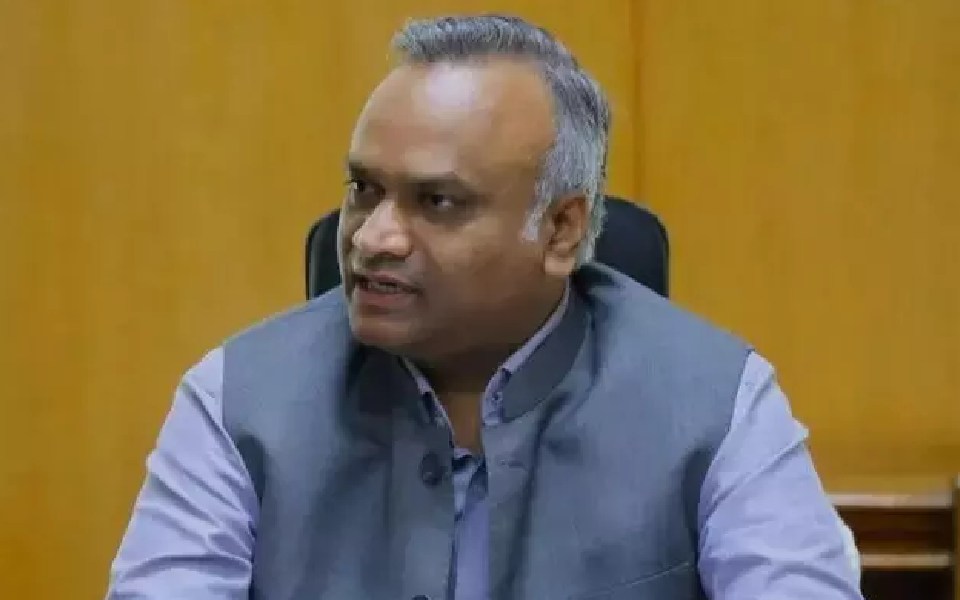
New Delhi, Aug 1 (PTI): Karnataka IT Minister Priyank Kharge on Friday expressed concern over the US decision to impose a 25 per cent tariff on Indian exports, warning that it could undermine the country's competitiveness against emerging rivals like Vietnam.
He urged the Centre to take swift and decisive action to protect the country's interests, including in electronics manufacturing ecosystem.
The remark comes at a time when Karnataka - already a thriving hub for innovation and technology - is seeking to expand its footprint in high-end electronics manufacturing with players like Apple suppliers Foxconn and Tata Electronics.
US President Donald Trump this week announced the imposition of a 25 per cent tariff on all goods coming from India.
For now, the Indian electronics industry remains insulated, a short two-week breather from the proposed tariffs is due to the pending review of a key section (Section 232 relates to impact of the products on national security). The industry, however, worries that Made-in-India products could become costlier if tariff exemption were to end.
Kharge told PTI in an interview: "This (issue of US tariffs) requires a lot more deep dive because it has been 24 hours since the US has announced these trade tariffs. But I think this is something that the Government of India seriously needs to look at."
He highlighted the competitive challenges India faces against competing nations like Vietnam, now with these tariffs.
"If you look at the people whom we are competing at the global scale as a country, it is with Vietnam and China, Indonesia, and we are the highest in Asia...Vietnam is at 20 per cent," he said.
Kharge emphasised the limitations of state governments in addressing global trade issues and called upon the Centre to assess and strengthen its policy response to safeguard India's interests.
"So quite naturally, it will have some sort of bearing. And this is something that the state governments cannot do alone. And we are willing to support the central government in whatever way we can. But the point remains...a massive miscalculation of policies by the central government..," Kharge said.
Stating that "so-called proximity" with US had not yielded any results for India, Kharge said: "in fact, it has become quite devastating for smaller manufacturers as well. So, this is something that I think the central government needs to pull up, get their act together on".
Kharge said it's only natural for countries to protect their own ecosystems, and as the US pushes its 'Make America Great Again' agenda, India too must safeguard its industries.
"Look, quite naturally, everybody will protect their ecosystem. While the President of the United States will try the MAGA slogan of 'Make America Great Again', we need to protect ecosystems as well," he said.
Geographical boundaries have become almost non-existent, due to factors like technology, cost of labour, cost of production, innovation. The cost of servicing the entire supply chain is very important, Kharge noted.
"And the strides that we have made in Karnataka or for India, we stand to lose if we don't solve this problem, early on. And I think, like I said, again, at the cost of sounding repetitive, central government should get its act together on this. Yes, it's going to have some sort of effect on the bigger manufacturers... the supply chain is very important," he said.
He said it is still too early to assess the response of the entire ecosystem.
"So we'll have to wait-and-watch and see before I can comment anything on the entire ecosystem... It's just not about Apple or about Foxconn. It's just not about their OEMs. We are manufacturing on scale for various components across sectors, whether it is smartphones, semiconductors or space tech. And I think we should see this ecosystem as a whole and not for one particular company," Kharge said.
Asked if the state government is in touch with electronics manufacturing companies and technology players to track their thinking and their next course of action, he said: "We have spoken to a few people. And of course, they're also a little uncertain, rather, and they don't want to have any knee-jerk reactions for whatever the American government has to say".
"So I think everybody is just waiting and watching what central government will do..," he said.
Meanwhile, Apple CEO Tim Cook has cautioned that the situation around tariffs is "evolving", and that for June quarter, the company incurred about USD 800 million of tariff-related costs.
During the Q3 FY2025 earnings, Cook said: "For the September quarter, assuming the current global tariff rates, policies, and applications do not change for the balance of the quarter, and no new tariffs are added, we estimate the impact to add about USD 1.1 billion to our costs. This estimate should not be used to make projections for future quarters, as there are many factors that could change, including tariff rates."
Let the Truth be known. If you read VB and like VB, please be a VB Supporter and Help us deliver the Truth to one and all.
Congress using hijab issue to pacify minority anger, alleges Karnataka LoP R Ashoka
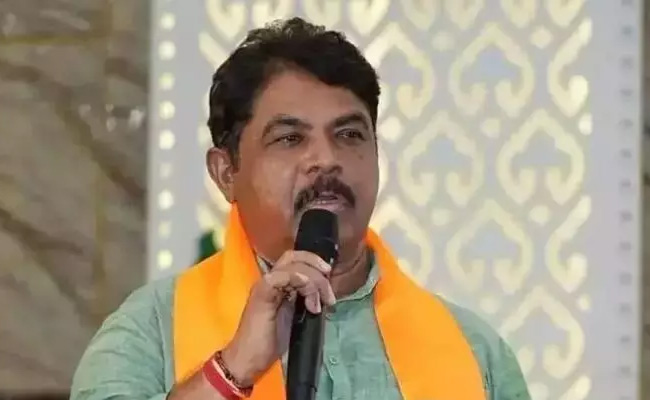
Bengaluru: Leader of Opposition in the Assembly R. Ashoka has accused the Congress government of using the hijab issue to placate what he described as discontent among minority voters after the Davanagere by-election.
In a post on X on Wednesday, Ashoka alleged that the state government, instead of addressing issues such as price rise, corruption, farmers’ distress and law and order, was attempting to retain its minority vote base by reviving the hijab issue.
Referring to the 2022 dress code introduced by the BJP government, which prohibited hijab in schools and colleges, Ashoka said the Karnataka High Court had upheld the policy and emphasised the importance of discipline in educational institutions.
He questioned the Congress government’s move to revisit the issue and asked whether setting aside the court-backed policy to benefit one community could be described as secularism.
Ashoka further alleged that while the government was willing to permit hijab, it continued to prohibit saffron shawls.
He accused the government of dividing students on religious lines rather than treating schools and colleges as spaces of equality.
Drawing a comparison with Mamata Banerjee’s government in West Bengal, Ashoka claimed that excessive appeasement politics had harmed the state and warned that the Congress in Karnataka could face a similar political response.
He said voters in Karnataka would teach the Congress a lesson for what he termed “vote-bank politics” and for compromising constitutional and judicial principles.