Karnataka: Lawyer duped by cyber fraudsters using AI-generated Trump video

Haveri (Karnataka), May 26 (PTI): A 38-year-old advocate was duped by cybercriminals who allegedly lured him into investing in a Trump Hotel rentals scheme using an AI-generated video of US President Donald Trump promising high returns, police said on Monday.
The issue came to light on May 6, when the victim approached the Haveri Central Crime Police Station with his complaint, they added.
In his statement, the advocate said that in January this year, he came across a video on YouTube offering an investment opportunity in “Donald Trump Hotel Rentals.” When he clicked the link, he was directed to download a mobile application.
He was then asked to fill out a form, which included submitting his bank account details and IFSC code.
According to the police, the victim followed the instructions and paid Rs 1,500 to activate his account. He was promised a 3 per cent daily return on his investment.
Initially, he received returns and made profits on his investments.
Trusting the scheme, he invested more money when asked by the fraudsters, hoping to double his earnings.
In total, he deposited Rs 5,93,240 to various bank accounts, UPI IDs, and digital wallets between January 25 and April 4.
However, he stopped receiving returns and was unable to recover the invested amount.
A case has been registered under the IT Act and Section 318(4) (cheating) of the Bharatiya Nyaya Sanhita, police said.
During the investigation, it was found that the complainant was tricked through a ‘fake’ link.
Consequently, Rs 1.5 lakh in the bank account to which the money was transferred has been frozen, a senior police officer said.
Police have appealed to the public to stay alert and avoid clicking on suspicious links.
“It has come to light that crores of rupees have been swindled across the country through fake links such as the Trump Hotel Rental scheme, which falsely promises to double your money. The public is urged to reject unknown links and remain vigilant,” the police release said.
Let the Truth be known. If you read VB and like VB, please be a VB Supporter and Help us deliver the Truth to one and all.
Ordinance issued to increase number of Supreme Court judges from 34 to 38
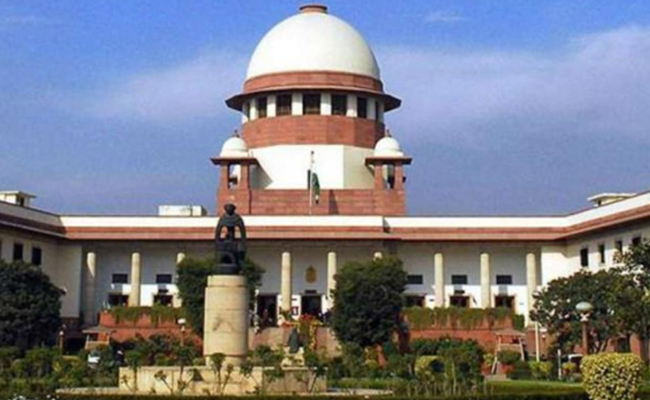
New Delhi (PTI): The government has promulgated an ordinance to increase the strength of the Supreme Court from the present 34 judges to 38, including the Chief Justice of India.
The law ministry notified the ordinance on Saturday, which amended the Supreme Court (Number of Judges) Act, 1956, to increase the sanctioned strength of the top court.
So far, the sanctioned strength of the top court was 34, including the Chief Justice of India (CJI). Now, the number of judges has been increased by four, taking the sanctioned strength to 38.
The top court will now have 37 judges, other than the CJI.
With the apex court having two vacancies at present, and the ordinance coming into force immediately, the Supreme Court Collegium will now have to recommend six names for appointment as judges in the top court.
A bill will be brought in the Monsoon Session of Parliament to convert the ordinance – an executive order – into a law passed by Parliament.
The Union Cabinet had cleared a draft bill on May 5 to increase the number of apex court judges.
The strength of the Supreme Court was last increased from 30 to 33 (excluding the CJI) in 2019.
The Supreme Court (Number of Judges) Act, as originally enacted in 1956, put the maximum number of judges (excluding the CJI) at 10.
This number was increased to 13 by the Supreme Court (Number of Judges), Amendment Act, 1960, and to 17 by another amendment to the law.
The Supreme Court (Number of Judges) Amendment Act, 1986, augmented the strength of judges from 17 to 25, excluding the CJI.
A fresh amendment in 2009 further increased the strength from 25 to 30.
Article 124(3) of the Constitution lists the qualifications required to become a Supreme Court judge.
An Indian citizen who has either served as a high court judge for at least five years, or as an advocate for 10 years, or is a distinguished jurist, can be appointed to the top court.
The strength of the Supreme Court is increased based on the recommendations of the CJI, who writes to the Union law minister. After consulting the finance ministry, the Department of Justice under the law ministry moves the Cabinet with a draft bill.