Karnataka records 274 springs in first statewide census, majority located in Western Ghats
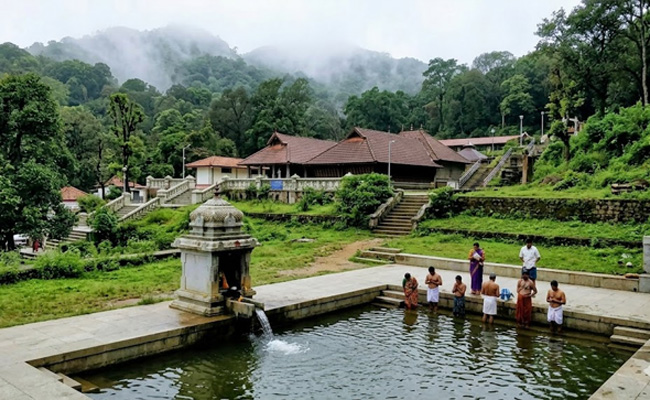
Hubballi: In its first-ever comprehensive census conducted during 2023-24, Karnataka has identified 274 natural springs across the State with 144 classified as perennial, 114 as seasonal and 16 reported to have dried up.
The enumeration was carried out by the Karnataka Minor Irrigation and Groundwater Development Department in association with the Groundwater Directorate as part of a Union government initiative, according to a Deccan Herald report. Officials were quoted as saying that the nine-month exercise involved field visits to nearly all identified springs. These springs were digitally mapped using a dedicated mobile application.
Belagavi district recorded the highest number of springs at 59, followed by Uttara Kannada with 31, while Chamarajanagar and Kodagu reported 23 each. Dharwad, Ramanagar, Bengaluru Rural, Davangere and Kolar districts have one spring each.
Bendru Teertha in Dakshina Kannada is the only hot spring documented in the State, which is attributed to a distinct hydrological formation. Springs in Talacauvery in Kodagu, Javali in Chikkamagaluru and Ambutheertha in Shivamogga, are the source points of major rivers such as the Cauvery, Hemavathi and Sharavathi.
According to the directorate, springs are natural discharge points where groundwater flows to the surface through openings in the earth’s crust, which occur when the water table intersects with the ground surface or when groundwater is forced out through fractures, faults or permeable rock layers.
The Western Ghats and Malnad regions, covering districts like Kodagu, Chikkamagaluru, Uttara Kannada, Dakshina Kannada, Belagavi and Shivamogga, account for a significant share of the springs due to high rainfall and favourable geological conditions.
K B Rajendra, Director of the Groundwater Directorate, was quoted by Deccan Herald as saying that nearly 80 per cent of the springs are located in rural areas. He noted that apart from those associated with religious or historical sites, most springs remain open and lack protective measures.
Noting their vital contributions to drinking water supplies and agricultural irrigation, especially in areas with hills and mountains, Rajendra said that these springs help maintain the flow of rivers and streams when the weather is dry, thereby supporting ecological balance and promoting biodiversity.
He added that the census findings would serve as a database for conservation, rejuvenation efforts, groundwater management and long-term water resource planning in the State.
Let the Truth be known. If you read VB and like VB, please be a VB Supporter and Help us deliver the Truth to one and all.
Gujarat builds 870 MW battery power backup network to stabilise renewable energy grid
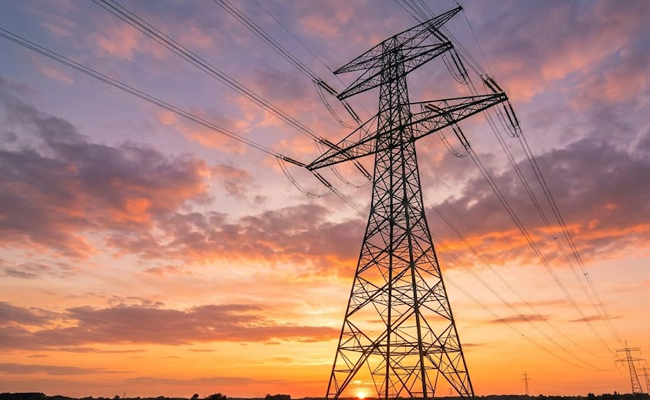
Gandhinagar (PTI): Gujarat has initiated battery storage systems at five locations in the state, with a total capacity of 870 MW, to maintain the stability of the renewable power grid, officials said on Saturday.
Battery Energy Storage Systems (BESS) are essential for storing electricity generated from solar and other renewable sources. They help manage additional load and maintain grid stability.
“Gujarat has initiated battery storage systems at five locations with a total capacity of 870 MW,” an official release stated.
The state has also registered 13 projects across Ahmedabad, Gandhinagar, Banaskantha, Patan and Kutch districts to set up additional battery storage systems, it said.
Modhera in Gujarat, India’s first solar village, has launched the country’s first BESS integrated with a solar power plant, it said.
"Under the leadership of Chief Minister Bhupendra Patel, the state has continued to advance in this direction and has strengthened its position among the leading states driving battery storage systems in India,” the release said.
Recently, a battery storage system was commissioned at Charal in the Sanand taluka of Ahmedabad, it said.
Four systems are operational at Modhera in Mehsana and Lakhpat in Kutch. The state government has also included advanced energy storage systems as a key component in the Gujarat Integrated Renewable Energy Policy, 2025, the release said.
Accordingly, standalone battery storage projects, works linked with new renewable energy installations, and those integrated with existing renewable energy systems are being approved, it said.
Once the Standard Operating Procedure is approved, registrations for battery storage will open for commercial and industrial users, it said, adding that the move will allow them to set up battery storage alongside their solar or wind projects.
The state government is developing battery storage systems across Gujarat, with companies being invited in through a competitive bidding process.
GETCO (Gujarat Energy Transmission Corporation) and power distribution companies strategically identify locations for battery storage systems based on grid capacity and operational requirements, the release said.
Power generation from solar and other renewable sources fluctuates throughout the day. Excess energy generated during peak hours can be stored and supplied later during periods of high demand, especially in the evening when solar output declines. Battery storage systems help reduce stress on the grid and improve grid stability, it added.