Karnataka seeks Rs 11,495 cr special grants among others in Union Budget
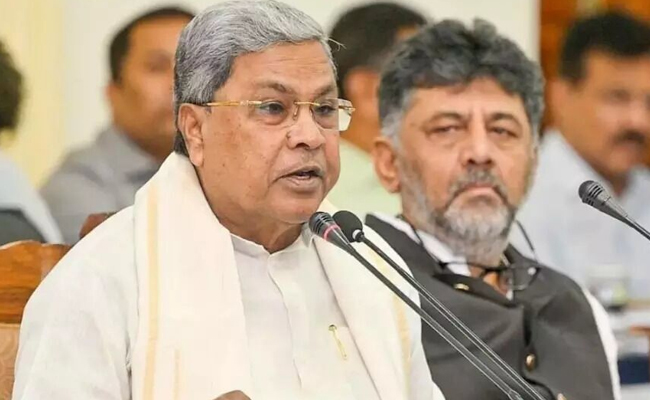
Bengaluru (PTI): Special matching grants for the development of the backward region of Kalyana Karnataka, approval for the Mekedatu project and release of Rs 11,495 crore of special grants recommended by the 15th Finance Commission were among the suggestions and requests made by the Karnataka government during a pre-budget consultation with the Centre.
Last month, Union Finance Minister Nirmala Sitharaman met finance ministers of states and union territories (UTs) to take their demands and suggestions for the Union Budget 2025-26, to be presented on February 1.
In his presentation at the meeting, Karnataka Revenue Minister Krishna Byre Gowda on behalf of the state government led by Chief Minister Siddaramaiah sought release of Rs 5,300 crore promised in the Union Budget to Upper Bhadra project to provide water to drought prone central Karnataka and special matching grants for the development of backward region of Kalyana Karnataka and the global eco sensitive Western Ghats.
The state urged the Central government to shift from a "reimbursement-based" system to an "advance-release" model for the implementation of the centrally sponsored schemes and also proposed increasing the Central share of their honorariums to Rs 5,000 per month for ASHA workers and Rs 2,000 for Anganwadi helpers.
According to a statement shared by the Gowda's office on Friday, the minister suggested increasing Pradhan Mantri Awas Yojana assistance from Rs 1.5 lakh to Rs five lakh for urban houses and from Rs 72,000 to Rs three lakh for rural houses.
Karnataka has requested additional railway lines, expedited projects, and Central support for 50 per cent of land acquisition and 100 per cent construction costs.
The state also urged approvals for road infrastructure proposals, including new ring roads and upgrades to National Highways.
Gowda has also requested the Union government to increase pensions for old-age, widows, physically-challenged persons.
The Karnataka government called for transparent and need-based reforms in disaster relief fund allocation and timely release of SDRF (State Disaster Response Force) funds, prioritising states' disaster vulnerabilities, it stated.
Let the Truth be known. If you read VB and like VB, please be a VB Supporter and Help us deliver the Truth to one and all.
RCB beat MI by 18 runs after batters fire
Mumbai (PTI): Royal Challengers Bengaluru skipper Rajat Patidar, Phil Salt and Virat Kohli blasted half-centuries as the defending champions beat Mumbai Indians by 18 runs in an Indian Premier League match here on Sunday.
Salt (78 off 36 balls) and Kohli (50 off 38 balls) stitched together a 120-run stand for the opening wicket before Patidar scored a rapid 53 off just 20 balls as RCB posted 240 for 4.
In response, Mumbai Indians were restricted to 222 for 5, with RCB spinner Suyash Sharma (2/47) putting the skids on the home side with a double strike in the eighth over, from which they could not recover.
Sherfane Rutherford top-scored for MI with an unbeaten 71 off 31 balls.
While opener Rohit Sharma appeared to be struggling with a hamstring issue and had to retire hurt on 19, his partner Ryan Rickelton made 37, while Suryakumar Yadav (33) and Hardik Pandya (40) were the other contributors for MI.
Brief scores:
Royal Challengers Bengaluru 240 for 4 in 20 overs (Phil Salt 78, Virat Kohli 50, Rajat Patidar 53, Tim David 35 not out).
Mumbai Indians: 222 for 5 in 20 overs (Sherfane Rutherford 71 not out, Ryan Rickelton 37, Hardik Pandya 40; Suyash Sharma 2/47).