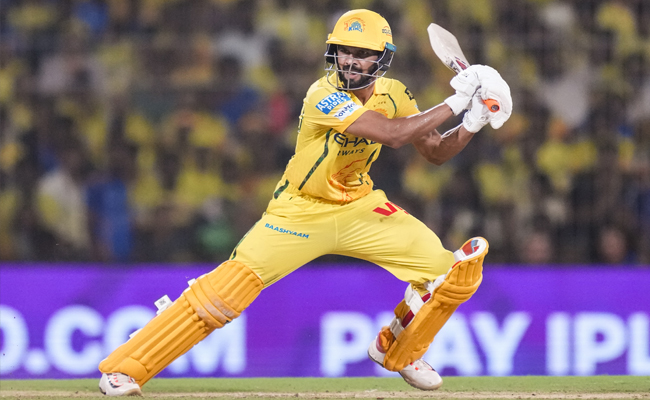
Karnataka to host Khelo India University Games 2021
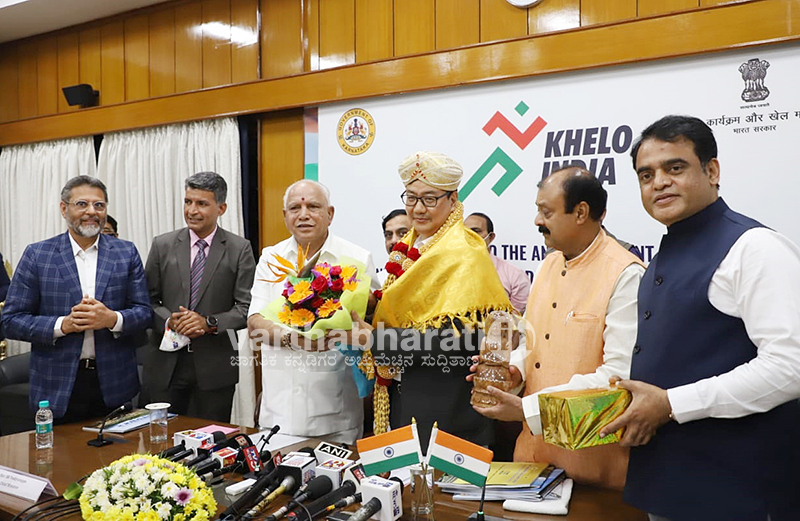
Bengaluru, Feb 21: Karnataka will host the second Khelo India University Games (KIUG) later this year, state chief minister BS Yediyurappa and Union Sports Minister Kiren Rijiju announced on Sunday.
Prime Minister Narendra Modi will inaugurate the Games to be held in the city-based Jain University and other venues, Rijiju told a press conference here.
"We have decided that the second edition of Khelo India University Games will be given to Karnataka and the university is Jain University," he said, in the presence of Yediyurappa and state Youth Empowerment and Sports Minister K C Narayana Gowda.
The union minister said he was confident that the Jain University would organise one of the best university games in the country's history.
It would be held in partnership with Association of Indian Universities (AIU).
KIUG is the largest University Games in the country and is aimed at tapping sporting talent, who can represent India in international events, including the Olympics.
The first edition of KIUG was held in Bhubaneswar in February last year and saw a total participation of 3,182 athletes in the U-25 age group, across 158 universities and colleges from all states.
This year, Yogasana and Mallakhamb have been added to the roster, with an effort to preserve and promote the century-old sporting disciplines of the country.
With the inclusion of these disciplines, the athlete participation figure is expected to cross 4000, this year.
Earlier in the day, Rijiju visited Shivamogga where he announced a Rs 50 crore project comprising a multi-purpose sports centre of high standards in the district.
Rijiju underlined that a large and young country like India with the highest number of young people in the world must be in the top rank in the Olympics in the future.
"India cannot afford to be satisfied with one or two medals. We Indians have talents, Indians have all the potential but unfortunately we could not focus, we lacked vision in the past," he pointed out.
The Minister explained that the Centre has also started indigenous games and recognised five indigenous games, which are Malkhamb, Kallaripayattu, Gatka, Thang Ta and Yogasana.
"We are going to provide lots of funding of indigenous sports. We have to play international sports and we have to play our traditional indigenous sports," he added.
Rijiju said the state will have many facilities similar to the Sports Authority of India facility in Bengaluru.
Yediyurappa said about 150 universities are likely to participate in the event.
The sports meet will be organised at the Kanteerava Stadium and hockey matches will be organised at the General Cariappa Hockey Stadium. All the arrangements will be borne by the state government and the university, the Chief Minister said.


Let the Truth be known. If you read VB and like VB, please be a VB Supporter and Help us deliver the Truth to one and all.
4 workers die after being buried under coal slurry in Jharkhand's Dhanbad
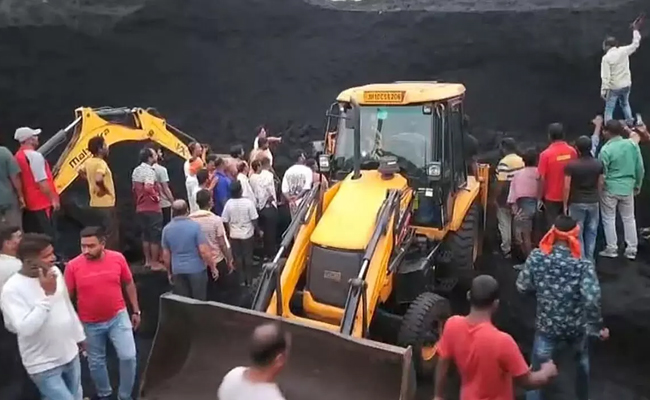
Dhanbad (Jharkhand) (PTI): At least four workers died after being buried under coal slurry in Jharkhand's Dhanbad district on Saturday, a police official said.
The incident took place at Moonidih coal washery in the command area of Bharat Coking Coal Limited (BCCL).
"Bodies of all four workers were dug out of debris during a rescue operation," Putki police station in-charge Waqar Hussain told PTI.
The incident took place when coal slurry was being loaded into trucks by workers, during which a large chunk of slurry fell and trapped several workers underneath, officials said.
The deceased have been identified as Manik Bauri, Dinesh Bauri, Deepak Bauri, and Hemlal Gope.
Meanwhile, the family members of the deceased and local villagers placed the bodies in front of the washery gate and began a protest.
They demanded compensation, jobs for dependents and action against those responsible for the incident.
Police and administration officials are trying to pacify the protesters, an official said.