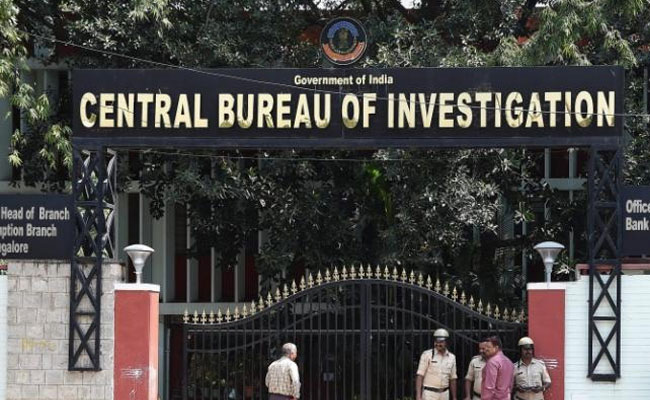
Karnataka Youth Congress chief Mohammed Nalapad appears before SIT probing Bitcoin scam

Bengaluru, Feb 06 (PTI): Karnataka Pradesh Youth Congress Committee President Mohammed Haris Nalapad appeared before the SIT of the Karnataka CID here on Thursday to take part in the Bitcoin scam probe.
Mohammed and his brother Omar Haris, were questioned in June 2024 too for over two days with regard to the payments made by them for expenses incurred by hacker Srikrishna Ramesh alias Sriki, including his stay at luxury hotels, his travel and other expenses between 2017 and 2018.
Sriki was arrested in November 2020.
Mohammed and Omar are sons of Congress MLA N A Haris, the chairman of the Bangalore Development Authority.
Sources said the SIT is reported to be in the process of finalising two charge sheets in the Bitcoin scam in which police officers have allegedly destroyed evidence and embezzled cryptocurrency.
The SIT began its investigation into the Bitcoin scam in June 2023.
Last year, the SIT filed a charge sheet against Sriki and his accountant Robin Khandelwal in connection with the hacking of Unocoin Technology Pvt Ltd's crypto exchange in Karnataka that occurred on June 23, 2017. This incident resulted in the theft of 60.6 Bitcoins, which were valued at Rs 1.14 crore based on the prevailing rate of Rs 1.67 lakh per Bitcoin at that time.
There is no record of direct financial transactions between the hacker and the Nalapad brothers, including their fund manager. However, the hacker stated to the CID police in 2021, following his arrest for a hacking incident at the Karnataka government's e-procurement portal in July 2019 that resulted in a Rs 11.5 crore heist, that he had made an "investment" of 150 Bitcoin and 1,100 Ethereum with Mohammed after meeting the brothers in 2017.
According to the sources, the statements made by Srikrishna are currently being investigated and verified.
At the time of the hacker's arrest in 2020, the value of one Bitcoin was in the range of $20,000 (around Rs 20 lakh), and it surged to as high as $50,000 (around Rs 50 lakh) by April 2021. The value of one Bitcoin recently hit $1,00,000.
Let the Truth be known. If you read VB and like VB, please be a VB Supporter and Help us deliver the Truth to one and all.
Man jumps to death from 22nd floor of posh Noida society; depression suspected

Noida (PTI): A 37-year-old man allegedly died by suicide after jumping from the 22nd floor of a posh residential society in Sector 107 here, police said on Monday.
The incident took place on Sunday in Prateek Edifice Society under the jurisdiction of the Sector-39 police station. The deceased has been identified as Sajjal Mehrotra, a company director who lived in the society with his family.
"On Sunday afternoon, he jumped from the balcony of his flat on the 22nd floor," a police official said.
Family members and security guards rushed him to a nearby hospital, where doctors declared him dead, police said, adding that no suicide note has been found.
Prima facie, the deceased was suffering from depression, officials said, adding that other aspects of the case are being investigated.
The body has been sent for post-mortem and further legal formalities are underway.
Police said the man got married about 10 years ago and is survived by his wife and two children. No complaint has been received from the family in connection with the incident.
(Assistance for overcoming suicidal thoughts is available on the state’s health helpline 104, Tele-MANAS 14416.)